
Views: 219 Author: Eyunhome Vacuum Publish Time: 2026-10-16 Origin: Site


Content Menu
● How Regular Vacuuming Helps Reduce Indoor Allergens
>> Pet Dander and Tracked-In Pollen
>> Dust Mite Allergens in Carpets and Soft Furnishings
● Vacuuming and Indoor Air Quality: Understand the Limits
>> A Vacuum Cleaner Is Not an Air Purifier
● Why HEPA Filtration and Dust Containment Matter
>> Filter Efficiency Is Not Whole-Machine Performance
● What Vacuuming Cannot Do: Mold, Bacteria, and Medical Claims
>> Moisture Control Comes Before Mold-Related Cleaning
● How Often Should You Vacuum Your Home?
● A Seven-Step Vacuuming Routine for Better Dust Control
>> 2. Clean Higher Surfaces First
>> 3. Select the Correct Attachment
>> 4. Make Controlled, Overlapping Passes
>> 5. Include Frequently Missed Areas
>> 6. Empty the Collection System Carefully
>> 7. Maintain Filters, Brushes, and Seals
● Choosing Upright, Handheld, Corded, and Cordless Vacuums
● A Manufacturer's Perspective: What OEM/ODM Buyers Should Verify
>> Request Evidence for the Exact Product Configuration
>> Evaluate Maintenance as Part of the Product
● Build a Vacuum Solution Around Real Cleaning Needs
>> Does Regular Vacuuming Help With Allergies?
>> Is a HEPA Filter Enough to Make a Vacuum Allergy-Friendly?
>> Can Vacuuming Make Allergy Symptoms Worse Temporarily?
>> Can a Vacuum Cleaner Remove Mold?
>> Should I Choose a Corded or Cordless Vacuum?
>> How Often Should an Allergy-Sensitive Household Vacuum?
>> What Should Private-Label Buyers Request From a Manufacturer?
The health benefits of regular vacuuming go beyond cleaner-looking floors. An effective vacuum cleaner helps remove settled dust, pet dander, pollen, and other particles that accumulate in carpets and furniture. For households managing allergies or asthma, that makes vacuuming a useful part of a broader indoor-allergen control routine—not a cure or a substitute for medical care.
However, results depend on more than cleaning frequency. Filtration, dust containment, floor compatibility, technique, and maintenance all influence what a vacuum picks up and what it may release.
This guide explains the benefits realistically, shows how to build a practical routine, and outlines what buyers should check when choosing household vacuums or developing private-label products.

Household dust is a mixture rather than a single substance. It can contain pollen, pet dander, dust mite waste, skin particles, and other debris. Carpets, rugs, and upholstered furniture provide places where these particles collect.
Removing accumulated dust reduces an important reservoir of potential triggers. That is the central health-related value of vacuuming: controlling exposure at the surface level.
Visible pet hair is only part of the cleaning challenge. Pet dander and other biological particles can remain in household dust even when a room looks tidy. Pollen can also become part of the indoor dust burden.
Give attention to pet resting areas, rugs, upholstery, and frequently used rooms. The aim is consistent particle removal, not simply making visible hair disappear.
For pet-owning households, practical equipment considerations include an upholstery attachment, accessible brush-roll maintenance, and a collection system that is straightforward to empty.
Vacuuming can help reduce exposure to particles containing dust mite allergens. It should not be presented as a reliable way to eliminate every mite or resolve an allergy on its own.
Specialist guidance recommends combining high-efficiency vacuuming with humidity control, regular bedding washing, and protective mattress and pillow encasings where appropriate. These measures address different parts of the exposure problem.
A useful household principle is to treat floors, furnishings, and bedding as one connected cleaning system rather than focusing exclusively on carpets.
Vacuuming removes settled material that may otherwise be disturbed by everyday activity. However, cleaning can also temporarily stir dust into the air. A poorly contained vacuum may release some collected particles back into the room.
This explains why "more vacuuming" is not automatically equivalent to "better air quality." Equipment and technique matter.
People with asthma or allergies should avoid the area being vacuumed when possible. Having another household member perform the task can help reduce exposure during cleaning.
A vacuum primarily cleans surfaces. An air purifier filters air passing through it. The products serve different purposes, and neither replaces controlling pollution sources or ventilating with clean outdoor air.
A balanced household approach may include:
- Removing settled dust from floors and furnishings.
- Addressing moisture problems.
- Maintaining appropriate ventilation.
- Considering room-air filtration where needed.
Avoid assuming that a clean carpet means every airborne pollutant has been removed.
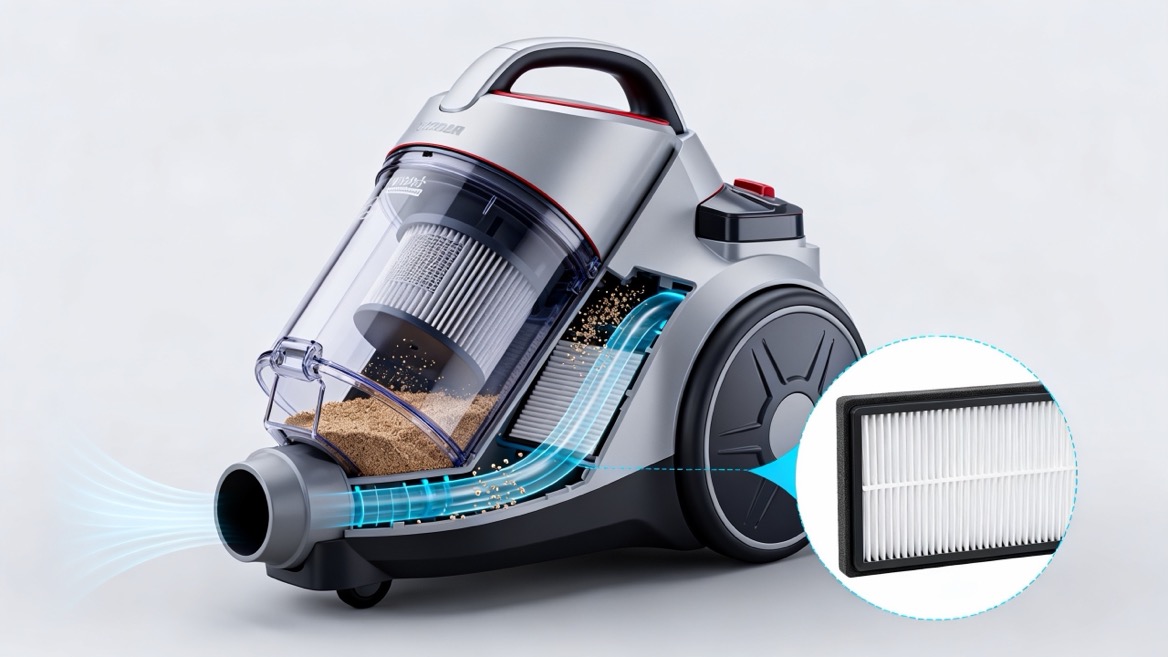
HEPA stands for high-efficiency particulate air. Under the definition described by the U.S. Environmental Protection Agency, this type of filter can theoretically remove at least 99.97% of airborne particles measuring 0.3 micrometers.
That number describes filter performance. It does not automatically prove that an assembled vacuum captures the same percentage under every operating condition.
Consider the full airflow path: floor head, collection chamber, filter housing, seals, and exhaust. If air bypasses the filter, a high-quality filter alone cannot establish effective particle containment.
Independent asthma-and-allergy product certification criteria reflect this distinction. They assess filtration-system integrity, allergen removal, airborne particles during operation, and exposure during bag or canister handling.
For household shoppers and commercial buyers alike, containment deserves as much attention as suction specifications.
Useful questions include:
- Does the stated efficiency describe the filter or the complete machine?
- What test method supports the claim?
- Was performance assessed with the collection chamber partly filled?
- How much dust escapes during emptying?
- Are replacement filters readily available?
These questions turn broad marketing language into verifiable product requirements.
Vacuuming should not be described as disinfecting a home, strengthening the immune system, or preventing respiratory infections. Removing dirt is different from proving a medical benefit.
Likewise, capturing some mold-related particles does not correct the moisture problem that allows mold to grow. Moisture-source removal and appropriate cleanup remain essential.
If a carpet smells musty or a room has persistent dampness, investigate the source rather than repeatedly vacuuming the affected area.
The Environmental Protection Agency recommends fixing water problems promptly, drying wet materials within 24–48 hours, and keeping indoor relative humidity below 60%, ideally between 30% and 50%.
Do not use an ordinary dry vacuum for wet material unless its instructions explicitly permit that application. Equipment selection must match the task.
For substantial or recurring mold problems, seek appropriate assessment instead of treating routine floor cleaning as remediation.
The Asthma and Allergy Foundation of America recommends vacuuming once or twice weekly to help keep indoor allergens low. Weekly carpet cleaning with a suitable filtered vacuum also appears in specialist allergy guidance.
Use that as a starting point, not an inflexible prescription. Household activity, pets, floor coverings, and the amount of tracked-in dirt influence practical cleaning needs.
| Area or situation | Practical routine |
|---|---|
| General household carpets and rugs | Begin with once or twice weekly |
| Pet resting areas | Check frequently and clean when debris accumulates |
| Entrances and busy walkways | Add targeted cleaning between full sessions |
| Upholstered seating | Include it in the regular cleaning rotation |
| Allergy-sensitive household | Combine vacuuming with broader exposure-control measures |
Additional spot cleaning is a housekeeping adjustment, not a proven medical treatment schedule.
If symptoms remain troublesome, discuss them with a healthcare professional rather than assuming that increasing vacuuming alone will solve the problem.
A repeatable routine is easier to maintain than an occasional intensive cleanup. The following workflow combines established dust-control principles with practical equipment care.
Remove loose objects and check for damp areas or items that could damage the machine. Follow the manufacturer's instructions about materials the vacuum can safely collect.
Preparation also makes it easier to reach edges and furniture-adjacent areas without repeated interruptions.
Remove dust from accessible furniture and shelving before finishing the floor. Use an appropriate cleaning method rather than deliberately scattering dust.
This sequencing helps avoid depositing fresh debris on a floor you have already cleaned.
Match the floor head to the surface and follow guidance for delicate finishes. Use upholstery and crevice tools where the main head cannot reach effectively.
An attachment is useful only if it can access the area and operate safely on that material.
Use a steady pace and slightly overlapping paths. Give visibly dirty sections additional attention instead of rushing through the entire room.
Follow any model-specific instructions for carpet settings or brush operation.
Rotate through edges, beneath accessible furniture, upholstery seams, and pet resting spots.
A simple checklist helps prevent the same hidden areas from being overlooked every week.
Follow the manufacturer's procedure. For allergy-sensitive cleaning, specialist guidance recommends emptying the bag outside while wearing a mask and promptly sealing the waste in a trash bag.
Avoid shaking collected dust back into the indoor environment.
Observe replacement intervals and cleaning instructions. Wash a filter only if the manufacturer identifies it as washable, and follow its drying requirements.
Check for blockages and damage before use. A maintenance routine should be easy enough that users can follow it consistently.
The most suitable format depends on the cleaning job. No category automatically guarantees superior allergen containment; evaluate the complete product rather than its shape alone.
| Vacuum format | Typical buying priority | What to verify |
|---|---|---|
| Upright | Regular floor cleaning | Maneuverability, floor compatibility, maintenance access |
| Handheld | Small-area and upholstery cleaning | Attachment reach, handling, collection capacity |
| Corded | Cleaning without battery-runtime planning | Cord reach, storage, usable operating range |
| Cordless | Convenient movement and quick sessions | Runtime by mode, charging requirements, battery support |
For allergy-conscious purchases, add filtration evidence and dust-disposal design to every category.
An easy-to-use vacuum may make routine cleaning more practical. However, convenience should not be mistaken for demonstrated filtration performance or a guaranteed health outcome.
For distributors, retailers, and private-label brands, health-oriented messaging should begin with evidence rather than ambitious promises.
A useful product brief separates three questions:
1. What surfaces and debris must the vacuum handle?
2. How will the machine retain collected particles?
3. Can users maintain that performance over time?
Ask suppliers to identify the tested model, filter, accessories, operating mode, and test conditions.
A report for a filter component or a different product configuration should not automatically support a claim about the finished vacuum being purchased.
Certification, where claimed, should also be checked for its scope and applicable model. Independent vacuum certification criteria show why pickup performance and dust exposure during operation and emptying require separate attention.
Replacement-filter access, clear instructions, brush cleaning, and spare-parts planning deserve a place in the development brief.
For example, a private-label handheld vacuum intended for pet upholstery should be evaluated with its proposed attachment and collection system—not only with a headline suction figure.
This is a procurement scenario, not a reported customer case. Its purpose is to connect the intended application with the evidence buyers should request.
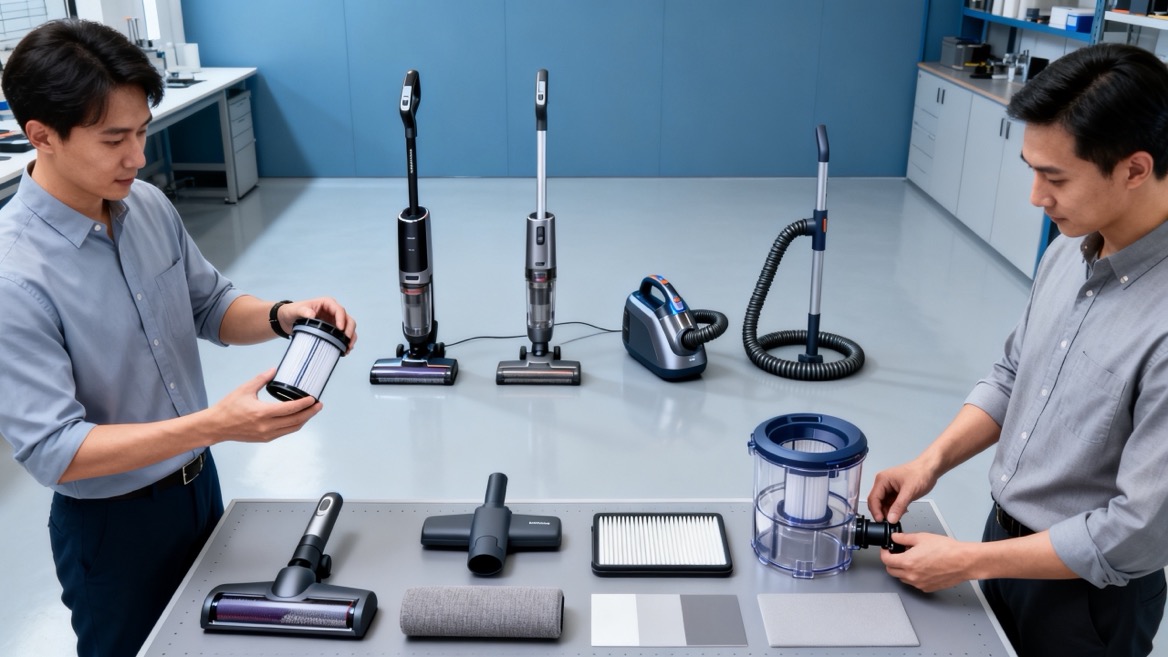
Ningbo Eyunhome Electric Technology Co., Ltd. provides upright, handheld, corded, and cordless vacuum cleaner solutions for business customers, together with OEM/ODM services, production support, and after-sales assistance.
For a productive sourcing discussion, prepare your target market, preferred format, floor-cleaning requirements, filtration objectives, branding needs, expected order volume, and applicable compliance requirements.
Contact Ningbo Eyunhome to discuss a product brief and request model-specific specifications, samples, relevant test documentation, and after-sales arrangements. Agree on the evidence needed before finalizing packaging or health-related product claims.
It can help reduce accumulated allergens as part of a broader exposure-control routine. Results vary, and vacuuming does not replace medical treatment or measures such as bedding care and humidity control.
Not by itself. Filter efficiency, airflow containment, dust release during operation, and exposure while emptying all matter. Look for evidence about the complete machine, not only the filter material.
Cleaning can stir settled dust into the air. People with asthma or allergies should avoid the area during vacuuming when possible, and use equipment designed to retain collected particles.
Vacuuming is not a solution to an underlying moisture problem. Address water sources and appropriate mold cleanup first. Removing some particles does not prevent continued growth in damp materials.
Choose according to cleaning area, session length, handling preferences, and maintenance needs. Assess runtime or cord reach alongside pickup and filtration evidence; neither power format independently establishes a health benefit.
Once or twice weekly is a useful starting point. Add targeted cleaning where needed and combine it with other allergen-control measures. Persistent symptoms warrant medical advice rather than relying on cleaning frequency alone.
Request specifications and evidence for the exact proposed configuration, including relevant performance reports, maintenance instructions, replacement-part arrangements, and applicable compliance documentation. Verify any certification claim before using it commercially.
- [Vacuum Wars — "Uncover the Health Benefits of Regularly Vacuuming Your Home"]
Original article supplied for restructuring. Used as the topic baseline, not as sole support for health claims. [vacuumwars]
- [U.S. Environmental Protection Agency — "What Is a HEPA Filter?"]
Source for the HEPA definition, 99.97% figure, and 0.3-micrometer particle-size reference. [epa]
- [U.S. Environmental Protection Agency — "Sources of Indoor Particulate Matter"]
Source for household dust composition, cleaning-related particle disturbance, moisture management, and humidity guidance. [epa]
- [U.S. Environmental Protection Agency — "Guide to Air Cleaners in the Home"]
Source for the limits of filtration, the importance of source control and ventilation, and why filtration does not resolve mold causes. [epa]
Specialist practice parameter supporting combined dust mite exposure-control measures. Published in 2013; not presented here as new research. [aaaai]
- [American Academy of Allergy, Asthma & Immunology — "Cleaning Tips for Allergy and Asthma Sufferers"]
Source for weekly carpet cleaning and precautions when handling collected dust. [aaaai]
- [Asthma & Allergy Friendly Certification Program — Vacuum Cleaner Criteria]
Source for whole-machine filtration integrity, allergen pickup, and dust-exposure assessment. Inclusion does not imply certification of Ningbo Eyunhome products. [asthmaandallergyfriendly]
Source for once- or twice-weekly vacuuming and broader indoor-allergen control guidance. [aafa]


