
Views: 277 Author: Eyunhome Vacuum Publish Time: 2026-09-23 Origin: Site


Content Menu
● Why Robot Vacuum Comparison Requires More Than Specifications
● The Most Important Robot Vacuum Features to Compare
>> Navigation and Mapping System
>> Suction, Airflow, and Cleaning System Design
>> Carpet Cleaning and Deep-Clean Capability
>> Mopping Method and Water Management
>> Docking Station and Automation Level
● How to Read Robot Vacuum Test Data Correctly
>> Look for Repeatable Conditions
>> Separate Claimed Data From Measured Data
>> Avoid Overvaluing One Score
● A Practical Comparison Framework for Buyers
>> Step 1: Identify the Primary Floor Type
>> Step 2: Define the Main Cleaning Challenge
>> Step 3: Evaluate Maintenance Honestly
>> Step 4: Compare Long-Term Ownership Requirements
● Expert View: What Creates a Successful Robot Vacuum Product
● Choosing an OEM/ODM Vacuum Cleaner Manufacturer
● Build a Better Vacuum Cleaner Program
>> What is the most important feature when comparing robot vacuums?
>> Is higher suction power always better in a robot vacuum?
>> Are self-emptying robot vacuums worth the extra cost?
>> What should importers check before sourcing a robot vacuum from China?
>> Can an OEM/ODM manufacturer customize a vacuum cleaner for my brand?
>> What replacement parts should be available for robot vacuum customers?
>> How can a distributor reduce vacuum cleaner returns?
Choosing the right robot vacuum is no longer as simple as comparing suction numbers or checking whether a model includes a mop. Today's buyers evaluate navigation, carpet pickup, pet-hair handling, docking automation, noise, battery runtime, maintenance burden, and app usability before making a decision.
For retailers, distributors, and private-label brands, this creates both an opportunity and a challenge. The opportunity is clear: consumers want smarter, more specialized floor-care products. The challenge is that a robot vacuum specification sheet alone does not explain how the product will perform in a real home.
As a China-based vacuum cleaner manufacturer, Ningbo Eyunhome Electric Technology Co., Ltd. supports global partners with upright, handheld, corded, cordless, and customized vacuum cleaner solutions. We work from a practical product-development perspective: a successful vacuum is not defined by one headline feature. It is defined by how its cleaning system, usability, reliability, production consistency, and after-sales support work together.
This guide explains how to compare robot vacuums by features and test data, how to interpret common performance claims, and how importers and brand owners can use these insights when selecting OEM/ODM vacuum cleaner products.

A robot vacuum may list high suction power, laser navigation, auto-emptying, and mopping functions. However, those features do not automatically produce a better user experience.
For example, a model with a high claimed suction figure may still leave debris along edges if its side brush, airflow path, brush-roll design, or wall-following behavior is weak. A model with advanced navigation may map rooms accurately but still struggle with cables, pet toys, low furniture, or dark surfaces. Likewise, an automatic docking station can reduce daily maintenance, but it also adds size, noise, consumable costs, and service requirements.
The strongest comparisons therefore consider three layers:
| Comparison Layer | What It Answers | Why It Matters |
|---|---|---|
| Product specifications | What does the product claim to include? | Helps buyers identify baseline capabilities |
| Controlled test data | How does the machine perform in repeatable scenarios? | Makes performance differences easier to evaluate |
| Real-use experience | Is the vacuum convenient, reliable, and easy to maintain? | Determines long-term satisfaction and repeat purchase potential |
A feature should be judged by its impact on the user's cleaning routine—not only by how impressive it sounds in a product listing.
Navigation affects cleaning coverage, speed, repeatability, and the ability to handle multi-room homes. Entry-level models may move in a semi-random pattern, while more advanced products use gyroscopes, cameras, laser sensors, structured-light systems, or combinations of sensors.
For most mid-range and premium robot vacuum projects, a structured mapping solution offers major advantages:
- More systematic cleaning routes
- Faster room coverage
- Room-by-room cleaning control
- Virtual no-go zones
- Better return-to-dock behavior
- More accurate cleaning-history reports
However, sensor selection should match the intended market. A highly advanced navigation system may improve convenience, but it can also increase bill of materials cost, software complexity, testing needs, and warranty exposure.
For an OEM or ODM robot vacuum program, the key question is not simply "Which sensor is best?" It is: Which navigation solution provides the right balance of performance, cost, privacy expectations, and serviceability for the target price segment?
Suction power is one of the most visible robot vacuum selling points. Yet suction alone does not determine cleaning performance.
Actual pickup depends on multiple engineering factors:
- Motor efficiency and sealed airflow design
- Main brush structure and contact with the floor
- Side-brush design and rotation speed
- Floor-surface detection
- Cleaning-path overlap
- Bin capacity and dust-channel geometry
- Carpet boost logic
- Filtration resistance
A vacuum with a well-designed brush roll and balanced airflow may outperform a product with a higher advertised suction number in certain real-life debris tests. This is especially important for homes with carpets, pet hair, fine dust, cereal, sand, or debris collected along wall edges.
For buyers, the best approach is to compare performance across several cleaning tasks instead of relying on a single advertised figure. For brands, the better approach is to validate cleaning performance using repeatable internal procedures before finalizing product claims.
Carpet cleaning is one of the biggest performance separators in the robot vacuum category. Hard floors are generally easier to clean because debris remains near the surface. Carpet fibers can trap fine dust, hair, and particles deeper below the surface.
When comparing models, look for:
- Main-brush type and bristle configuration
- Carpet-detection capability
- Automatic power adjustment
- Brush-roll anti-tangle performance
- Cleaning performance on low-pile and medium-pile carpet
- Ability to cross carpet edges and low thresholds
- Edge cleaning near skirting boards
A robot vacuum that performs well on hard flooring may not deliver the same results on thick rugs or textured carpets. This is why distributors should test candidate models using the floor types common in their destination market.
For example, a lightweight hard-floor-focused robot vacuum may suit apartments in Japan, Southeast Asia, or urban Europe, where compact spaces and hard flooring are common. A model designed for North American homes may require stronger carpet pickup, larger dust capacity, and better threshold-crossing ability.
Robot vacuum mopping systems vary widely. Some use a basic drag pad. Others use vibrating pads, rotating mop pads, roller mops, water tanks, carpet detection, mop lifting, pad washing, and hot-air drying.
The right mopping method depends on the intended user and price category.
| Mopping Type | Suitable For | Main Consideration |
|---|---|---|
| Passive drag pad | Entry-level products and light daily wiping | Low cost, limited stain-removal ability |
| Vibrating mop pad | Homes needing stronger scrubbing action | Better contact, increased mechanical complexity |
| Dual rotating pads | Mid- to premium-level hard-floor cleaning | Requires stable water control and pad maintenance |
| Roller mop system | Premium cleaning projects | High performance potential, higher design and service demands |
A mopping system should not be evaluated only by how wet the floor looks after a cycle. Better mopping balances water output, pad pressure, stain removal, edge coverage, drying time, and avoidance of carpet contamination.
For private-label projects, clear instructions are also essential. Many negative reviews come from incorrect use, such as adding unsuitable detergents, failing to clean pads, or operating a robot mop on delicate flooring without appropriate settings.
A docking station can transform a robot vacuum from a manually maintained appliance into a highly automated cleaning system. However, more automation brings more components, more consumables, and more potential points of failure.
Common dock functions include:
- Charging
- Automatic dust emptying
- Clean-water supply
- Dirty-water collection
- Mop-pad washing
- Mop-pad drying
- Detergent dispensing
- Self-cleaning base functions
A simple charging dock may be ideal for value-focused markets and small apartments. An auto-empty dock may appeal to pet owners and busy households. A full-service station can be compelling for premium buyers but requires robust water sealing, pump reliability, odor management, cleaning access, and replacement-part availability.
From a manufacturing perspective, docking systems should undergo repeated cycle testing. A product may work well during a short demonstration but reveal issues only after frequent emptying, water movement, or long-term sealing use.
Test data becomes useful when the testing conditions are clear and repeatable. When reviewing third-party product comparisons, buyers should ask how a test was conducted before treating the result as decisive.
Reliable performance testing usually controls variables such as:
- Floor material
- Debris type and weight
- Cleaning area size
- Battery level
- Cleaning mode
- Number of cleaning passes
- Carpet pile height
- Obstacle type
- Lighting conditions
- Product maintenance status
If two models are tested under different conditions, the numbers may not be directly comparable.
For instance, a "pickup percentage" test is more meaningful when the same amount of debris is placed on the same carpet, the machines use the same cleaning mode, and remaining debris is measured using a consistent process.
Product pages often include manufacturer claims, such as maximum suction power, runtime, noise level, or obstacle-clearance height. These claims can be useful, but they should be distinguished from measured in-use results.
A professional comparison process separates:
1. Declared product specifications provided by the manufacturer
2. Laboratory or controlled test results measured under stated conditions
3. Real-home observations collected during normal use
This distinction matters for retail partners. Marketing teams need compelling messages, but product claims must remain accurate, supportable, and appropriate for the market where the vacuum will be sold.
A single overall score may help consumers narrow a large product list. Still, it cannot replace individual consideration of the buyer's needs.
A pet owner may prioritize hair pickup, anti-tangle performance, and automatic dust emptying. A homeowner with thick carpets may prioritize deep cleaning and threshold climbing. A small-apartment customer may care most about compact storage, low noise, and an unobtrusive charging base.
The "best robot vacuum" is therefore not always the highest-scoring model. It is the model that best fits the user's floors, cleaning habits, home layout, and maintenance expectations.
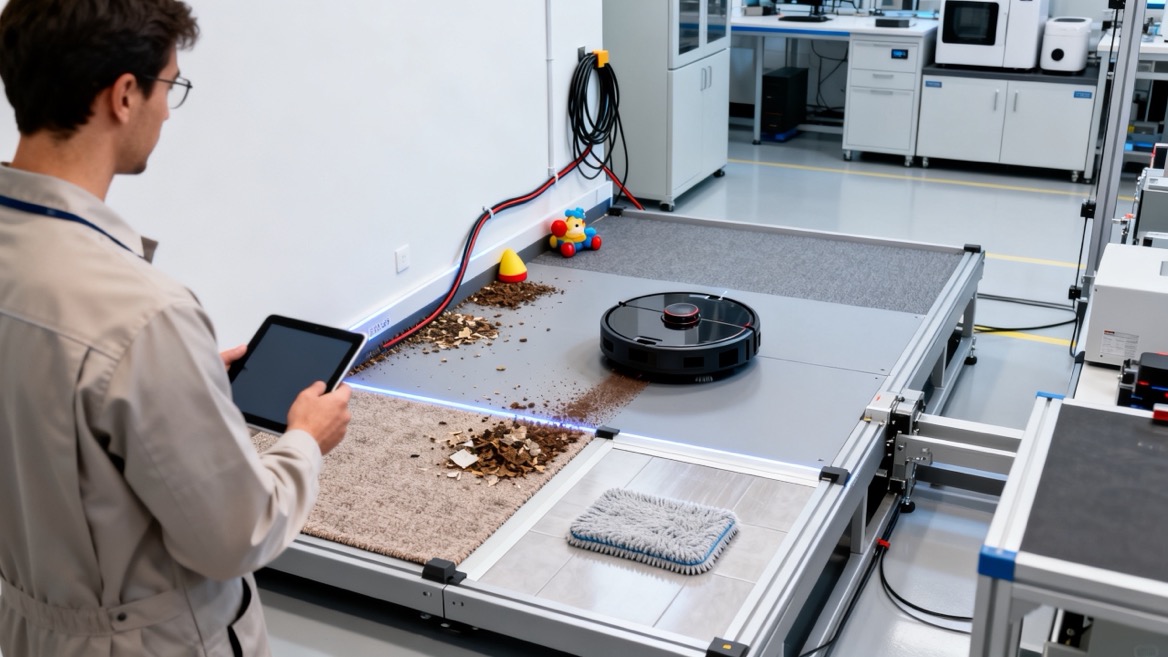
Before comparing brands and models, define the actual cleaning environment. This simple step prevents feature overload and helps buyers focus on the functions that matter.
Consider whether the home is mostly:
- Tile, vinyl, laminate, or hardwood
- Low-pile carpet
- Medium- or high-pile carpet
- Mixed flooring with rugs
- Uneven surfaces and raised thresholds
Hard-floor households may benefit most from edge cleaning, mopping quality, and low-profile navigation. Carpet-heavy homes should place greater emphasis on brush performance, airflow, bin capacity, and deep-clean ability.
The most important challenge may be:
- Pet hair
- Long human hair
- Fine dust
- Food crumbs
- Sand and outdoor debris
- Wet footprints
- Daily maintenance reduction
- Cluttered rooms with cables and toys
A clear use case makes product selection more rational. It also helps B2B buyers create stronger product positioning and more persuasive retail content.
Many consumers want maximum automation, but every robot vacuum still requires care. Users may need to empty bins, replace dust bags, clean sensors, wash mop pads, remove hair from rollers, refill water tanks, and replace filters.
A better product does not eliminate maintenance entirely. It makes routine maintenance easier, cleaner, and less frequent.
Before purchasing or importing a model, check:
- Availability of filters, side brushes, mop pads, dust bags, and batteries
- Warranty coverage and local repair process
- App language and firmware-update support
- Replacement-part lead times
- Packaging protection for international shipment
- Documentation quality and safety compliance requirements
For distributors, reliable after-sales support often matters as much as product performance. A strong product with unavailable spare parts can quickly create avoidable customer complaints.
After evaluating the vacuum cleaner category from a manufacturing and market-development perspective, one pattern is consistent: balanced product design outperforms feature overload.
A strong robot vacuum should offer a clear customer promise. It may be "easy daily cleaning for compact homes," "pet-hair cleaning with reduced maintenance," or "premium vacuuming and mopping for busy families." The feature set, price, packaging, manual, spare-parts plan, and after-sales process should all support that same promise.
For example, a value-oriented robot vacuum should not include a complicated docking platform that raises failure risk and consumes too much budget. Conversely, a premium robot vacuum should not pair an advanced mopping system with weak customer guidance, limited replacement parts, or poor water-tank access.
For OEM/ODM partners, the development process should include:
- Target-market research before product configuration
- Functional prototypes tested on real floor surfaces
- Verification of cleaning, charging, docking, and water-management functions
- Packaging drop testing and transportation evaluation
- Quality-control standards for each production stage
- Spare-parts planning before mass production
- Clear service documentation for distributors and end users
This approach helps turn a product concept into a reliable commercial program.
Selecting a vacuum cleaner manufacturer is about more than finding a factory that can assemble a product. The right partner should help reduce uncertainty across development, production, quality control, compliance, and after-sales preparation.
When evaluating a China vacuum cleaner manufacturer, ask practical questions:
| Evaluation Area | Questions to Ask |
|---|---|
| Product capability | Can the supplier support upright, handheld, corded, cordless, or customized vacuum cleaner projects? |
| Customization | Can the factory adapt color, tooling, accessories, packaging, manuals, and functional configurations? |
| Quality control | What inspections occur for incoming materials, assembly, performance testing, and final packaging? |
| Production stability | How are supply continuity, lead times, capacity, and component sourcing managed? |
| Compliance support | Can the supplier provide relevant documents and work with destination-market testing requirements? |
| After-sales readiness | Are consumables, spare parts, repair guidance, and technical support available? |
At Ningbo Eyunhome Electric Technology Co., Ltd., we understand that distributors and brand owners need more than a finished product. They need dependable manufacturing coordination and a vacuum cleaner solution that fits their market position.
Our team can support OEM/ODM vacuum cleaner projects across upright, handheld, corded, and cordless product categories. We focus on stable production, customization support, practical quality processes, and responsive after-sales cooperation for global customers.
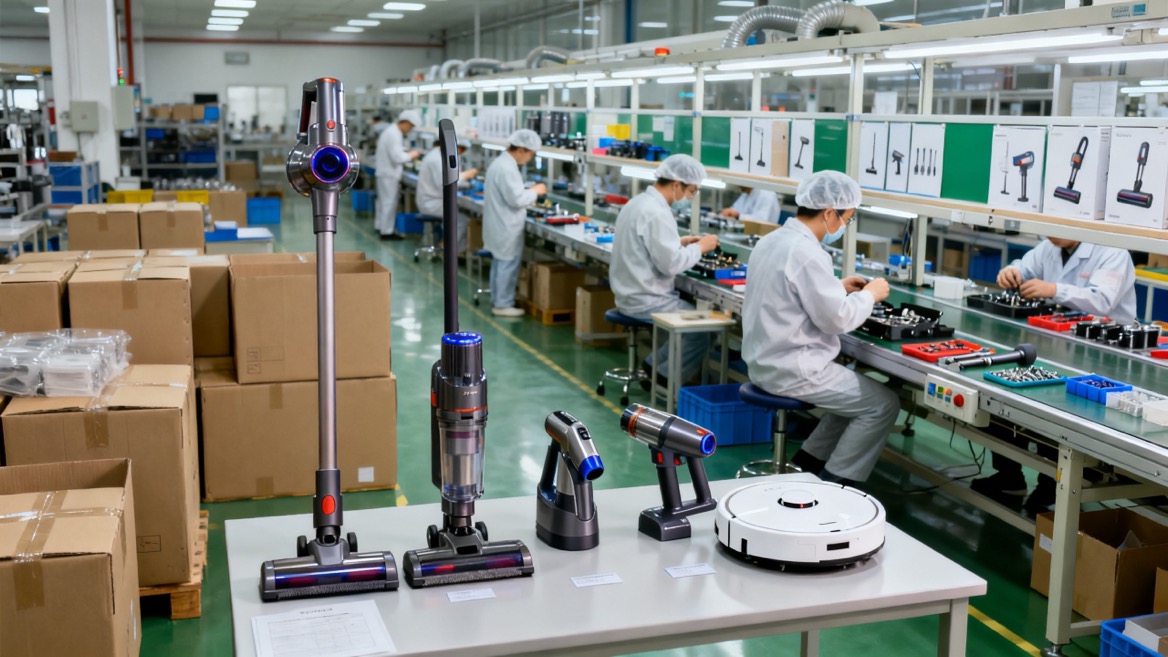
A well-selected robot vacuum can solve real daily cleaning problems. But lasting market success depends on a complete system: realistic product claims, reliable engineering, useful accessories, strong quality control, and dependable post-sale support.
If you are developing a private-label vacuum cleaner range, expanding an existing floor-care category, or sourcing customized upright, handheld, corded, or cordless vacuum cleaner products, work with a manufacturing partner that understands both product performance and international market expectations.
Contact Ningbo Eyunhome Electric Technology Co., Ltd. to discuss your OEM/ODM vacuum cleaner requirements, target market, product configuration, and production plan.
There is no single most important feature for every buyer. For hard-floor homes, mopping and edge cleaning may matter most. For carpeted homes, brush-roll design, airflow, deep-clean performance, and threshold climbing are usually more important. Pet owners should also prioritize anti-tangle performance and dust-emptying convenience.
No. High suction can help, but cleaning results also depend on airflow design, brush contact, cleaning-path coverage, bin design, and floor type. Compare the complete cleaning system rather than relying only on a maximum suction claim.
They can be worthwhile for busy households, pet owners, and users who want to reduce manual dust-bin emptying. However, they require dust bags or other consumables, create additional noise during emptying, and add to the product's overall cost and size.
Importers should evaluate product performance, quality-control procedures, compliance needs, production capacity, customization ability, spare-parts availability, packaging protection, manuals, warranty policies, and post-sale technical support.
Yes. Depending on the project, customization may include color, logo, packaging, accessories, user manuals, plug type, filtration configuration, functional options, and product positioning. The available scope depends on the model, order quantity, tooling requirements, and development timeline.
Common replacement items include filters, side brushes, main brushes, mop pads, dust bags, water tanks, batteries, charging components, and cleaning tools. Planning these parts before product launch helps protect customer satisfaction and reduce service delays.
Distributors can reduce returns by selecting products with verified performance, using clear product descriptions, setting accurate user expectations, providing easy setup guidance, ensuring spare-part availability, and offering timely technical support.
- [Vacuum Wars — Compare Robot Vacuums by Features and Test Data]
- [Vacuum Wars — Robot Vacuum Buyers Guide]
- [Vacuum Wars — How We Test Robot Vacuums]
- [International Organization for Standardization — ISO 9001 Quality Management Systems]
- [U.S. Consumer Product Safety Commission — Vacuum Cleaner Safety Information]


