
Views: 287 Author: Eyunhome Vacuum Publish Time: 2026-10-07 Origin: Site


Content Menu
● What Makes an Upright Vacuum Cleaner Powerful?
>> Sealed Suction: Pressure Under Restricted Airflow
>> Airflow: The Air Moving Through the Cleaning System
>> Usable Suction: Pressure With the Floorhead Operating
● Which Upright Vacuum Has the Strongest Published Power Results?
>> Dyson Ball Animal 3: The Overall Power Leader in This Comparison
>> Sanitaire Tradition: A Different Route to High Airflow
● Why the Most Powerful Upright Vacuum May Not Clean Best Everywhere
>> Carpet Cleaning Needs Agitation and Controlled Contact
>> Hard-Floor Cleaning Needs Effective Debris Entry
>> Pet-Hair Cleaning Needs More Than Suction
● What Real User Feedback Adds to Laboratory Results
>> Strong Suction Can Come With Higher Push Resistance
>> Adjustable Settings Need Clear Instructions
● How to Evaluate Filtration Without Relying on a Label
>> Filter Efficiency and Whole-Machine Sealing Are Different
>> Questions to Ask a Vacuum Supplier
● A Five-Step OEM/ODM Sample Evaluation Plan
>> Step 1: Define the Target Customer and Cleaning Tasks
>> Step 2: Standardize the Comparison Conditions
>> Step 3: Test Pickup Alongside Power
>> Step 4: Assess Usability and Maintenance
>> Step 5: Agree on Acceptance Criteria
● Corded Upright vs. Cordless Vacuum: Which Fits the Application?
● Turning Performance Evidence Into a Better Product Brief
● OEM/ODM Vacuum Solutions From Ningbo Eyunhome
>> Start With a Defined Product Requirement
>> What is the most powerful upright vacuum cleaner?
>> Does higher wattage mean stronger cleaning performance?
>> Which measurement matters more: suction or airflow?
>> Why can a powerful upright vacuum be difficult to push?
>> Is a HEPA filter enough to verify whole-machine filtration?
>> What should a private-label buyer request before ordering?
Finding the most powerful upright vacuum cleaner takes more than comparing motor wattage or choosing the largest suction number. A vacuum must lift embedded dirt, move debris through its air path, remain comfortable to push, and maintain performance as its collection system fills.
Independent testing identifies the Dyson Ball Animal 3 as the power leader among the upright vacuums evaluated in the comparison discussed here. However, maximum power does not automatically make a machine the best choice for every household or product portfolio.
For consumers, the challenge is matching performance to flooring and cleaning habits. For distributors and private-label brands, it is translating those needs into a reliable product specification.
This guide explains the measurements that matter, examines published results and customer feedback, and outlines a practical approach to evaluating upright vacuum cleaner solutions.
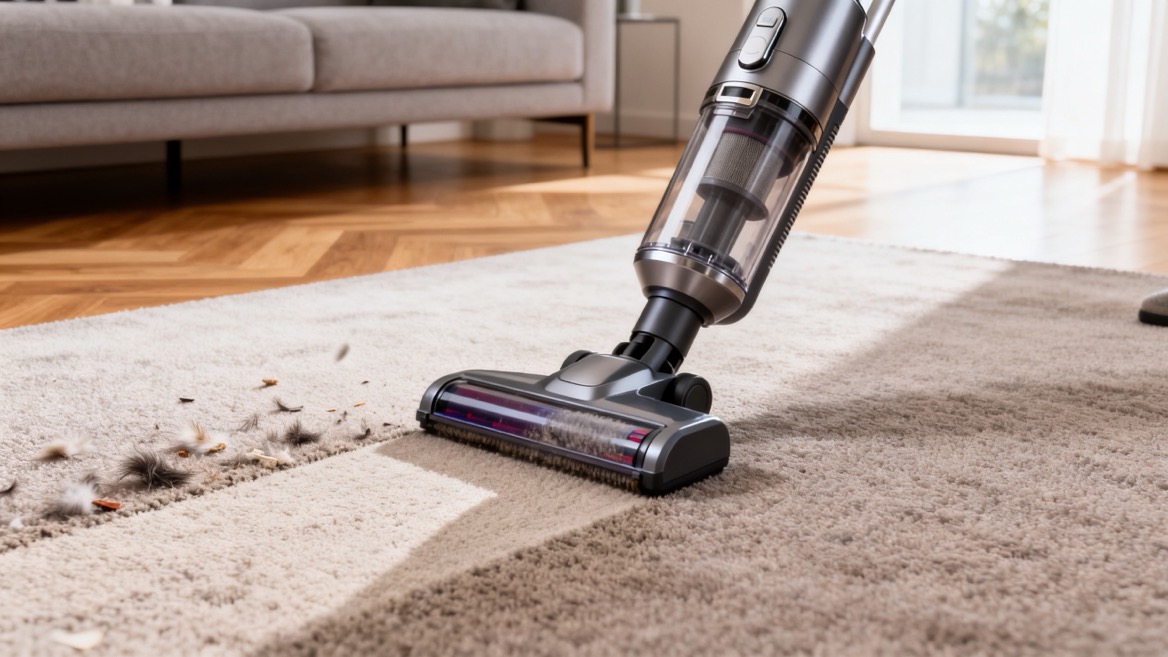
Three measurements help explain vacuum performance: sealed suction, airflow, and usable suction. They describe different operating conditions, so they should not be treated as interchangeable specifications.
Sealed suction measures the pressure difference a vacuum generates under a closed or highly restricted test condition. Results are commonly expressed in inches of water lift or kilopascals.
This measurement helps characterize pressure capability, particularly relevant to restrictive tools and cleaning tasks. However, it does not directly measure how much dirt a vacuum removes from carpet.
A strong sealed-suction result is useful evidence, not a complete cleaning-performance verdict.
Airflow describes the volume of air moving through a vacuum, commonly measured in cubic feet per minute, or CFM.
Moving air transports loosened debris through the nozzle and into the collection system. Brush agitation, nozzle geometry, filters, and restrictions all influence how effectively that airflow supports cleaning.
Measurement location matters. A floorhead reading should not be directly compared with a hose reading obtained under different conditions.
Usable suction, sometimes called unsealed suction, evaluates pressure while air can enter through the floorhead.
It helps reveal how motor capability interacts with the nozzle's openings and seals. Nevertheless, results remain dependent on the test setup.
The most useful principle is balance: pressure, airflow, brush action, and floorhead design must work together.
The comparison below summarizes selected measurements published by Vacuum Wars. These are results from its evaluation program, not universal manufacturer specifications.
| Upright vacuum | Sealed suction | Floorhead airflow | Usable suction |
|---|---|---|---|
| Dyson Ball Animal 3 | 114 inches of water lift | Not listed in the article | 2.94 kPa |
| Shark Stratos | 104 inches of water lift | Not listed in the article | 0.76 kPa |
| Shark PowerDetect | 98 inches of water lift | 76 CFM | 0.64 kPa |
| Sanitaire Tradition | Not listed in the article | 155 CFM | 2.13 kPa |
| Kenmore Elite 31150 | Not listed in the article | 83 CFM | / |
"Not listed" means the source article does not provide that measurement. It does not mean the product was untested or performed poorly.
The Dyson Ball Animal 3 leads the published sealed-suction and usable-suction results. Vacuum Wars also places it first in its combined power ranking.
That makes it a useful benchmark for brands developing a high-suction upright vacuum.
The conclusion needs a boundary: it leads this evaluated comparison, rather than proving superiority over every upright vacuum available worldwide.
The Sanitaire Tradition records the highest airflow figure in the article, at 155 CFM.
The source associates its airflow performance with a direct-air motor arrangement. This illustrates why different vacuum architectures can produce different strengths.
A high-airflow design and a high-pressure design should therefore be assessed against their intended cleaning tasks, not compared through one headline number.
Power measurements explain capability. Pickup tests reveal whether a machine uses that capability effectively.
A floorhead can perform well on embedded dirt yet struggle to admit larger particles. Strong nozzle sealing can also increase resistance on certain carpets.
For a powerful upright vacuum for carpet, examine:
- Embedded-dirt removal.
- Brushroll contact with the carpet.
- Suitability for different pile heights.
- Push resistance.
- Performance with a partially loaded collection system.
A practical demonstration should include the carpet types customers actually use. Testing only one surface can hide an important usability limitation.
Hard-floor performance depends partly on whether debris can enter the nozzle rather than being pushed forward.
Check fine dust and larger particles separately. Also assess whether the product offers an appropriate brushroll setting for the flooring concerned.
A strong suction specification cannot compensate for an opening that does not admit the debris being collected.
For a high-suction upright vacuum for pet hair, evaluate pickup and maintenance together.
Relevant questions include:
- Does hair wrap around the brushroll?
- Can users access the roller easily?
- How well do upholstery tools collect hair?
- Is emptying straightforward?
- Are replacement filters and brush components available?
A machine that cleans effectively but requires frequent, difficult maintenance may disappoint owners over time.
Customer feedback helps reveal difficulties that a power table cannot capture. It should complement testing, not replace it.
Customer reviews on Dyson's website include complaints that the Ball Animal 3 feels heavy or difficult to push on carpet.
A separate TechGearLab review of the Ball Animal 3 Extra also reports strong suction alongside maneuverability concerns. Because that review concerns the Extra variant, its observations should not be treated as identical results for every package or configuration.
Together, these sources highlight an important evaluation question: how comfortably can the intended customer use the machine?
Dyson describes three cleaner-head suction settings for different surfaces. This matters because an unsuitable setting can change the cleaning experience.
For product developers, controls should be understandable without guesswork. For retailers, clear demonstrations can help customers match settings to their flooring.
Individual complaints do not establish a failure rate. They identify issues worth investigating during sample testing.
A powerful vacuum should also manage the dust it collects. Filtration claims deserve their own evidence.
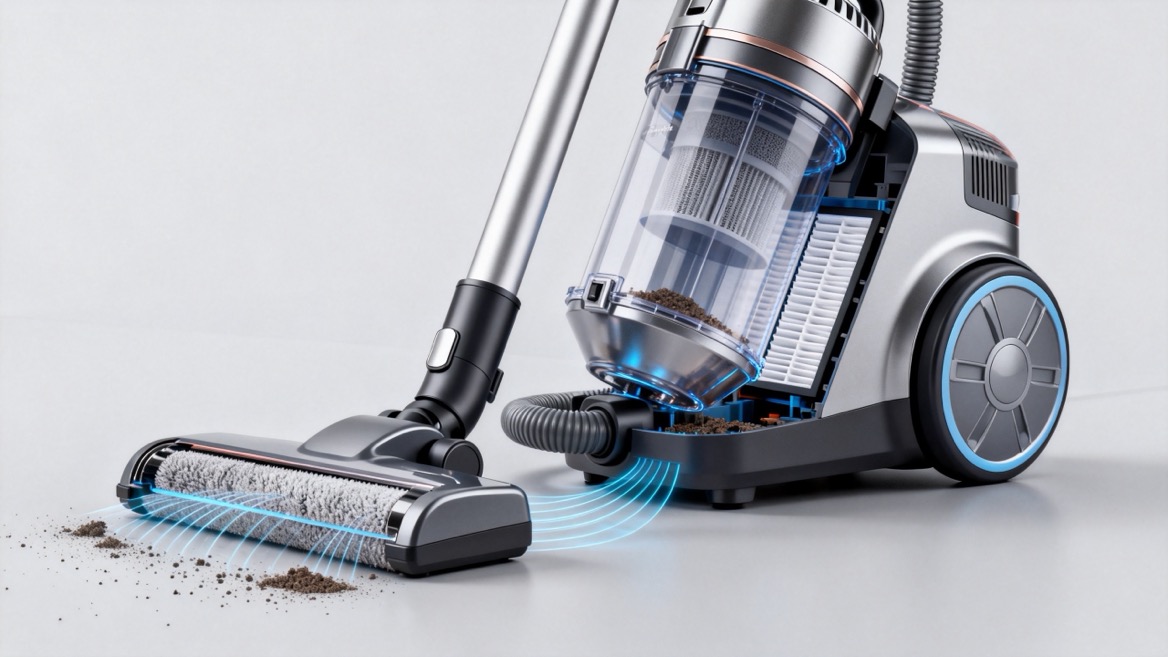
The U.S. Environmental Protection Agency describes a HEPA filter as capable of removing at least 99.97% of particles measuring 0.3 microns.
That filter-level description does not, by itself, demonstrate identical whole-vacuum performance.
Air can bypass a filter if the machine is not adequately sealed. Buyers should therefore distinguish filter-media evidence from assembled-product evidence.
Before approving filtration language, request:
1. The exact filter specification.
2. The applicable test method.
3. Whether testing covers the filter or complete appliance.
4. Filter replacement and maintenance instructions.
5. Evidence supporting any percentage-removal claim.
Avoid presenting a component specification as a verified result for the whole machine.
A structured sample process turns product claims into purchase decisions. The following framework is a recommended procurement approach, not a report of testing performed by Eyunhome.

Specify flooring, typical debris, pet ownership, storage constraints, expected cleaning duration, and target retail positioning.
For example, a carpet-focused household product and a lightweight apartment vacuum may require different compromises.
Use consistent surfaces, debris quantities, cleaning passes, settings, and collection-system conditions.
For cordless products, record battery condition and operating mode. For corded products, record the electrical conditions.
IEC 62885-2:2026 describes performance-measurement methods for household and similar-use dry vacuums, including mains-operated and cordless models within its scope.
Evaluate surface debris, embedded dirt, edge pickup, and above-floor cleaning where relevant.
Record suction and airflow separately from cleaning outcomes. This prevents a strong component measurement from concealing weak practical performance.
Include representative users in the evaluation.
Check push effort, carrying comfort, control clarity, emptying, filter access, brushroll cleaning, and blockage removal. Record observations consistently rather than relying on a brief first impression.
Before placing a production order, document the approved configuration, test conditions, acceptable results, labeling, packaging, and service arrangements.
Where appropriate, retain an approved reference sample.
The purpose is repeatability: production units should match an agreed specification, not simply resemble an attractive prototype.
These categories solve different practical problems. Neither should be selected through suction claims alone.
| Buying priority | Corded upright considerations | Cordless considerations |
|---|---|---|
| Longer cleaning sessions | No battery-runtime limit while connected to power | Confirm runtime in the intended operating mode |
| Movement between rooms | Assess cord reach and outlet access | Assess battery capacity and carrying comfort |
| Storage | Check footprint and accessory storage | Check charging and storage arrangements |
| Product servicing | Review cord, motor, filters, and brush components | Include battery and charger support |
Cordless runtime claims need context. A maximum-runtime figure may not describe operation with the powered floorhead and higher suction settings.
For brands offering multiple formats, the objective is not to make every product perform identically. It is to give each product a clearly defined role.
A specification sheet becomes more useful when it connects each measurement to a customer need.
Instead of requesting "maximum suction," define the expected carpet-cleaning result, acceptable push effort, debris-entry requirements, and maintenance access.
Instead of requesting "premium filtration," specify the claim that must be substantiated and the evidence required.
This approach creates a clearer conversation between purchasing, engineering, marketing, and after-sales teams. It also reduces the risk of promising benefits that the finished appliance cannot demonstrate.
Ningbo Eyunhome Electric Technology Co., Ltd. is a China-based vacuum cleaner manufacturer offering upright, handheld, corded, and cordless vacuum solutions.
According to the company information supplied for this article, Eyunhome provides OEM/ODM services, stable production, and after-sales support for global business customers.
Specific performance figures, certifications, order quantities, and delivery commitments should be confirmed for the proposed model and project. They should not be inferred from another brand's test results.
Contact Ningbo Eyunhome with your target market, preferred vacuum format, flooring requirements, filtration expectations, intended price positioning, and order plan.
Request a model-specific specification, sample proposal, customization options, and after-sales arrangement.
A successful project starts with a measurable product brief—not a suction number alone.
The Dyson Ball Animal 3 leads the combined power ranking in the Vacuum Wars comparison discussed here. That conclusion applies to the products evaluated, not every upright vacuum worldwide.
Not necessarily. Electrical input does not directly describe debris pickup. Compare cleaning results, suction, airflow, floorhead design, and usability rather than judging performance through wattage alone.
Both matter, but they describe different behavior. Pressure capability helps characterize restrictive conditions, while airflow transports debris. Practical pickup testing shows how effectively the complete system uses them.
Strong floorhead sealing can increase resistance on some carpets. Carpet construction, nozzle design, and settings also matter. Follow the appliance instructions and test the machine on representative flooring.
No. Filter efficiency and whole-machine sealing are separate issues. Request evidence identifying what was tested before applying a filter-level efficiency claim to the complete vacuum.
Request a model-specific specification, representative samples, documented performance conditions, agreed acceptance criteria, customization details, packaging requirements, and clear spare-parts and after-sales arrangements.
1. [Vacuum Wars — "What Is the Most Powerful Upright Vacuum Cleaner?"]
Updated October 8, 2026. Source for the selected suction, airflow, usable-suction measurements, and combined-ranking conclusion. The page contains a conflicting Shark Stratos score between its heading and body, so that composite score is not reproduced above. [vacuumwars]
2. [Dyson — Ball Animal 3 Vacuum Reviews]
Source for customer-reported weight and carpet-pushing concerns. Individual reviews are qualitative feedback, not representative failure-rate evidence. [dyson]
3. [Dyson — Ball Animal 3 Product Information]
Source for the manufacturer's description of three suction settings for different flooring conditions. [dyson]
4. [TechGearLab — Dyson Ball Animal 3 Extra Review]
Source for independent observations about strong suction, maneuverability, push resistance, and larger-debris pickup. This review concerns the Extra variant. [techgearlab]
5. [U.S. Environmental Protection Agency — What Is a HEPA Filter?]
Source for the HEPA filter efficiency description of at least 99.97% at 0.3 microns. [epa]
6. [U.S. Environmental Protection Agency — What to Look for in a HEPA Vacuum]
Source explaining why complete-machine design and prevention of filter bypass matter. The page addresses renovation-cleaning requirements; it is used here only to clarify the technical distinction between filter efficiency and whole-machine sealing. [epa]
7. [International Electrotechnical Commission — IEC 62885-2:2026]
Source for the scope of performance-measurement methods covering household and similar-use mains-operated and cordless dry vacuum cleaners. [webstore.iec]


