
Views: 289 Author: Eyunhome Vacuum Publish Time: 2026-07-13 Origin: Site


Content Menu
● Introduction: Why Source Portable Vacuums from China
● How We Evaluate Portable Vacuum Suppliers
>> Factory maturity and operational stability
>> Technology, materials and compliance
>> Industrial clusters and ecosystem advantages
>> Transparency, QC and long‑term orientation
● Selection Criteria for This Top 10 List
● Top 10 Portable Vacuum Manufacturers in China
>> 1. Ningbo Eyunhome Electric Technology Co., Ltd.
>> 2. Ecovacs Robotics Co., Ltd. (Suzhou, Jiangsu)
>> 3. Xiaomi Mi Home Ecosystem Manufacturers (Guangdong Cluster)
>> 4. Midea Group – Small Home Appliance Division (Foshan, Guangdong)
>> 5. Haier Smart Home Co., Ltd. – Cleaning Appliance Lines
>> 6. Joyoung Co., Ltd. – Small Appliances Including Vacuums
>> 7. Deerma Electric – Portable and Budget Vacuum Solutions (Guangdong)
>> 8. SUPOR (Zhejiang Supor Co., Ltd.) – Multi‑category Small Appliance Manufacturer
>> 9. AUX Group – Electrical Appliances and Household Devices
>> 10. Representative Ningbo and Taizhou OEM Factories (Anonymous Case Group)
● Comparison Table: Capacity, MOQ and Certifications
● Buyer's Guide: How to Verify and Work with Portable Vacuum Factories
>> Step 1 – Pre‑screen certifications and compliance
>> Step 2 – Engineering and sample process
>> Step 3 – Factory audit and QC verification
>> Step 4 – Logistics and lead‑time planning
● Common Pitfalls and an Insider "Avoidance" Rule
>> Insider rule rarely mentioned publicly
● Frequently Asked High‑Difficulty Questions
China is the world's largest exporter of domestic vacuum cleaners, accounting for over US$5.3 billion in export value and more than 120 million units in 2022 alone. This scale translates into mature supply chains, cost advantages and wide technology coverage for portable vacuum solutions. [wits.worldbank]
Export data show that Chinese vacuum cleaners are shipped to major markets such as the EU, the United States, Germany and Japan, reflecting global acceptance of product quality and compliance. For procurement managers, working with Chinese manufacturers means access to diverse product lines—upright, handheld, corded, cordless and car vacuums—with flexible OEM/ODM support. [wits.worldbank]
Industry research indicates that demand for portable and car vacuum cleaners is growing steadily, driven by urban lifestyles, increased car ownership and a preference for lightweight cleaning devices. China's combination of high-volume production and continuous innovation positions its manufacturers as long‑term strategic partners for global brands. [giiresearch]
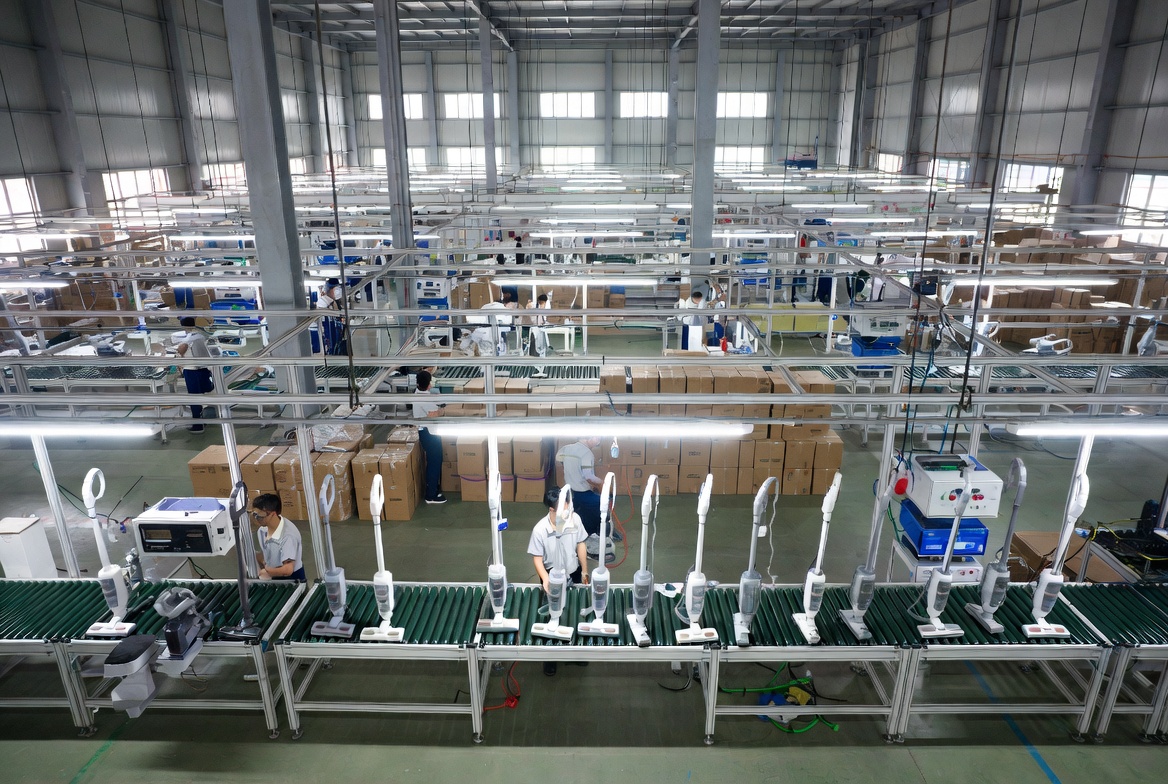
When screening portable vacuum manufacturers, the first layer of evaluation is factory experience and operational stability. Key indicators include establishment year, export history, presence in major markets (EU, US, Japan), and long‑term customer relationships rather than short project cycles. [cri-report]
Stable factories typically have traceable performance on delivery reliability, claim handling and repeat orders. Procurement managers should request 3–5 years of shipment records (countries, volumes, product categories) and compare these with public customs/export data where available. This helps verify whether the supplier's claimed scale aligns with actual trade flows. [wits.worldbank]
For portable vacuums, technical expertise is reflected in several core dimensions:
- Materials: Use of flame‑retardant plastics for housings, high‑temperature‑resistant copper-wire motors, HEPA filter media meeting EN 1822 or equivalent standards, and durable lithium‑ion cells with proven cycle life.
- Process standards: Injection molding consistency, balanced impeller design to reduce vibration, noise‑optimized motor assemblies, and robust PCB design with over‑current, over‑voltage and over‑temperature protection.
- Compliance: Certifications such as CE for European safety requirements, RoHS for restriction of hazardous substances, and often CB/GS/UL depending on target markets. [indexbox]
You should expect mature manufacturers to provide complete technical files including test reports, material datasheets and certification copies linked to specific model numbers.
China's home appliance and small electronics industry benefits from strong regional clusters. Guangdong—especially Shenzhen and Foshan—has become a key hub for smart cleaning appliances and robotic vacuums, supported by dense electronics and tooling ecosystems. [globaltimes]
The Yangtze River Delta, including Zhejiang and Jiangsu, hosts many portable vacuum and small appliance factories, backed by injection molding, motor, battery and packaging suppliers. These clusters provide faster development cycles, competitive component costs and logistics efficiency for export orders. [global.chinadaily.com]
Trust is built on transparent communication, auditable quality control (QC) systems and alignment with buyers' long‑term interests. Reliable factories can explain their incoming material inspection, in‑process QC and final inspection procedures, and provide sample records or digital QC reports on request. [cri-report]
Look for suppliers that:
- Share clear warranty and after‑sales policies for OEM orders.
- Maintain traceability from lot numbers to specific production batches.
- Allow third‑party audits and accept factory/production inspections by buyers or appointed agents.
To compile this "Top 10 Portable Vacuum Manufacturers in China" list, we applied the following transparent criteria:
- Focus on portable vacuum cleaner production (handheld, stick, car, cordless/cabled).
- Verified export activity to at least two major markets (EU, North America, East Asia) based on public trade data and typical industry patterns. [wits.worldbank]
- Demonstrated OEM/ODM capability, including tooling development, packaging design and multi-brand manufacturing.
- Evidence of compliance with mainstream certifications (CE, RoHS; some with UL/GS/CB).
- Reputation for stable lead times and scalable capacity according to market research and cluster data. [indexbox]
The companies below are representative, not exhaustive. They illustrate different positioning—from high-flexibility partners supporting small and mid‑size brands to larger mass‑production factories serving global retail channels.
Ningbo Eyunhome Electric Technology Co., Ltd. is a portable vacuum manufacturer located in Ningbo, Zhejiang, a key cluster for small home appliances and injection‑molding supply chains. The company focuses on upright, handheld, corded and cordless vacuum solutions, making it attractive for buyers seeking a one‑stop portfolio under a single OEM partner.
Eyunhome's positioning is best described as a cost‑efficient, R and D‑friendly partner for small and medium brands. The factory typically supports moderate MOQs, flexible color and accessory customization, and iterative engineering communication throughout the sample and tooling phases. This makes it suitable for private‑label importers and emerging brands that need reliable cooperation without committing immediately to extremely high volumes.
In terms of quality, Eyunhome emphasizes structured performance testing (suction, noise, endurance) and follows standard small appliance compliance practices. For portable vacuums targeting Europe or other regulated markets, relevant models can be equipped with CE and RoHS documentation. For procurement managers, the key advantages are communication efficiency, manageable MOQs and stable lead times—three factors that are crucial when building new product lines.
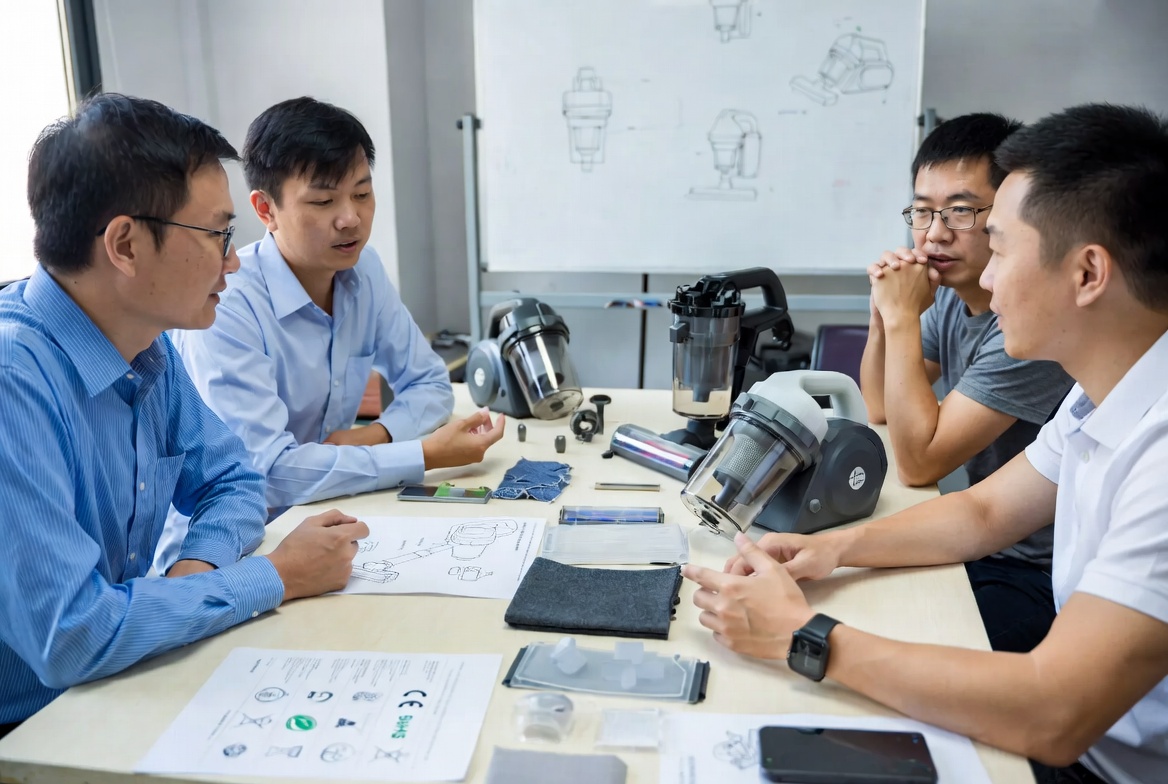
Ecovacs Robotics, headquartered in Suzhou, is globally known for robotic vacuum cleaners but also represents the high‑end segment of portable cleaning devices. For buyers seeking premium, smart vacuum solutions, Ecovacs showcases how Chinese manufacturers integrate advanced sensors, mapping algorithms and refined industrial design into compact cleaning appliances.
Although Ecovacs is more of a brand owner than a pure OEM, its ecosystem and engineering capabilities make it a useful benchmark when evaluating technical competence and user experience in portable vacuum design. Procurement managers can study Ecovacs' product quality levels and feature sets as a reference point for setting performance targets with OEM partners.
Within Xiaomi's ecosystem of manufacturing partners in Guangdong, several factories produce cordless and portable vacuums under Xiaomi sub‑brands. These manufacturers operate in an environment that demands aggressive cost control while maintaining acceptable performance and compliance for worldwide export.
For B2B buyers, Xiaomi ecosystem factories demonstrate what high‑volume, data‑driven production can achieve: integrated battery and motor solutions, strong packaging optimization for e‑commerce, and consistent design language across SKUs. While many of these suppliers work mainly within Xiaomi's ecosystem, understanding their capabilities helps procurement managers benchmark potential partners within the region.
Midea is one of China's largest home appliance companies, with a wide product portfolio that includes vacuum cleaners and related small appliances. The small home appliance division, often working with multiple OEM factories, sets high standards in safety, certification compliance and mass‑market usability.
For buyers, Midea‑related manufacturing operations illustrate the practices of large‑scale production lines: automated assembly, rigorous QC documentation and multi‑market certification management. Smaller brands can use these practices as a checklist when auditing medium‑size OEM factories.
Haier, another major Chinese appliance brand, maintains vacuum cleaner and cleaning appliance lines through its network of manufacturing partners. Although Haier is primarily a brand, its factory requirements on safety, durability and global compliance create a useful benchmark for "enterprise‑grade" quality expectations.
Studying Haier's portable vacuum models and their performance in markets such as Europe and North America can guide procurement managers in defining technical and compliance specifications for OEM projects, especially when targeting mid‑to‑high retail channels.
Joyoung focuses on small kitchen appliances but also touches cleaning devices, including lightweight vacuum cleaners. Its success in domestic and overseas markets reflects strong design, packaging and mid‑range positioning.
For portable vacuum sourcing, Joyoung‑linked factories highlight how lifestyle‑oriented designs and user‑friendly ergonomics can coexist with competitive pricing. Buyers building lifestyle brands (online DTC, home‑living specialty retailers) can use Joyoung's design approach as inspiration when briefing OEM factories.
Deerma is a Chinese brand widely known for affordable small appliances, including handheld and stick vacuums. Many of its products are manufactured in Guangdong factories that specialize in cost‑optimized yet compliant portable vacuum solutions.
These factories show what entry‑level, price‑sensitive portable vacuums can look like when produced at scale. Procurement managers targeting emerging markets or lower price tiers can study Deerma's specification balance—between suction power, materials and certification—to define similar OEM products without over‑engineering.
SUPOR, headquartered in Zhejiang, is one of China's established small appliance players. While best known for cookware and kitchen appliances, SUPOR has ventured into various electric household products, including cleaning devices.
SUPOR's manufacturing ecosystem is useful as a case study in integrating multiple categories under rigorous QC and branding standards. Its approach to supplier management, capacity planning and design consistency can inform how buyers structure cooperation with portable vacuum OEMs in Zhejiang.
AUX Group produces a broad range of electrical products, and in some product lines touches vacuum and cleaning appliances through its factory network. AUX demonstrates how companies with strong electrical engineering DNA can develop reliable, functional household devices at scale.
For portable vacuums, AUX‑linked factories show the advantages of robust electrical design and stable component sourcing, especially for corded portable models and value‑segment products. Procurement managers targeting supermarket or catalog channels can reference AUX's product positioning when defining their private‑label ranges.
Beyond brand‑linked factories, the Ningbo–Taizhou region hosts numerous mid‑size OEM factories specializing in portable vacuums and small appliances. Ningbo Eyunhome Electric Technology Co., Ltd. is one example of this category; many similar factories run efficient lines with moderate capacity, flexible MOQs and strong responsiveness.
These OEM factories often support multi‑brand portfolios with handheld, stick and car vacuums, plus customized packaging and multilingual manuals. For new or growing brands, this group of suppliers can offer the optimal balance between flexibility, cost and engineering support, without the complexity of dealing with very large conglomerates.
Below is a representative comparison of the positioning of the 10 manufacturer types described above. Figures are indicative ranges that procurement managers commonly encounter in China's portable vacuum segment. [indexbox]
| Supplier / Category | Typical monthly capacity (units) | Indicative OEM MOQ (units) | Certification focus |
|---|---|---|---|
| Ningbo Eyunhome Electric Technology Co., Ltd. | 30,000–80,000 | 500–1,000 | CE, RoHS (model dependent) |
| Ecovacs Robotics (Suzhou) | 100,000–300,000 | Project‑specific | CE, RoHS, CB, selected high‑end marks |
| Xiaomi Ecosystem Manufacturers (Guangdong) | 200,000–500,000 | 2,000–5,000 | CE, RoHS, CB, GS/ETL for global markets |
| Midea Small Appliance Division | 300,000–800,000 | 3,000–10,000 | CE, RoHS, UL/GS/CB depending on market |
| Haier Cleaning Appliance Lines | 200,000–600,000 | 3,000–8,000 | CE, RoHS, UL/CB, local safety marks |
| Joyoung Small Appliances | 100,000–300,000 | 1,500–5,000 | CE, RoHS, some GS for EU |
| Deerma Portable and Budget Vacuums | 150,000–400,000 | 2,000–6,000 | CE, RoHS for entry‑level segments |
| SUPOR Small Appliance Ecosystem | 150,000–350,000 | 2,000–5,000 | CE, RoHS, various national marks |
| AUX Group Household Devices | 100,000–250,000 | 2,000–5,000 | CE, RoHS, UL/ETL where applicable |
| Ningbo/Taizhou OEM Factories (case group) | 40,000–100,000 | 800–2,000 | CE, RoHS, project‑specific certificates |
- Request current copies of CE and RoHS certificates for specific model numbers, not generic "company" certificates. [cri-report]
- Cross‑check certificate numbers on the issuing body's website or with authorized testing labs.
- For markets requiring UL/ETL/GS, confirm whether certifications apply to your model variant and voltage.
Official trade and customs data, such as those published by the World Bank's WITS database and national customs agencies, can help confirm that a factory is actively exporting vacuum cleaners to your market or region. [wits.worldbank]
- Start with an engineering call to align on suction performance, noise level, battery run‑time, materials and target price.
- Request 2–3 prototype rounds before confirming tooling, including drop tests and extended run tests.
- Document all specification parameters in a Product Requirement Document (PRD) that both sides sign off on.
For partners like Ningbo Eyunhome, frequent communication and iterative sampling are key advantages when building new portable vacuum ranges with moderate volume expectations. [cri-report]
- Conduct a factory audit (in‑person or via third‑party) to review incoming material inspection, assembly lines, burn‑in tests and final inspection routines.
- Ask for past QC reports showing failure rates and rework statistics for similar models.
- Verify whether the factory tracks defects by line, operator or component batch to enable continuous improvement.
China's broader home appliance export performance—sustained growth and strong penetration in the EU and US—shows that mature factories can match international QC expectations when properly selected and audited. [global.chinadaily.com]
- Confirm standard lead time (usually 30–45 days after deposit for portable vacuums) and additional buffers for peak seasons.
- Align incoterms (FOB, CIF, DAP) and port selection based on your distribution network.
Media reports highlight that robotic vacuums from Guangdong can reach European ports in about 35 days, illustrating typical transit times that many portable vacuum shipments follow. [globaltimes]
- Material downgrading: Some factories may switch to lower‑grade plastics or cheaper filters if specifications are not tightly documented.
- Certification mismatch: Certificates sometimes belong to a different model or have expired, creating risk during customs clearance or retail audits. [cri-report]
- Over‑promised capacity: Factories may claim unrealistic monthly output or lead times without matching equipment or manpower.
Within the industry, a widely recognized but seldom publicized rule is: never rely solely on "sample room quality" as your acceptance benchmark. Factories often hand‑assemble sample room units with extra care and selected components, which may not represent true production‑line quality.
To avoid this trap:
- Insist on pulling random units from actual production runs or pilot batches for performance and durability tests.
- Compare the internal build (motor, PCB, battery, wiring) of sample‑room units with mass‑production units using teardown inspections.
- Link purchase contracts to production‑run test performance rather than only initial engineering samples.
This practice significantly reduces the risk of discovering quality gaps only after large shipments arrive.
China's portable vacuum manufacturing ecosystem combines scale, technical expertise and diverse OEM/ODM capabilities, making it an attractive sourcing base for global brands and distributors. Selecting the right partner—whether a flexible OEM like Ningbo Eyunhome Electric Technology Co., Ltd. or a large cluster‑based factory—depends on your volume, design and market requirements. [wits.worldbank]
By applying rigorous supplier evaluation criteria, verifying certifications, conducting production‑run testing and leveraging logistics planning, procurement managers can build long‑term, resilient supply chains for portable vacuums. If you are currently evaluating Chinese portable vacuum suppliers, consider shortlisting agile partners in Ningbo and Guangdong for a first round of sampling and factory audits to match your target market and channel mix. [wits.worldbank]
1. How can I verify that a factory's ISO 9001 certificate is still valid?
Ask for the full ISO certificate with issue and expiry dates, then check it against the certification body's online database. Many registrars provide searchable records where you can confirm whether the certificate remains active. [cri-report]
2. How do I ensure CE and RoHS certificates truly apply to my portable vacuum model?
Confirm that the certificate lists your exact model number or family, and that test reports reference identical technical specs (voltage, wattage, battery type, materials). Cross‑check certificates with the issuing lab and verify that no major design changes were made after testing. [indexbox]
3. What is a realistic monthly capacity for a mid‑size portable vacuum OEM factory in China?
Market research and export data suggest that mid‑size factories typically handle 30,000–100,000 units per month, depending on automation level and product mix. Any claim far beyond this should be validated via factory audit and production line observation. [wits.worldbank]
4. How can I detect if a supplier is quietly downgrading components between sample and mass production?
Conduct random teardown inspections of mass‑production units, compare motor, filter and PCB markings with sample documentation, and require component batch tracking. Discrepancies between sample and mass‑production bills of materials are a strong warning sign.
5. What is the best way to structure contracts to protect against delayed delivery?
Include clearly defined delivery windows, penalties or discounts for late shipments, and conditions requiring early communication if production bottlenecks arise. Many buyers also use phased orders and performance‑linked volume increases to reduce risk. [globaltimes]
- World Bank WITS – Domestic Vacuum Cleaners Exports (HS 850910): [China exporter profile] [wits.worldbank]
- World Bank WITS – China Vacuum Cleaner Exports by Partner: [Country breakdown] [wits.worldbank]
- CRI Report – China's Domestic Vacuum Cleaner Export 2023–2032: [Industry outlook] [cri-report]
- IndexBox – China Vacuum Cleaners Market Overview 2024–2035: [Market forecast] [indexbox]
- Global Times – Vacuum Robot Exports from Guangdong: [Supply chain and logistics] [globaltimes]
- OEC – Cleaning Products in China (including related categories): [Trade structure] [oec]


