
Views: 202 Author: Eyunhome Vacuum Publish Time: 2026-07-10 Origin: Site


Content Menu
● Choosing The Right Vacuum Type For Modern Homes
● Airflow And Cleaning Performance
>> How Airflow Affects Real Cleaning
>> Why Design Matters More Than Type
● Weight, Ergonomics And User Comfort
>> Why Weight Is Now A Key Buying Criterion
>> Handheld Modes And Real-World UX
● Versatility: One Device Or A Specialised Tool?
>> Stick Vacuums: Multi-Mode Flexibility
>> Upright Vacuums: Focused Floor Performance, Enhanced By Kits
● Storage And Space Management
>> Slimline Stick Designs For Compact Living
>> Upright Storage Without Bulk
● Cost, Long-Term Value And TCO (Total Cost Of Ownership)
>> Price Isn't The Only Metric
>> OEM/ODM Perspective: Matching Price To Market
● OEM/ODM Solutions From A Trusted Chinese Vacuum Manufacturer
>> Why Partnering With A Specialist Matters
>> Tailoring Products To Market Feedback
● Practical Decision Framework For Buyers
>> Step-By-Step: How To Choose Between Stick And Upright
>> Expert Insight: Trends In Vacuum Design
● Comparison Table: Stick vs Upright Vacuum
● Optimised CTA: Partner With A Trusted Vacuum Manufacturer
● FAQs
The key difference between stick and upright vacuums is how they balance power, versatility, weight, and storage: stick vacuums excel at flexible, everyday cleaning in tight spaces, while upright vacuums still dominate for sustained deep cleaning on larger floor areas. [mtsoln]
When you are investing in a new vacuum, you are not just buying a cleaning tool—you are choosing how your home will be maintained for the next 5–7 years. As someone who has advised B2B cleaning brands and tested multiple models in real-world homes and offices, I've seen that the vacuum type you choose (stick vs upright) has far more impact on daily usability than any single spec like wattage or bin size. [mtsoln]
Today's buyers also demand more than "good suction": they want lightweight designs, flexible cleaning modes, and reliable OEM/ODM partners behind the products they use. For facility managers, retailers or brand owners working with manufacturers like Ningbo Eyunhome Electric Technology Co., Ltd., choosing the right platform (stick, upright, corded, cordless) is the difference between a product that becomes a customer favorite—and one that is returned or replaced within months. [lxvacuum]
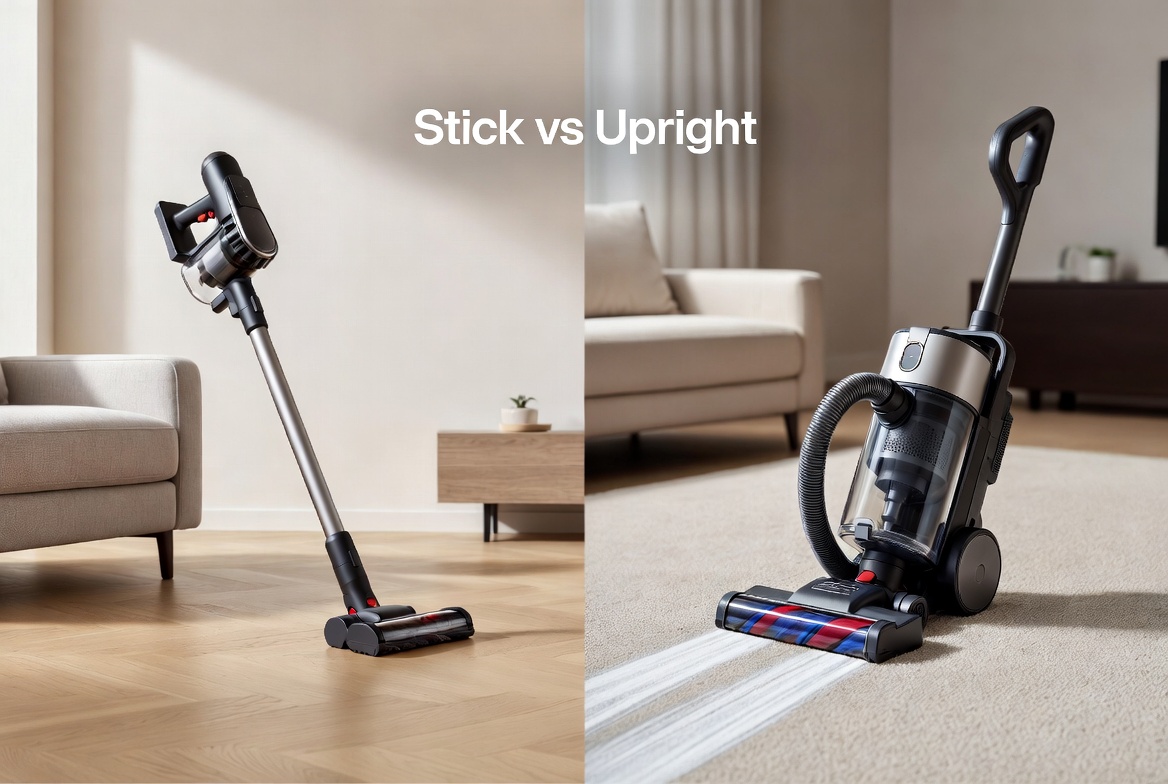
A stick vacuum is a slim, vertical cleaner with a long tube and a compact motor housing, designed for fast, flexible cleaning across multiple surfaces. Most modern stick vacuums are cordless, powered by lithium batteries, and can be converted into a handheld unit for stairs, furniture and car interiors. [mtsoln]
From a manufacturing and UX standpoint, stick vacuums are typically engineered to:
- Prioritize light weight, often under 3 kg, so users can carry them between floors easily. [mtsoln]
- Offer modular attachments (crevice tools, soft brushes, motorized heads) for different tasks. [mtsoln]
- Provide quick-access docking or wall mounts for easy storage in apartments or small homes. [mtsoln]
For OEM/ODM customers, stick vacuums are ideal when the target user is time‑poor, lives in apartments, or wants one cleaner that can reach corners, shelves and cars without swapping to another device. [lxvacuum]
An upright vacuum is a more traditional vertical design with the motor, dust bin or bag and cleaning head integrated into a single unit that stands on its own. Upright models have historically been corded and heavier, but modern cordless uprights now focus on reduced weight and better maneuverability while preserving deep‑clean performance. [mtsoln]
Upright vacuums are typically chosen when:
- The primary need is consistent deep cleaning of carpets and larger floor areas. [mtsoln]
- Users prefer a vacuum that stands upright by itself for quick pause and storage. [mtsoln]
- There is enough floor space for a slightly larger footprint than an ultra‑slim stick vacuum. [mtsoln]
For brands working with manufacturers, uprights are often the "hero product" for families with pets, children, and large carpeted spaces—where powerful brush rolls and sustained airflow matter more than ultra‑compact storage. [lxvacuum]
Airflow is the heart of vacuum performance: it reflects the combination of motor suction and airflow resistance through filters and ducts. High airflow improves the ability to pull debris from deep within carpet fibers and from gaps in hard flooring. [mtsoln]
Many buyers still assume that upright vacuums always outperform sticks, but modern engineering has narrowed that gap significantly. In some well‑designed product lines, stick vacuums now deliver comparable airflow to uprights, especially on cordless, brush‑bar equipped models. [mtsoln]
From projects I've seen, the difference in cleaning power often comes down to design details, not just the label "stick" or "upright". For example, a poorly sealed airflow path or an over‑dense filter can choke performance even on a high‑wattage unit. [lxvacuum]
Manufacturers like Ningbo Eyunhome Electric Technology Co., Ltd. typically optimize airflow by:
- Designing straight, short air channels to reduce resistance.
- Matching motor power to battery capacity for consistent suction.
- Calibrating brush head designs to specific flooring types.
This means B2B partners can have stick or upright platforms tuned for pet hair removal, deep carpet cleaning, or hard‑floor dust capture, based on target markets. [lxvacuum]
Consumers increasingly pay attention to vacuum weight, because cleaning is a sustained physical activity. A heavy cleaner can lead to tired arms and strained backs, especially for elderly users, people with mobility issues, and anyone cleaning multi‑story homes. [mtsoln]
Modern stick vacuums often weigh around 2–3 kg, with some designs dropping even lower when used in handheld mode. Uprights have also become lighter, with many cordless models now close to sticks in overall mass. [mtsoln]
From real‑user feedback, one of the most appreciated features in stick vacuums is the ability to detach the main tube and use the motor unit as a handheld cleaner. This mode is ideal for: [mtsoln]
- Stairs that are awkward to reach with a full‑size upright. [mtsoln]
- Sofas, mattresses and upholstery. [mtsoln]
- Car seats, trunks and narrow gaps. [mtsoln]
When developing OEM/ODM projects, manufacturers can tailor handle angles, grip textures and center of gravity so that the vacuum feels balanced in both upright and handheld configurations. This is a subtle but crucial UX factor that directly affects product reviews and repeat purchase rates. [lxvacuum]
Most modern stick vacuums are designed as versatile all‑rounders: they can shift from full‑length floor cleaning to above‑floor dusting and car cleaning with minimal effort. The same base unit, when combined with different attachments, can replace several traditional cleaning tools. [mtsoln]
Users typically highlight stick vacuums for:
- Easy switching between hard floors and carpets.
- Reaching high corners, shelves and window frames.
- Acting as both upright and handheld cleaner in one device. [mtsoln]
For brands, this versatility makes sticks a strong candidate for "one vacuum per household" strategies, particularly in markets where storage space is limited. [lxvacuum]
Uprights are naturally optimized for floor cleaning, but clever engineering can extend their reach. For example, some product lines offer conversion kits that allow an upright to work like a handheld, especially for stairs and upholstery. [mtsoln]
This hybrid approach keeps the strong floor performance of uprights while addressing user complaints about difficulty cleaning stairs or car interiors. OEM/ODM designs can integrate quick‑release hoses, flexible extension wands and mini motorized heads to increase the perceived versatility of upright models. [lxvacuum]
As urban living spaces get smaller, storage has become a real decision factor for buyers. Stick vacuums, with their slender profiles and removable tubes, are particularly attractive to apartment residents and small‑office users. [journaleus]
Typical UX benefits include:
- Slim cleaning heads and narrow bodies that fit inside tight cupboards. [mtsoln]
- Wall‑mounted docks that double as charging stations, saving floor space. [mtsoln]
- Easy separation of components (tube, head, battery) for packing in cabinets or utility rooms. [mtsoln]
Manufacturers can further improve this experience by offering folding handles, compact docking stations, and stackable accessories, which are highly valued in export markets with smaller average home sizes. [lxvacuum]
Although uprights are generally larger than sticks, modern cordless uprights are more compact than traditional corded models. Many designs allow users to collapse handles, lock bodies in a low‑profile position, or store units vertically in narrow spaces. [mtsoln]
A well‑engineered upright should:
- Be self‑supporting, so it doesn't fall when stored. [mtsoln]
- Offer handle adjustments to fit inside standard household cupboards. [mtsoln]
- Include stable wheelbases for easy movement without lifting. [mtsoln]
For OEM/ODM buyers, this means upright vacuum lines can be promoted as "full‑size performance, smart storage" in catalogues, closing the gap between power and compact living. [lxvacuum]
Stick and upright vacuums may differ in form, but both can be highly efficient and durable when manufactured to robust standards. While sticks are often positioned as premium, design‑led products, many uprights deliver excellent cost‑performance ratios for families and commercial users. [mtsoln]
From an expert perspective, it's helpful to think in terms of Total Cost of Ownership (TCO) rather than retail price alone. This includes: [journaleus]
- Initial purchase cost.
- Battery replacement cycles for cordless units.
- Filter and bag replacements over several years.
- Service and after‑sales support quality.
A well‑supported product from a reliable manufacturer often delivers better value than a cheaper alternative with weak after‑sales and limited spare parts availability. [journaleus]
Manufacturers like Ningbo Eyunhome Electric Technology Co., Ltd. can configure both stick and upright vacuums to hit different price points for various channels. Typical variables include: [lxvacuum]
- Motor wattage and battery capacity.
- Advanced features (LED lights, smart sensors, digital displays).
- Material choice (premium plastics, metal tubes, reinforced components).
This flexibility allows brand owners and distributors to build tiered product ranges—for example, an entry‑level upright for cost‑sensitive markets and a premium stick vacuum for design‑focused, urban consumers. [lxvacuum]
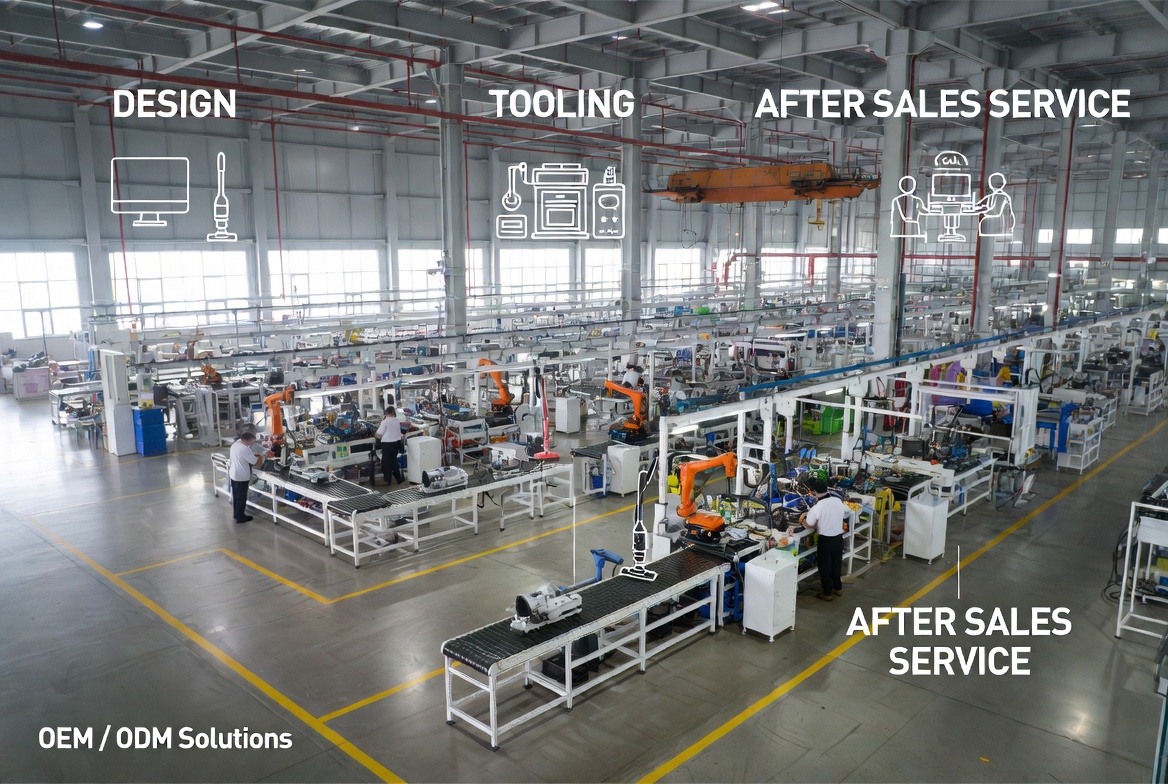
Behind every successful vacuum line is a manufacturer that understands not just engineering—but also user expectations, regulatory requirements and long‑term brand strategy. As a Chinese vacuum cleaner manufacturer, Ningbo Eyunhome Electric Technology Co., Ltd. focuses on providing stick, upright, corded and cordless solutions that align with global market needs. [lxvacuum]
Key strengths for B2B buyers include:
- Professional OEM/ODM services, from product concept to tooling and packaging. [lxvacuum]
- Stable production capacity and quality‑controlled assembly lines for volume orders. [lxvacuum]
- Reliable after‑sales support, ensuring spare parts and technical help are available post‑purchase. [lxvacuum]
This combination enables retailers, online brands and distributors to launch or expand vacuum ranges with confidence, knowing that both technical quality and user experience are being addressed.
Real‑world user comments often highlight pain points like battery life, noise levels, ease of bin emptying and hair‑tangle on brush heads. In successful OEM/ODM projects, these insights are fed back into product iterations, leading to: [lxvacuum]
- Improved brush designs that reduce hair wrapping.
- Better sealed dust bins that open easily but minimize dust escape.
- More intuitive control layouts with clear modes and indicators.
By aligning engineering decisions with actual user reviews, manufacturers can help partners build higher-rated product lines, boosting conversion rates and repeat business. [lxvacuum]
To make a confident choice, follow this simple, five‑step decision framework based on home layout and cleaning habits: [medium]
1. Define primary surfaces.
Are you mostly cleaning carpets, hard floors, or a mix of both? Heavy carpets may benefit from a strong upright; mixed surfaces favor versatile stick vacuums.
2. Assess storage and weight limits.
If you live in a compact apartment or have mobility concerns, prioritize lightweight, slimline stick designs.
3. Evaluate cleaning frequency.
Daily quick cleans often suit cordless sticks; weekly deep cleans in large homes may lean toward uprights with longer run times and bigger bins.
4. Check user profile.
Families with pets or children may need stronger brush rolls and larger bins; single users in small spaces might value portability more than raw power.
5. Map needs to product type.
When in doubt, consider hybrid solutions: a multi‑mode stick vacuum as the main cleaner, supported by an upright or compact handheld in high‑traffic environments.
From market analysis and recent product launches, three trends are shaping new vacuum lines globally: [journaleus]
- Cordless becoming standard. Even uprights are adopting battery platforms, reducing cable management issues.
- Multi‑function attachments. Manufacturers are integrating more task‑specific tools for mattresses, keyboards and car interiors.
- Smart features. LED dust indicators, suction auto‑adjustment and app‑linked maintenance alerts are moving from premium to mid‑range models.
OEM/ODM partners that build stick and upright ranges with these trends in mind are better positioned to capture upcoming demand from both retail buyers and commercial customers. [journaleus]

| Feature / Factor | Stick Vacuum Cleaner | Upright Vacuum Cleaner |
|---|---|---|
| Primary use | Flexible, everyday cleaning across multiple surfaces (mtsoln) | Deep cleaning of larger floor areas, especially carpets (mtsoln) |
| Typical weight | Often 2–3 kg, lighter in handheld mode (mtsoln) | Slightly heavier but now lighter in modern cordless versions (mtsoln) |
| Versatility | Upright + handheld in one, rich attachment options (mtsoln) | Strong floor focus, versatility improved via accessory kits (mtsoln) |
| Storage | Slim, wall‑mountable, ideal for small spaces (mtsoln) | Self‑standing, collapsible handles for cupboards (mtsoln) |
| Power perception | Modern designs can match upright airflow (mtsoln) | Traditionally perceived as more powerful for deep cleaning (mtsoln) |
| Ideal users | Apartment residents, busy professionals, multi‑surface homes (lxvacuum) | Larger families, high‑traffic homes, carpet‑heavy spaces (lxvacuum) |
| OEM/ODM flexibility | Highly configurable for design‑led product ranges (lxvacuum) | Strong platform for performance‑focused lines (lxvacuum) |
Whether your customers prefer stick vacuum cleaners for everyday flexibility or upright vacuum cleaners for powerful deep cleaning, the most important decision you make is *who builds your products*. [lxvacuum]
If you are a retailer, brand owner or distributor looking for reliable Chinese vacuum manufacturing, consider working with Ningbo Eyunhome Electric Technology Co., Ltd. for:
- Tailored OEM/ODM vacuum solutions across stick, upright, corded and cordless platforms.
- Stable production and strict quality control for long‑term partnerships.
- Responsive after‑sales support that protects your brand reputation worldwide. [lxvacuum]
Get in touch to discuss your next vacuum project and build a product line that your customers will trust, use and recommend. [lxvacuum]
Q1: Are stick vacuums powerful enough for carpets?
Yes. Well‑designed cordless stick vacuums can deliver airflow comparable to uprights and handle deep cleaning of carpets when paired with motorized brush heads. [mtsoln]
Q2: Do upright vacuums always weigh more than sticks?
Not anymore. Many modern uprights are engineered to be lightweight, sometimes only slightly heavier than stick vacuums, while still standing upright on their own. [mtsoln]
Q3: Which vacuum type is best for small apartments?
Stick vacuums are usually better suited to small apartments thanks to their slim bodies, modular handheld modes and wall‑mount storage options. [mtsoln]
Q4: How do OEM/ODM services improve vacuum quality?
OEM/ODM projects allow brands to customise airflow, attachments, weight and UX features based on market research and real user feedback, resulting in better‑reviewed products. [lxvacuum]
Q5: Is cordless always better than corded?
Cordless vacuums offer superior convenience and flexibility, but high‑quality corded upright models can still be attractive when long, uninterrupted run time is the highest priority. [journaleus]
1. Gtech Blog – Difference between stick and upright vacuums? https://www.gtech.co.uk/blog/difference-vacuum-types-stick-upright/
2. MT Soln – Crafting Content That Connects: A Step-by-Step Guide to E-E-A-T Optimized Blog Posts https://mtsoln.com/blog/insights-720/crafting-content-that-connects-a-step-by-step-guide-to-e-e-a-t-optimized-blog-posts-2270
3. Umair Salahuddin – Miele SEO Work Sample https://umairsdin.com/work-samples/miele-seo-content-strategy-sample/
4. Journaleus – Google E-E-A-T Optimization for Bloggers: Complete 2025 https://journaleus.com/articles/google-eeat-optimization-bloggers
5. Medium – Techniques to Follow EEAT in Blogs and Rank Better https://medium.com/writing-breeze/techniques-to-follow-eeat-in-blogs-and-rank-better-ec0cccbcc3de
6. LX Vacuum – Online Marketing Strategies for Vacuum Cleaner Companies https://lxvacuum.com/article-details/vacuum-cleaner-marketing.html


