
Views: 281 Author: Eyunhome Vacuum Publish Time: 2026-07-08 Origin: Site


Content Menu
● What Is a Vacuum Cleaner and Why Its Evolution Matters
● Early Manual Carpet Sweepers: The First Step Toward Suction Cleaning
● American Power: Hand‑Cranked and Early Mechanical Vacuums
● Electricity Changes Everything: From Lighting to Vacuum Motors
● The Pneumatic Carpet Renovator: Early Motorized Suction
● The British Boom: From Giant Machines to Practical Home Cleaners
● High‑Voltage Innovation: Spangler, Hoover, and the Modern Upright
● Key Milestones in 20th‑Century Vacuum Development
>> Upright and Canister Designs
>> Disposable Bags and Improved Filtration
>> Portable and Handheld Devices
● The Bagless Revolution and Cyclone Technology
● Robotic and Smart Vacuums: Automation Enters the Home
● Modern Vacuum Categories: Upright, Stick, Handheld, Corded and Cordless
● Latest Vacuum Trends: What 2026 Buyers Expect
● How Chinese OEM/ODM Manufacturers Support Global Vacuum Brands
● Practical Tips for Choosing the Right Vacuum Type for Your Market
● Looking Ahead: The Future of Vacuum Cleaners
● Work With a Reliable Chinese Vacuum OEM/ODM Partner
● FAQs
As a vacuum industry professional in China, I have watched the humble vacuum cleaner transform from noisy, awkward machines into precise, cordless cleaning systems that power modern homes and businesses worldwide. Understanding this journey is not just a history lesson – it is the foundation for choosing the right upright, handheld, corded, or cordless vacuum OEM/ODM partner for your brand today. [en.wikipedia]
A vacuum cleaner is a device that uses suction to remove dust and debris from floors, upholstery, and other surfaces, typically powered by electricity and driven by a fan that creates negative pressure. Over more than 150 years, improvements in suction technology, filtration, and motor efficiency have turned vacuums into high‑performance cleaning systems that directly affect hygiene, productivity, and user comfort at home and in commercial settings. [edisonvacuums]
For brands sourcing from OEM/ODM manufacturers, this evolution means you can now specify highly customized features—such as HEPA filtration, brushless DC motors, or smart battery management—to meet the expectations of end users in different markets. [vacuumdoctor.co]
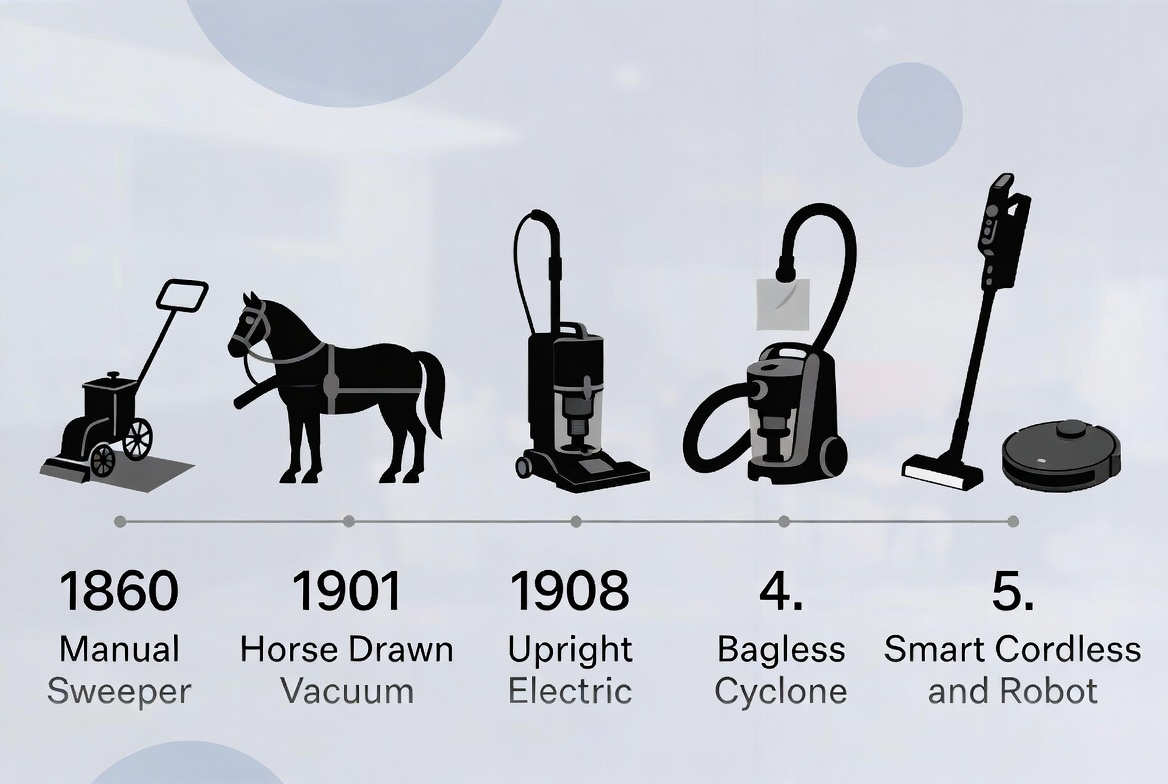
The story begins in the mid‑19th century, when households relied mainly on brooms and rug beaters to clean floors and textiles. These tools removed visible debris but left fine dust, which is why inventors started to explore mechanical ways to draw air and dirt through a device. [jonessewandvac]
In 1860, Daniel Hess of Iowa patented a "carpet sweeper" that used rotating brushes and bellows to pull dust into a filter, making it one of the earliest recorded suction‑based cleaners. While innovative, it remained manually operated and never went into mass production due to its complexity and effort required. [ca.dreametech]
During the 1860s and 1870s, American inventors led many of the first vacuum concepts. Ives W. McGaffey's 1869 "Whirlwind" used a hand‑cranked fan to generate airflow, representing an important shift from bellows to rotary power. Melville Bissell later introduced a mechanical carpet sweeper with a central brush and became known for using aggressive marketing to popularize his design. [jonessewandvac]
From today's manufacturing perspective, these machines were large, heavy, and ergonomically poor, but they set the direction for later upright designs: a brush to agitate dirt, an air path to collect debris, and a container or bag to capture dust. [youtube]
The commercialization of electric power at the end of the 19th century, driven by inventions such as Thomas Edison's carbon‑filament lamp, created the conditions for electrically driven domestic appliances. Once homes and commercial buildings had electric supply, inventors could design vacuums with small motors and fans instead of manual cranks or gasoline engines. [sciencemuseum.org]
This transition is critical for modern OEM/ODM projects, because today's corded and cordless vacuums still rely on the same core principle: a compact motor driving a fan to produce suction, combined with a filtration system that traps dust before air is released back into the room. [en.wikipedia]
One of the most remarkable pre‑domestic machines was John S. Thurman's "Pneumatic Carpet Renovator" at the end of the 19th century. Powered by a motor and mounted on a horse‑drawn carriage, it blew dust into a separate receptacle and then expelled cleaner air through a nozzle. [jonessewandvac]
Although this machine was too large for home use, it demonstrated that powered airflow and filtration could deliver deeper cleaning – the same principle that underpins today's commercial canisters and central vacuum systems. [edisonvacuums]
At the turn of the 20th century, British engineers began to refine vacuum technology for domestic applications. In 1901, Hubert Cecil Booth collaborated with American inventor David T. Kenney to develop a large horse‑drawn vacuum cleaner that used suction to pull air through a cloth filter, removing dust from prestigious buildings such as Westminster Abbey and Buckingham Palace. [jonessewandvac]
The real breakthrough for home users came with devices like Walter Griffiths' "Improved Vacuum Apparatus for Removing Dust from Carpets," which used a simpler, more portable design. These machines represent the ancestor of the upright vacuum—compact enough for domestic use, with a handle, brush, and suction path that users today would still recognize. [en.wikipedia]
The first truly modern portable electric vacuum came from James Murray Spangler, a janitor in Ohio whose asthma made him painfully aware of the dust from early carpet sweepers. In 1907, he assembled an upright vacuum using a broom handle, an electric motor, a fan, a rotating brush, and a cloth bag—famously using his wife's pillowcase as the dust collector. [youtube]
Unable to fund production, Spangler sold his patent to William Henry Hoover, who redesigned the machine with steel casings, wheels, and accessories, launching the Hoover Model O in 1908. Through strong marketing and in‑store trials, Hoover popularized the product so successfully that "hoovering" became synonymous with vacuuming in many English‑speaking markets. [youtube]
The 20th century brought a series of innovations that shaped the categories we still use in product development today. [edisonvacuums]
By the 1920s, companies such as Electrolux introduced canister vacuums with metal runners, which separated the motor and dust container from the cleaning head via a hose, making them easier to maneuver on different surfaces. Upright models remained popular for carpeted homes, while canisters appealed to users needing flexibility for stairs, upholstery, and hard floors. [youtube]
In 1920, the Air‑Way Sanitary System incorporated disposable, filtered bags that trapped fine dust more effectively and simplified maintenance. This concept evolved into today's multi‑layer dust bags and HEPA filters, which are now standard requirements in many OEM/ODM briefs for allergy‑sensitive markets. [en.wikipedia]
The late 1970s saw the introduction of compact handheld vacuums such as the DustBuster, which made quick spot‑cleaning much more convenient. This form factor laid the groundwork for modern cordless handheld and stick vacuums, which are now in high demand worldwide. [ca.dreametech]
In the 1980s, cyclonic separation changed user expectations around suction power and maintenance. Engineer James Dyson spent years prototyping a bagless vacuum that used high‑speed cyclones to spin dust out of the air stream into a collection bin. [en.wikipedia]
The result was a bagless system that maintained more consistent suction as the bin filled and eliminated the cost and inconvenience of replacing bags. Many leading manufacturers have since adopted their own cyclonic architectures, and today both single‑cyclone and multi‑cyclone layouts are widely used in cordless stick and upright models manufactured by OEM partners in China. [vacuumdoctor.co]
By the late 1990s and early 2000s, robotic vacuums began to emerge, using sensors and onboard processors to navigate rooms and return to their chargers automatically. Early models like the Electrolux Trilobite proved that autonomous cleaning was technically possible, though expensive and limited in performance. [youtube]
Today, robot vacuums integrate mapping, app control, and, in some models, LiDAR or camera‑based navigation, turning them into smart home devices rather than simple appliances. For brands working with experienced OEM/ODM manufacturers, it is now feasible to specify robot vacuums with customized software, navigation strategies, and docking solutions targeted to different regions and user segments. [ca.dreametech]
From a buyer's or product manager's perspective, the evolution of vacuums has crystallized into several major categories, each serving different cleaning scenarios. [ca.dreametech]
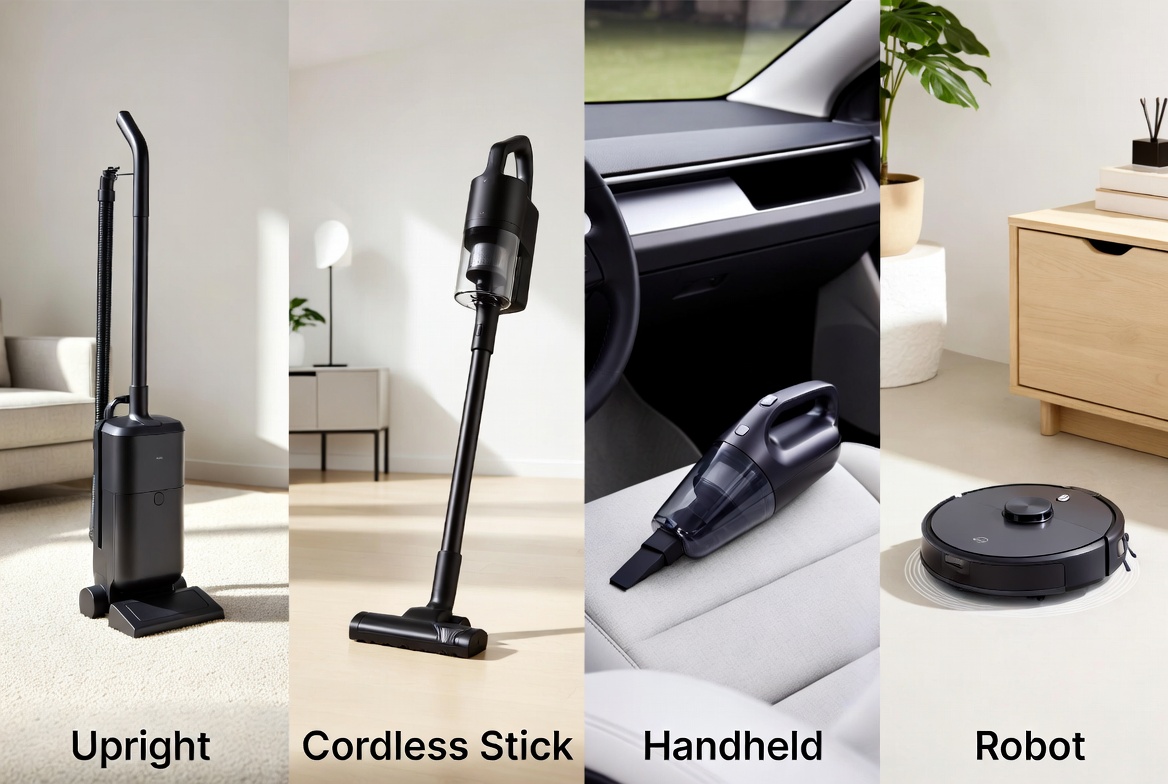
Upright vacuums concentrate the motor, dust container, and brush in a single vertical body that is pushed in front of the user. They are known for strong deep‑cleaning performance on carpet, often with wide cleaning heads and height adjustment. [edisonvacuums]
This format remains popular in North America and parts of Europe, and our engineering experience shows that optimizing brush roll design, air path, and sealed filtration is critical for outstanding upright performance in OEM projects. [vacuumdoctor.co]
Stick vacuums are slim, lightweight cleaners with a long tube and small motor body, often configured as cordless units with rechargeable lithium batteries. They excel at quick, everyday cleaning and are especially favored in apartments and mixed‑floor homes. [vacuumdoctor.co]
Most modern cordless sticks can convert into handheld vacuums by removing the tube and floor head, making them two‑in‑one solutions that cover both floor cleaning and above‑floor tasks like sofas, car interiors, and shelves. [ca.dreametech]
Dedicated handheld vacuums focus on portability and ease of use for tight spaces, cars, or furniture rather than whole‑home cleaning. Their compact format makes them ideal add‑on products for brands seeking to expand their range with accessible, high‑volume items. [en.wikipedia]
Corded vacuums offer continuous power and tend to be more cost‑effective, making them suitable for entry‑level products and commercial environments where runtime is critical. Cordless models, powered by lithium‑ion batteries, deliver greater freedom of movement and are rapidly gaining share thanks to advances in battery energy density and motor efficiency. [edisonvacuums]
For global OEM/ODM projects, we typically recommend corded designs for budget‑sensitive markets or heavy‑duty use, and cordless designs for mid‑to‑high‑end retail channels where convenience and design are key buying factors. [vacuumdoctor.co]
Industry data and trend analyses show several clear directions in vacuum development leading into 2026. [edisonvacuums]
- Stronger cordless performance: Brushless DC motors and high‑capacity lithium batteries now allow cordless vacuums to rival corded models in suction and runtime, with many products targeting 40–60 minutes of standard‑mode operation. [ca.dreametech]
- Advanced filtration and hygiene: Multi‑stage filtration, including HEPA‑grade filters that capture fine particles and allergens, is increasingly a standard requirement in premium models. [en.wikipedia]
- Smart features: App connectivity, usage statistics, filter replacement reminders, and power‑mode optimization are moving from robot vacuums into stick and upright categories. [youtube]
- Eco‑design and recyclability: Many brands now emphasize reduced material use, modular components, and longer product lifecycles to support sustainability commitments and regulations. [vacuumdoctor.co]
These trends are reshaping OEM/ODM project specifications, from motor selection to PCB design, plastics engineering, and the choice between bagged and bagless architectures. [ca.dreametech]
As a Chinese vacuum cleaner manufacturer, we see firsthand how buyers leverage OEM/ODM partnerships to turn these historical and technological trends into competitive product lines. [vacuumdoctor.co]
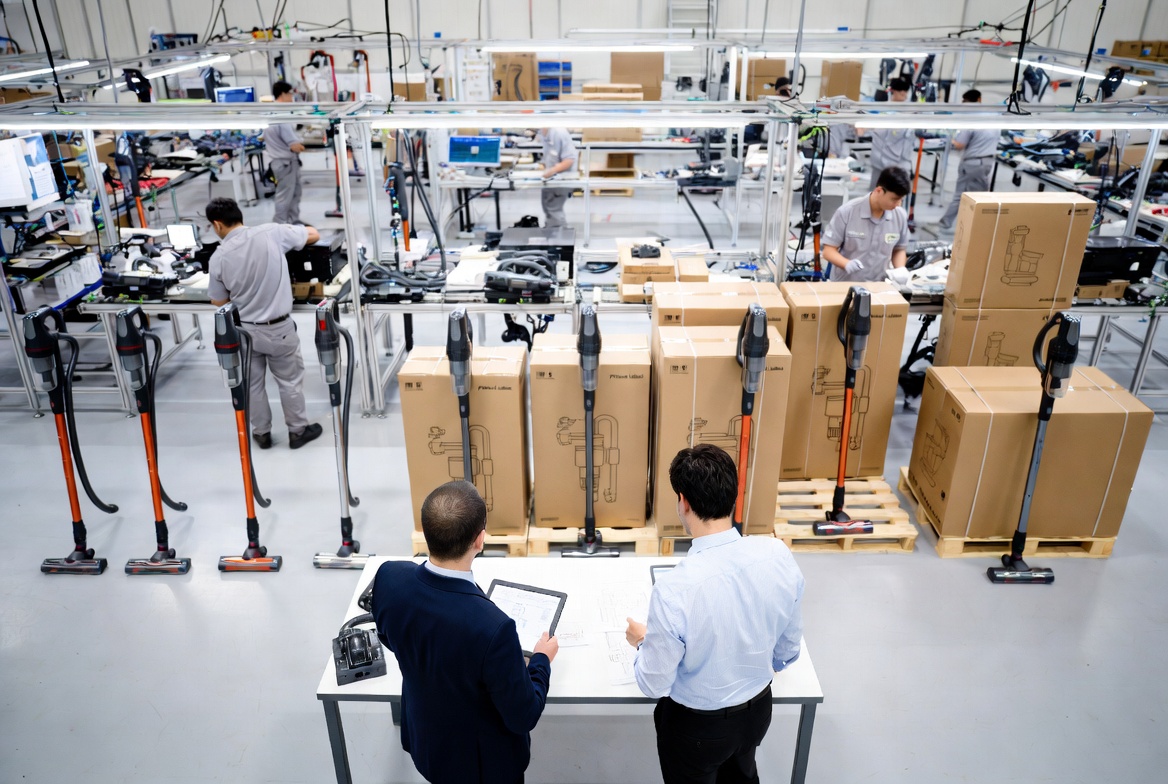
A mature vacuum OEM/ODM production system typically offers:
- Category coverage for upright, stick, handheld, corded, cordless, and selected robot platforms. [ca.dreametech]
- Flexible engineering including motor selection (brushed vs brushless), cyclone architecture, battery pack design, and filtration options tailored to target markets. [vacuumdoctor.co]
- Tooling and industrial design support to help brands differentiate with unique housing shapes, colors, and ergonomics while maintaining shared internal platforms. [ca.dreametech]
- Compliance and testing for major certifications such as CE, ETL, or CB, along with in‑house performance and durability tests, ensuring safety and reliability. [edisonvacuums]
By combining this capability with a deep understanding of modern user expectations, OEM/ODM partners can help brands move from simple vacuum products to complete cleaning ecosystems that include multiple devices, accessories, and consumables. [vacuumdoctor.co]
Based on industry experience and global market data, different regions and user segments tend to favor specific vacuum categories. [edisonvacuums]
Use the table below as a quick reference when planning your product portfolio:
| Target scenario | Recommended type | Key reasons |
|---|---|---|
| Small apartments, mixed floors | Cordless stick & 2‑in‑1 handheld | Lightweight, easy storage, flexible for quick daily cleaning (ca.dreametech) |
| Large carpeted homes | Upright (corded or cordless) | Strong deep‑cleaning on carpets, wide cleaning path (en.wikipedia) |
| Cars and sofas | Compact handheld | Portable, focused suction for tight spaces (en.wikipedia) |
| Budget‑sensitive mass market | Corded upright or canister | Lower cost, continuous power, durable design (edisonvacuums) |
| Tech‑savvy, time‑poor consumers | Robot vacuum + cordless stick | Automated daily cleaning plus manual spot‑cleaning (vacuumdoctor.co) |
When collaborating with an OEM/ODM manufacturer, aligning these scenarios with your target consumers helps define motor power, battery size, filtration level, and feature set early in the project. [ca.dreametech]
The future of vacuum cleaners is likely to merge robotics, connectivity, and high‑efficiency powertrains even more deeply. We are already seeing models that integrate AI‑based path optimization, advanced obstacle recognition, and energy‑saving modes that adapt suction to floor type. [youtube]
For upright, stick, and handheld vacuums, improvements in battery chemistry and motor design are expected to deliver longer runtime with lower weight, while filtration systems continue to target smaller particles and improved air quality. This means brands partnering with experienced manufacturers can plan multi‑year roadmaps that steadily introduce smarter, lighter, and more sustainable cleaning solutions across their portfolios. [en.wikipedia]
For brands seeking to build or expand their vacuum cleaner lines, partnering with a trusted Chinese manufacturer gives access to stable production, experienced engineering, and scalable OEM/ODM services across upright, handheld, corded, and cordless categories. [vacuumdoctor.co]
By combining the lessons of 150 years of vacuum innovation with modern engineering and quality control, you can bring products to market that are not only historically informed, but also aligned with current user expectations for performance, convenience, and design. If you are planning your next vacuum project, this is the ideal moment to define specifications that reflect both global trends and the unique needs of your brand. [en.wikipedia]
1. Who invented the first vacuum cleaner?
The earliest known suction‑based cleaner was patented in 1860 by Daniel Hess of Iowa, who designed a manual carpet sweeper with rotating brushes and bellows to draw dust into a filter. [ca.dreametech]
2. When did electric vacuum cleaners become common in homes?
Electric vacuum cleaners began to spread after James Murray Spangler's upright design was commercialized by Hoover in 1908, and they became more common in the following decades as household electrification expanded. [youtube]
3. What is the main difference between upright and canister vacuums?
Upright vacuums combine motor, dust container, and brush in a single vertical body pushed by the user, while canister vacuums separate the main unit from the cleaning head via a hose for more flexibility on stairs and varied surfaces. [edisonvacuums]
4. Are cordless vacuums powerful enough to replace corded models?
Modern cordless vacuums using high‑efficiency brushless motors and lithium‑ion batteries can match many corded models in everyday cleaning performance, though continuous heavy‑duty use may still favor corded designs in some environments. [vacuumdoctor.co]
5. Why is filtration so important in vacuum cleaners?
Effective filtration prevents fine dust and allergens from being released back into the air, improving indoor air quality and protecting users with sensitivities, which is why multi‑stage and HEPA‑grade systems are increasingly in demand. [en.wikipedia]
6. What should brands look for in a vacuum OEM/ODM partner?
Brands should prioritize partners with proven category coverage, strong engineering capability, robust quality control, and experience with international certifications, ensuring products meet both performance and regulatory requirements. [ca.dreametech]
1. *Vacuum cleaner – History and technology overview*. Wikipedia. Available at: <https://en.wikipedia.org/wiki/Vacuum_cleaner> [en.wikipedia]
2. *The invention of the vacuum cleaner, from horse-drawn to modern machines*. Science Museum. Available at: <https://www.sciencemuseum.org.uk/objects-and-stories/everyday-wonders/invention-vacuum-cleaner> [sciencemuseum.org]
3. *Fascinating Vacuum Cleaner History: Who & When Invented It*. Dreame. Available at: <https://ca.dreametech.com/blogs/blog/vacuum-cleaner-history-evolution> [ca.dreametech]
4. *The Complete History of Vacuum Cleaners (1860–Present)*. Edison Vacuums. Available at: <https://edisonvacuums.com/the-complete-history-of-vacuum-cleaners-1860-present/> [edisonvacuums]
5. *History of Vacuums*. Jones Sew & Vac. Available at: <https://www.jonessewandvac.com/history-of-vacuums.htm> [jonessewandvac]
6. *The Evolution of Vacuum Cleaners | The Henry Ford's Innovation Nation*. The Henry Ford. Available at: <https://www.youtube.com/watch?v=3RkRrlV4SA0> [youtube]
7. *How the Vacuum Cleaner Was Invented (And Why It Changed Everything)*. History of Simple Things. Available at: <https://www.youtube.com/watch?v=mJ-sab_CKDk> [youtube]
8. *The Biggest Vacuum Cleaner Trends for 2026*. Vacuum Doctor. Available at: <https://www.vacuumdoctor.co.uk/blog/25-11-the-biggest-vacuum-cleaner-trends-for-2026.html> [vacuumdoctor.co]
9. *Global Cordless Vacuum Cleaners Market Report 2026*. The Business Research Company. Available at: <https://www.thebusinessresearchcompany.com/report/cordless-vacuum-cleaners-global-market-report> [thebusinessresearchcompany]
10. *Cordless Vacuum Cleaner Market Outlook 2026–2034*. Intel Market Research. Available at: <https://www.intelmarketresearch.com/cordless-vacuum-cleaner-market-28887> [intelmarketresearch]


