
Views: 282 Author: Eyunhome Vacuum Publish Time: 2026-08-22 Origin: Site


Content Menu
● Stick Vacuum vs Upright Vacuum: Quick Comparison
● Why Stick Vacuums Generate More Online Interest
>> Features That Help Stick Vacuums Convert Online
>> The Strength of Everyday Cleaning
● Why Upright Vacuums Still Matter
>> When an Upright Vacuum Can Sell Better Online
● Which Product Sells Better Online?
● Product Strategy for Importers and Brands
>> 1. Identify the Primary Sales Channel
>> 2. Build Around a Specific Cleaning Problem
>> 3. Design the After-Sales Plan Early
● The Real Decision Is About Product Positioning
● How to Choose the Right Model to Launch
● Choose a Manufacturing Partner for Your Vacuum Program
● FAQ
>> 1. Do stick vacuums sell better than upright vacuums online?
>> 2. Are cordless stick vacuums suitable for whole-home cleaning?
>> 3. Why do buyers still choose upright vacuums?
>> 4. Which vacuum is better for pet hair?
>> 5. What features improve stick vacuum sales?
>> 6. What should importers consider before sourcing an upright vacuum?
>> 7. Can one brand sell both stick and upright vacuums?
For brands, retailers, and importers choosing between a stick vacuum and an upright vacuum, the short answer is clear: stick vacuums are generally better positioned to generate online sales growth, especially in cordless, compact, mid-to-premium product ranges. However, upright vacuums still have strong commercial value where buyers prioritize deep cleaning, larger dust capacity, continuous runtime, and carpet performance.
As a professional vacuum cleaner manufacturer, Ningbo Eyunhome Electric Technology Co., Ltd. helps global buyers develop upright, handheld, corded, and cordless cleaning products for different channels and consumer needs. The right product is not simply the one with the highest demand—it is the one that best matches your target market, price point, audience, platform strategy, and after-sales capability.
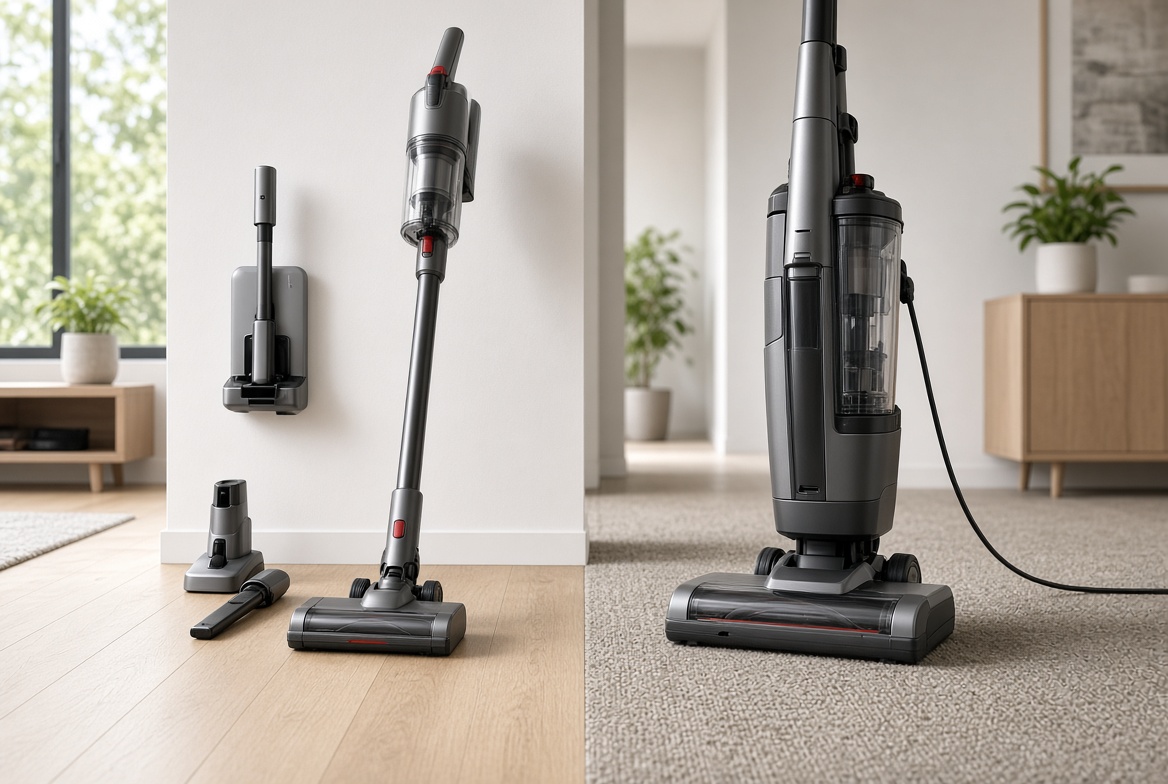
| Factor | Stick Vacuum | Upright Vacuum |
|---|---|---|
| Typical design | Slim, lightweight, often cordless | Larger, floor-standing, usually corded |
| Best use | Daily cleaning, apartments, quick cleanups | Deep cleaning, carpets, larger homes |
| Portability | Excellent | Moderate to low |
| Storage | Compact, often wall-mounted | Requires more floor or closet space |
| Runtime | Limited on cordless models | Continuous on corded models |
| Dust-bin capacity | Usually smaller | Usually larger |
| Online visual appeal | Very high | Moderate |
| Typical buyer | Urban households, pet owners, convenience-focused users | Families, carpet owners, value-oriented buyers |
| Sales-growth potential online | High | Stable but more category-specific |
| Product-development priority | Battery, motor, filtration, accessories | Suction, brush roll, cord length, capacity |
Stick vacuums win attention. Upright vacuums win sustained cleaning power. For online sellers, deciding between them requires looking beyond the product category and into the buyer journey.
The stick vacuum category benefits from several characteristics that align naturally with e-commerce behavior. Buyers can understand the product quickly through product photos, short videos, comparison charts, and user reviews.
A cordless stick vacuum communicates convenience in seconds: pick it up, clean a spill, convert it into a handheld unit, empty the bin, and place it on a charging dock. This simple visual story works well on marketplace listings, brand websites, social video platforms, and retail product pages.
Recent market research indicates that online channels accounted for about 57.3% of global vacuum-cleaner revenue in 2025. Stick vacuums are particularly compatible with this sales environment because they are compact, feature-rich, and easy to differentiate with visual selling points such as LED floor brushes, removable batteries, anti-tangle rollers, foldable tubes, wall mounts, and multiple attachments.
The global stick vacuum cleaner market was valued at approximately USD 4.23 billion in 2025 and is projected to expand at a 6.74% annual growth rate through 2034. The cordless segment is expected to represent nearly 79.72% of stick vacuum demand in 2026, highlighting how strongly buyer interest has shifted toward cable-free cleaning.
A stick vacuum can generate stronger online conversion when the listing clearly communicates practical benefits:
- Lightweight handling for stairs, cars, curtains, sofas, and daily floor cleaning
- Cordless freedom for fast cleaning without changing outlets
- Convertible design that combines stick and handheld vacuum functions
- Compact storage for apartments, condominiums, dormitories, and small homes
- Visible filtration systems that help explain cleaner air and easier maintenance
- Multiple attachments that increase perceived value in a product bundle
- Modern product styling that supports premium positioning
For buyers scrolling through dozens of products, visual clarity matters. A clean product image showing a slim vacuum cleaning under furniture often communicates more value than a long paragraph about motor specifications.
In many markets, consumers do not buy a stick vacuum as a once-a-week deep-cleaning machine. They buy it for frequent, low-effort cleaning.
That distinction matters for online sales. A product tied to daily habits has more opportunities for repeat recommendation, positive reviews, accessories, replacement filters, additional batteries, and upgraded models.
For example, a pet-owning apartment resident may use a cordless stick vacuum every day to remove hair from hard floors, upholstery, and corners. The product becomes part of their routine. This creates a strong emotional and practical case for purchase.
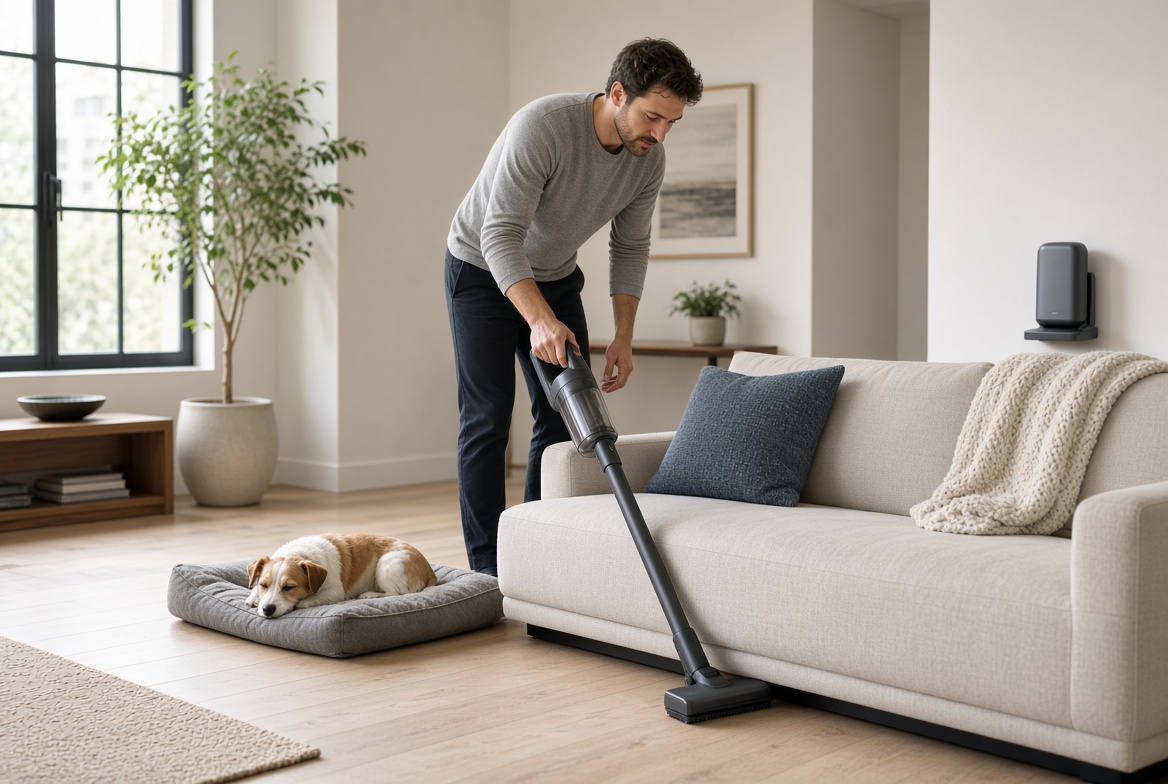
The upright vacuum remains highly relevant, especially in markets with larger homes, carpets, pets, children, and buyers who prefer dependable corded performance.
Although stick vacuums attract more attention in many online categories, upright vacuums are far from obsolete. In fact, uprights represented 61.38% of the residential vacuum-cleaner market by product category in 2025 in one market analysis. Corded vacuum models also accounted for 57.37% of the market by cord type, demonstrating continued demand for uninterrupted power and extended cleaning sessions.
An upright vacuum offers advantages that are difficult for many cordless stick models to match:
- Longer, uninterrupted operation without battery charging
- Larger dust capacity for larger households and longer cleaning sessions
- Strong carpet-cleaning potential with a powered brush roll
- More stable operation across wide floor areas
- Competitive price positioning for budget-conscious buyers
- Familiar format for traditional retail customers
For retailers serving North America, the United Kingdom, Australia, or carpet-heavy household markets, an upright model may still be a vital product line.
An upright vacuum can outperform a stick vacuum when the product page speaks directly to a high-intent customer. The message should focus on the cleaning challenge, rather than merely listing features.
Strong positioning examples include:
- "Powerful upright vacuum for pet hair and deep carpet cleaning"
- "Large-capacity corded vacuum for family homes"
- "Reliable vacuum cleaner for high-traffic carpets"
- "Bagless upright vacuum with washable filtration"
- "Affordable full-size vacuum for everyday whole-home cleaning"
The buyer of an upright vacuum is often more focused on results, reliability, and capacity than on compact design. They may compare suction performance, brush-roll performance, filtration, cord length, noise, bin size, and warranty coverage more carefully before purchasing.
For most online-first consumer brands, stick vacuums have the stronger growth opportunity. Their compact format, visual appeal, convenience-led messaging, and cordless innovation make them highly suitable for direct-to-consumer stores and marketplace platforms.
However, "more online sales" can mean different things:
| Sales Objective | Better Product Choice | Why |
|---|---|---|
| Fast marketplace growth | Stick vacuum | Strong visual appeal and broad convenience demand |
| Premium product positioning | Stick vacuum | Battery, motor, filtration, and accessory upgrades support higher pricing |
| Budget household segment | Upright vacuum | Reliable corded designs can offer stronger value |
| Carpet-focused consumers | Upright vacuum | Larger brush systems and sustained power support deep cleaning |
| Apartment and small-home buyers | Stick vacuum | Compact storage and lightweight design fit the lifestyle |
| Large family homes | Upright vacuum | Long runtime and large bin capacity reduce interruptions |
| Pet-hair category | Both | Stick models suit daily touch-ups; uprights suit intensive cleaning |
| Retail bundle strategy | Stick vacuum | Accessories and replacement parts create add-on opportunities |
The highest-performing portfolio is often not stick vacuum versus upright vacuum. It is stick vacuum plus upright vacuum, each with a specific customer role.
From a manufacturing perspective, product selection should begin with the commercial model. Before developing a new vacuum cleaner, define where and how it will be sold.
Different channels reward different product strengths.
- Marketplace platforms reward strong images, competitive pricing, reviews, and clear feature differentiation.
- Brand websites reward storytelling, bundle offers, subscriptions, warranties, and product education.
- Offline retailers may favor familiar designs, shelf impact, larger packaging, and value-led pricing.
- Professional or commercial distributors may prioritize durability, stable supply, spare parts, and technical support.
For an online-first launch, a cordless stick vacuum with a clear visual advantage can be easier to market. For retail chains serving value-conscious households, a corded upright vacuum may offer a stronger price-to-performance proposition.
The best-selling vacuum products are not designed for "everyone." They solve a recognizable problem for a defined user.
Examples include:
- Pet hair: motorized brush roll, anti-tangle structure, upholstery tool, larger bin
- Small apartments: lightweight body, wall mount, compact charging base
- Car cleaning: detachable handheld module, crevice nozzle, flexible hose
- Carpet homes: strong floor head, adjustable suction, wide cleaning path
- Allergy-conscious households: sealed filtration path, washable or high-efficiency filters
- Budget buyers: corded operation, simple controls, durable core components
This approach also creates clearer product-page messaging and reduces confusion during the purchasing decision.
Online reviews can determine whether a vacuum cleaner becomes a bestseller or a costly return problem. For both stick and upright vacuums, buyers need confidence that consumables and service support will be available.
A strong product plan should include:
- Clear instruction manuals and troubleshooting guidance
- Replacement filters and brush rolls
- Battery-support planning for cordless models
- Spare parts for key wear items
- Packaging designed to reduce transport damage
- Consistent quality-control procedures
- Responsive customer-service workflows
For a cordless stick vacuum, battery communication is especially important. State expected runtime conditions honestly, explain charging time clearly, and identify which mode the runtime claim is based on. This reduces avoidable dissatisfaction.
The stick vacuum vs upright vacuum decision should not be based only on category popularity. It should be based on the interaction between buyer expectations and product capability.
A stick vacuum can fail commercially if it is marketed as a full replacement for a high-power corded upright without enough battery capacity, dust-bin volume, or carpet performance. Likewise, an upright vacuum can underperform if it is presented as a bulky legacy product instead of a reliable deep-cleaning solution.
The most credible brands use accurate positioning:
- A stick vacuum is a fast, flexible, convenient cleaning system.
- An upright vacuum is a powerful, dependable solution for larger and more demanding cleaning tasks.
This positioning helps buyers choose correctly, lowers return rates, and supports better review quality.
Use this practical decision process before finalizing your product range.
1. Define your target customer. Consider home size, flooring, pets, budget, storage space, and cleaning frequency.
2. Review competitor price bands. Identify whether the opportunity is entry-level, mid-range, premium, or specialist.
3. Select the core promise. Choose one primary benefit: portability, carpet cleaning, pet hair, compact storage, long runtime, or value.
4. Match specifications to the promise. Avoid adding features that increase cost without strengthening the main benefit.
5. Prepare product-page evidence. Use clear images, dimensions, runtime details, accessories, cleaning scenarios, and warranty information.
6. Plan consumables and service. Ensure filters, batteries, brush rolls, and support materials are available before launch.
7. Test real-world use cases. Evaluate performance on hard floors, carpets, hair, crumbs, corners, furniture, and vehicle interiors.
If you are developing a private-label vacuum cleaner range, Ningbo Eyunhome Electric Technology Co., Ltd. can support your business with upright, stick, handheld, corded, and cordless vacuum cleaner solutions.
Our team can help buyers evaluate the right product direction for their market, customize product configurations, develop OEM/ODM projects, maintain stable production, and prepare reliable after-sales support. Whether your goal is a high-growth cordless stick vacuum or a dependable upright vacuum for deep cleaning, the best opportunity begins with a product built around a clear customer need.
Contact Eyunhome to discuss your target market, product requirements, branding needs, and vacuum cleaner sourcing plan.

In many online-focused markets, stick vacuums have stronger growth potential because they are lightweight, compact, visually attractive, and well suited to cordless convenience messaging. Upright vacuums remain competitive for carpet cleaning, larger homes, and value-oriented buyers.
They can be suitable for smaller homes and regular maintenance cleaning, depending on battery capacity, suction performance, floor type, and cleaning mode. For large homes or intensive carpet cleaning, a corded upright vacuum may offer more consistent runtime.
Buyers choose upright vacuums for continuous corded power, larger dust capacity, deep carpet cleaning, familiar operation, and competitive pricing. They remain especially relevant in households with extensive carpeting.
Both can work well. A stick vacuum is convenient for daily pet-hair removal on hard floors, sofas, and stairs. An upright vacuum is often better for deeper carpet cleaning and larger pet-owning households.
High-conversion features include removable batteries, motorized floor heads, anti-tangle rollers, LED lighting, multiple attachments, washable filters, wall mounts, foldable tubes, and a handheld conversion function.
Importers should assess suction performance, brush-roll quality, cord length, dust-bin capacity, filtration, product weight, noise, spare-part availability, packaging strength, safety requirements, and warranty support.
Yes. A two-category range can serve different customer needs: stick vacuums for convenience-driven daily cleaning and upright vacuums for deep cleaning, larger homes, and carpet-focused households.
1. [Eyunhome – Company Introduction]
2. [Eyunhome – Household Vacuum Cleaner OEM and Product Solutions]
3. [Grand View Research – Vacuum Cleaner Market Size, Share and Growth]
4. [Fortune Business Insights – Stick Vacuum Cleaner Market]
5. [Mordor Intelligence – Residential Vacuum Cleaners Market]
6. [The Business Research Company – Cordless Vacuum Cleaners Market Report]


