
Views: 220 Author: Eyunhome Vacuum Publish Time: 2026-08-20 Origin: Site


Content Menu
● Stick Vacuum vs Upright Vacuum at a Glance
● Weight: Why Stick Vacuums Feel Easier to Use
>> Stick Vacuum Weight Advantages
>> Upright Vacuum Weight Trade-Offs
● Suction: Raw Power Is Only Part of Cleaning Performance
>> Why Upright Vacuums Often Deliver Stronger Sustained Cleaning
>> Where Stick Vacuums Perform Very Well
>> Battery Runtime and Suction Stability
● Convenience: The Deciding Factor for Everyday Use
>> Stick Vacuum Convenience Benefits
>> Upright Vacuum Convenience Benefits
● Which Vacuum Type Fits Different Users?
● How to Evaluate a Vacuum Beyond Marketing Claims
● OEM and ODM Design Considerations
● Stick Vacuum or Upright Vacuum?
● FAQ
>> 1. Is a stick vacuum as powerful as an upright vacuum?
>> 2. Which is better for pet hair: a stick vacuum or upright vacuum?
>> 3. Are cordless stick vacuums suitable for whole-home cleaning?
>> 4. Why does suction decrease during vacuum use?
>> 5. Is a corded upright vacuum still a good product category?
>> 6. What should brands ask an OEM vacuum cleaner manufacturer?
>> 7. Which vacuum is easier to store?
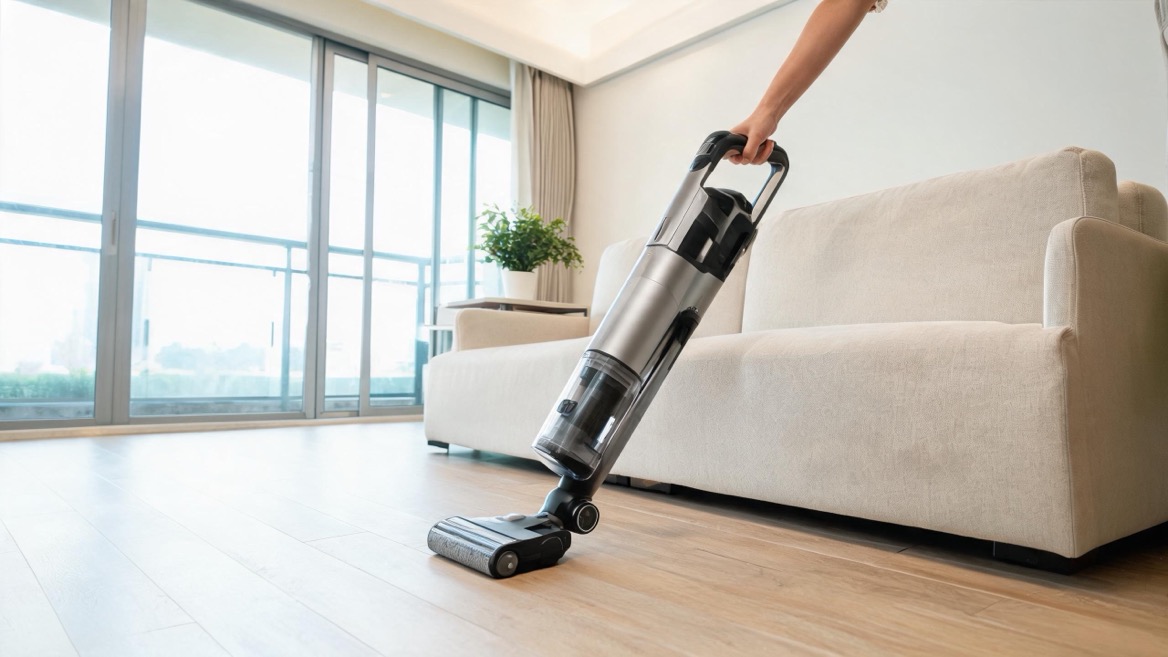
Choosing between a stick vacuum vs upright vacuum is not simply a matter of selecting a shape. It is a product-positioning decision that affects cleaning results, user comfort, storage, battery expectations, attachment configuration, and long-term satisfaction.
For retailers, distributors, private-label brands, and project buyers, the best choice depends on the intended customer, flooring mix, home size, price tier, and target market. Stick vacuums are designed around lightweight handling and quick access. Upright vacuums are generally designed for deeper floor cleaning, longer operating sessions, and larger debris capacity.
At Ningbo Eyunhome Electric Technology Co., Ltd., we see this distinction regularly in OEM and ODM vacuum cleaner projects. Buyers do not only ask, "Which vacuum is better?" The more useful question is: Which vacuum design best matches the end user's real cleaning routine?
| Feature | Stick Vacuum | Upright Vacuum |
|---|---|---|
| Typical product positioning | Fast, flexible everyday cleaning | Deep cleaning and larger-area cleaning |
| Weight | Usually lighter | Usually heavier |
| Portability | Excellent for stairs, cars, sofas, and quick pick-ups | Better for room-to-room floor cleaning |
| Suction potential | Strong in premium models, especially for daily debris | Often stronger and more sustained for carpet cleaning |
| Power source | Commonly cordless; corded options also exist | Commonly corded; cordless upright designs are also available |
| Runtime | Limited in cordless models | Continuous with a corded model |
| Dust cup capacity | Usually smaller | Usually larger |
| Storage | Compact and often wall-mountable | Requires more floor or closet space |
| Best for | Apartments, hard floors, frequent light cleaning | Carpets, larger homes, pet hair, longer cleaning sessions |
| OEM opportunity | Battery, filtration, lightweight design, accessories | Motor performance, floor head, capacity, durability |
The simple answer: choose a stick vacuum when mobility and convenience lead the buying decision. Choose an upright vacuum when stronger sustained cleaning performance and capacity matter most.
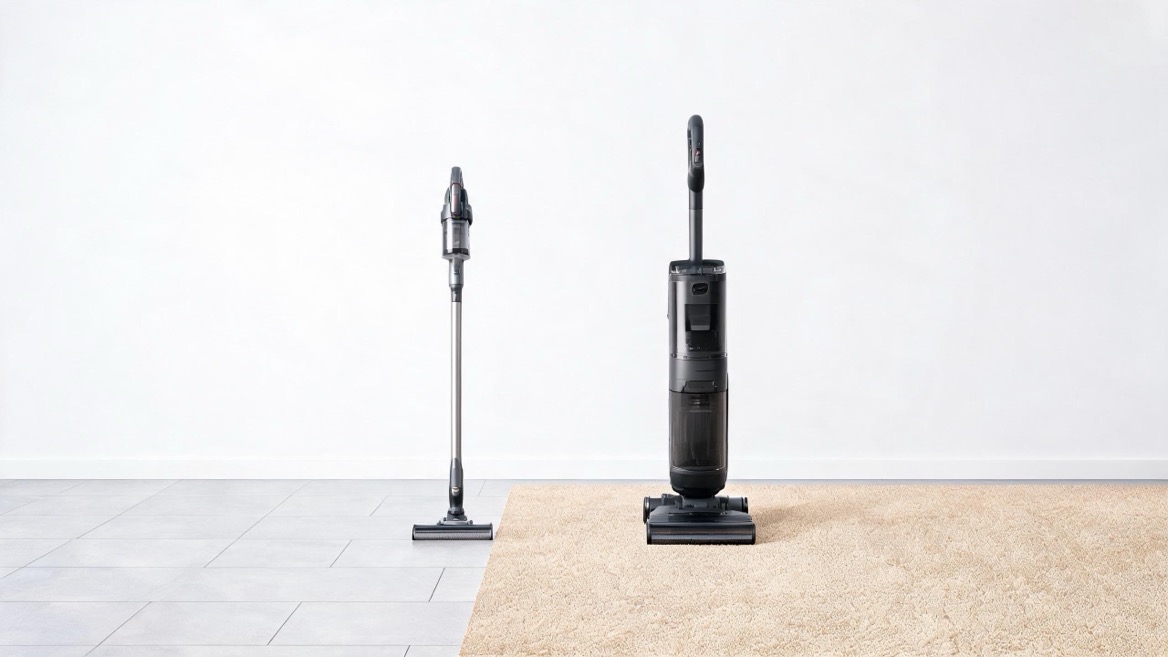
Weight is one of the most visible differences in a stick vacuum vs upright vacuum comparison. A stick vacuum typically has a narrow body, slim extension tube, compact dust cup, and smaller floor head. This construction makes it easier to carry, steer around furniture, and use above floor level.
Many consumer-focused stick vacuums weigh below 10 lb, while upright vacuum cleaners may range from roughly 8 lb to 25 lb, depending on motor size, dust capacity, brush roll system, cord length, and materials.
A lightweight vacuum changes how frequently people clean. If a product is easy to lift, users are more likely to grab it for small messes rather than delay cleaning until the weekend.
Stick vacuums are especially convenient for:
- Daily crumbs in kitchens and dining areas
- Hair and dust on hard floors
- Quick cleaning before visitors arrive
- Staircases and narrow hallways
- Upholstery and curtains with a handheld conversion
- Car interiors and compact workspaces
- Older users or customers who prefer lower lifting effort
A cordless stick vacuum can be particularly attractive because it removes the need to find an outlet, unwind a cable, and reposition the plug between rooms.
An upright vacuum is often heavier because it may include:
- A larger motor system
- A wider cleaning head
- A larger dust container or bag chamber
- A full-size brush roll
- A longer power cord
- More robust wheels and chassis components
- Additional filtration layers
That additional weight is not automatically a disadvantage. For carpet-oriented cleaning, a more substantial floor head can create a stable, controlled cleaning feel. Larger rear wheels can also improve movement across thick carpet.
However, an upright vacuum can feel less practical in multi-level homes, small apartments, or spaces with many obstacles. It is usually less convenient for cleaning bookshelves, blinds, sofas, ceiling corners, and vehicle interiors unless it includes an effective hose and accessory system.
When buyers compare upright vacuum suction vs stick vacuum suction, they often focus on motor wattage or a single suction number. That is understandable, but it is incomplete.
A vacuum cleaner's real cleaning performance depends on the whole air system, not just the motor. Relevant factors include airflow, sealed suction, air watts, floor-head design, brush roll speed, filtration resistance, nozzle sealing, battery output, and dust-bin condition.
Industry testing standards such as ASTM F558 cover measurements including suction, airflow, air power, maximum air power, and input power under standardized conditions.
Traditional upright vacuums generally have more internal space for a larger motor, larger airflow channels, a full-size brush roll, and a bigger dust container. Corded upright models also receive continuous electrical power during use.
This makes them well suited to:
- Large carpeted rooms
- Homes with pets
- High-traffic entrances
- Deep cleaning schedules
- Commercial-style residential cleaning
- Users who want longer uninterrupted operation
For embedded carpet debris, a powerful brush roll and properly engineered nozzle can matter as much as suction. The brush roll agitates fibers and helps lift dirt, hair, and fine particles from within the pile.
Important product-development insight: a high motor rating alone does not guarantee better pickup. A poorly sealed floor head or inefficient airflow path can waste available power. In an OEM project, motor selection, duct design, filtration structure, and floor nozzle should be developed as one system.
Modern stick vacuums can deliver excellent cleaning results on sealed hard floors, low-pile carpets, area rugs, and everyday household debris. Premium cordless designs may use high-speed digital motors, motorized floor heads, multi-stage filtration, and multiple power modes.
Stick vacuum performance is strongest when the user needs:
- Frequent light-to-medium cleaning
- Fast removal of visible debris
- Hard-floor dust pickup
- A second vacuum for daily maintenance
- Flexible cleaning above the floor
- Easy conversion to handheld use
For many households, a stick vacuum does not need to replace a powerful upright vacuum. It may instead serve a different role: the vacuum that gets used every day.
Cordless stick vacuums rely on battery capacity and power management. Runtime can vary greatly based on battery voltage, battery-cell configuration, motor speed, brush-roll operation, selected mode, floor type, and blockage level.
Higher suction modes can improve pickup but shorten runtime. For this reason, brands should present runtime clearly and responsibly. A useful product page should distinguish between:
- Runtime in standard mode
- Runtime with motorized floor brush
- Runtime in high-power mode
- Charging time
- Replaceable battery availability
- Battery protection features
For OEM buyers, removable battery designs can add practical value. They allow customers to charge separately, purchase a spare battery, and extend cleaning time without waiting for a recharge cycle.
Convenience is where the stick vacuum often leads. A slim cordless vacuum can be stored in a wall dock, lifted with one hand, and used within seconds. That low-friction experience can be more important than maximum suction for many urban households.
A stick vacuum is often the better option for customers who prioritize speed and flexibility.
Key advantages include:
- Grab-and-go operation for daily messes
- Cord-free movement around furniture and stairs
- Compact storage in apartments and small homes
- Handheld conversion for sofas, mattresses, cars, and shelves
- Lightweight handling for a wider range of users
- Easy access for quick spot cleaning
For brands selling to apartment dwellers, younger households, renters, and consumers with limited storage, these benefits can be highly persuasive.
Upright vacuums are less compact, but they provide their own practical advantages:
- Longer cleaning sessions without battery limitations
- Larger dust capacity that reduces emptying frequency
- Wide cleaning paths for large rooms
- Stable parking position during pauses
- Stronger carpet-focused cleaning in many configurations
- Lower dependency on battery replacement cycles
A corded upright is often a better fit for users who clean an entire home in one session. It can be particularly effective where carpets, pet hair, and large floor areas are the priority.
The right vacuum cleaner depends on the cleaning environment rather than a universal "best" choice.
| User Need | Better Option | Why |
|---|---|---|
| Small apartment with hard floors | Stick vacuum | Lightweight, compact, quick to deploy |
| Large home with thick carpets | Upright vacuum | Sustained power and stronger carpet capability |
| Daily kitchen and living-room cleaning | Stick vacuum | Easy to use for frequent short sessions |
| Pet hair on carpet and upholstery | Upright vacuum or high-performance stick vacuum | Depends on brush design, suction system, and attachments |
| Multi-level home | Stick vacuum | Easier to carry upstairs and use on stairs |
| Long weekly whole-home cleaning | Upright vacuum | Larger bin and continuous corded operation |
| Car and furniture cleaning | Stick vacuum | Handheld conversion and narrow accessories |
| Value-focused retail segment | Corded upright vacuum | Strong feature-to-cost ratio in many markets |
For importers and private-label brands, choosing between a stick vacuum and upright vacuum should involve more than reviewing a specification sheet.
Use this practical evaluation process:
1. Define the target floor mix. Identify the percentage of hard floor, low-pile carpet, medium-pile carpet, and rugs in the target market.
2. Set the cleaning scenario. Is the product intended for daily maintenance, weekly deep cleaning, pet-hair removal, or compact-space use?
3. Test pickup on real surfaces. Evaluate fine dust, cereal, hair, debris along wall edges, and particles embedded in carpet.
4. Check handling comfort. Test push force, turning radius, swivel steering, handle balance, trigger comfort, and above-floor reach.
5. Review dust-bin usability. A bin should be easy to remove, empty, reinstall, and clean without excessive dust contact.
6. Verify filtration and sealing. Good filtration performance requires more than a filter label. Inspect air-path sealing, filter installation, and maintenance instructions.
7. Assess serviceability. Consider battery replacement, roller removal, filter availability, spare-parts planning, and repair access.
8. Confirm market requirements. Electrical safety, EMC, material compliance, labeling, packaging, and documentation must be aligned with the destination market.
This approach gives brands a clearer path to building a product that performs well after purchase, not only in promotional materials.
A successful vacuum cleaner program begins by matching the product architecture to the brand's commercial strategy.
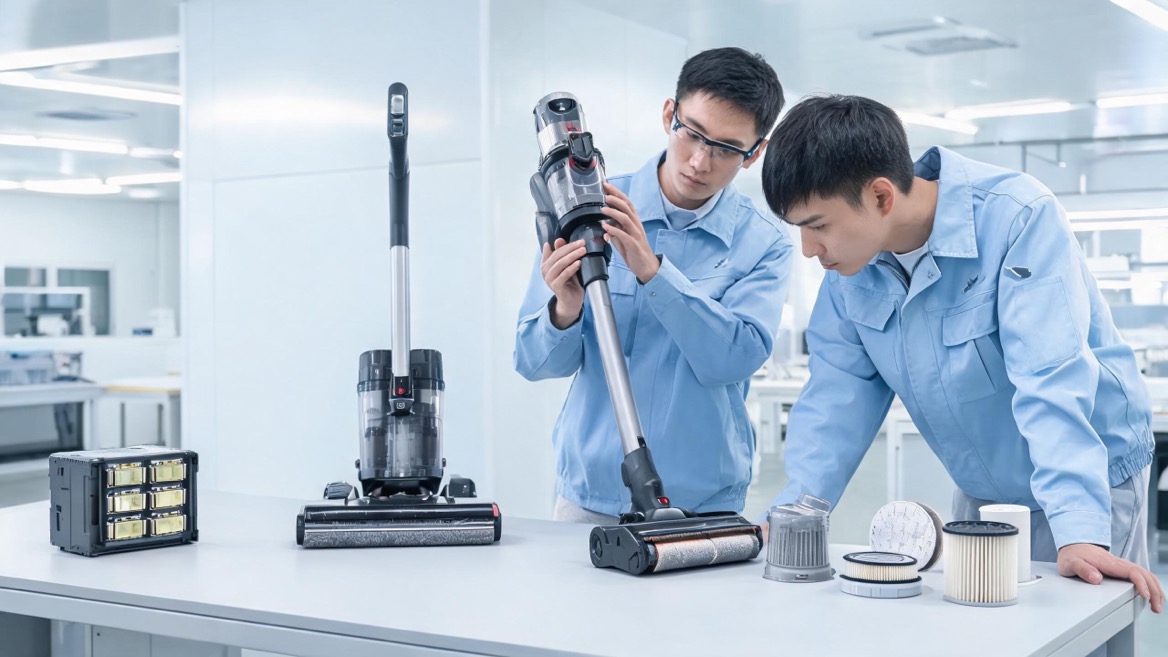
For a stick vacuum OEM project, common customization priorities include:
- Battery platform and removable battery design
- Motor performance and power modes
- Wall-mounted charging dock
- LED floor-head lighting
- Anti-tangle brush roll
- Foldable tube design
- Handheld attachment package
- Dust-cup capacity
- Color, logo, packaging, and instruction manual localization
For an upright vacuum ODM project, buyers often focus on:
- Motor durability and airflow design
- Brush-roll configuration
- Carpet and hard-floor compatibility
- Dust-bin volume
- Power-cord length
- Hose reach and accessory storage
- Noise control
- HEPA or multi-stage filtration configuration
- Chassis durability and wheel design
- Private-label appearance and packaging
Manufacturers should also consider destination-market compliance requirements early. Vacuum cleaner requirements can involve electrical safety, electromagnetic compatibility, substance restrictions, efficiency-related rules, and product documentation. The European Commission notes that the former EU vacuum cleaner energy-label legislation no longer applies, while ecodesign-related requirements remain relevant in specific contexts.
In the stick vacuum vs upright vacuum decision, neither product is universally superior.
Choose a stick vacuum if your customers value lightweight handling, cordless convenience, compact storage, handheld flexibility, and frequent everyday cleaning. It is an especially strong choice for hard-floor homes, apartments, and fast-paced lifestyles.
Choose an upright vacuum if your customers need powerful sustained cleaning, larger debris capacity, longer run time, and strong carpet performance. It is often the more practical choice for larger homes, pet owners, and users who prefer one longer cleaning session.
For many brands, the strongest product strategy is not choosing only one category. It is creating a balanced range: a convenient cordless stick vacuum for daily use and a high-performance upright vacuum for deeper whole-home cleaning.
Looking for a reliable China vacuum cleaner manufacturer? Ningbo Eyunhome Electric Technology Co., Ltd. can support your upright, handheld, corded, and cordless vacuum cleaner projects with OEM/ODM development, stable production planning, quality control support, and after-sales service solutions for global markets. Contact our team to discuss your target market, desired features, and private-label requirements.
Some premium stick vacuums provide strong cleaning performance, especially on hard floors and low-pile carpet. However, upright vacuums often offer stronger sustained performance for deep carpet cleaning because they can use larger motors, larger brush rolls, and continuous corded power.
Both can work well when they have a motorized brush roll, effective airflow design, and suitable attachments. An upright vacuum is often preferable for heavy pet hair on carpet, while a stick vacuum is convenient for daily hair removal from hard floors, furniture, and stairs.
Yes, if battery runtime, charging time, dust capacity, and floor area match the user's needs. For large homes, a removable battery system or a second battery can improve the experience.
Reduced suction may result from a full dust cup, blocked filter, tangled brush roll, clogged air channel, leaking seals, or low battery power. Regular maintenance is essential for stable performance.
Yes. Corded upright vacuums remain relevant for users who want continuous runtime, strong carpet cleaning, larger capacity, and a cost-effective alternative to battery-powered products.
Brands should ask about motor options, airflow testing, battery specifications, brush-roll design, filtration, factory quality controls, compliance support, production capacity, spare parts, packaging customization, and after-sales service planning.
A stick vacuum is generally easier to store because of its slim body and wall-mountable charging dock. Upright vacuums need more closet or floor space but can often stand independently.
1. [ASTM F558-21: Standard Test Method for Measuring Air Performance Characteristics of Vacuum Cleaners]
2. [European Commission: Vacuum Cleaners FAQs]
3. [European Commission: Ecodesign and Energy Labelling for Vacuum Cleaners]
4. [Consumer Reports: Best Vacuums of 2026]
5. [HomeViable: Stick Vacuum vs Upright Vacuum]
6. [UK Government: Designated Standards for Vacuum Cleaners]
7. [European Commission: Ecodesign Requirements for Vacuum Cleaners]


