
Views: 283 Author: Eyunhome Vacuum Publish Time: 2026-07-24 Origin: Site


Content Menu
● Are Robot Vacuums Spying on You?
● How Robot Vacuums See Inside Your Home
>> Cameras, Lasers, and Sensors
>> Mapping, Storage, and Long‑Term Profiles
● The Real Privacy Risks Behind Smart Cleaning
>> Visual Data and Image Leakage
>> Telemetry, Behavior Patterns, and Profiling
>> Research on Sound Reconstruction
>> Implications for Everyday Conversations
● What Household Robots Already Know About Families
>> Intimate Profiles from Ordinary Data
>> Vulnerable Users: Children and Older Adults
● Offline, "Dumb" and Privacy‑Focused Cleaning Options
>> Traditional Vacuums as Safe Defaults
● A Manufacturer's Perspective on Trustworthy Vacuums
>> Ningbo Eyunhome Electric Technology Co.,Ltd.
>> OEM and ODM Solutions for Privacy‑Conscious Markets
● Practical Steps to Regain Control Over Your Data
>> Network Hygiene and Room Boundaries
● How Manufacturers Can Design Safer Vacuums
>> Privacy‑First Product Principles
>> Long‑Term Support and Clear Communication
● Balancing Convenience, Safety, and Trust
>> Finding the Right Mix for Your Home
● Conclusion: Smarter Cleaning, Wiser Choices
● FAQs
Robot vacuums can reveal more about your home and daily life than most people expect, yet with informed choices and careful settings, it is possible to keep the benefits of smart cleaning without turning a helper into a roaming observer. As a long‑time smart‑home user and advisor to vacuum manufacturers, my perspective is straightforward: treat any connected cleaner as a small computer on wheels and manage it with the same care you would give a laptop or phone.
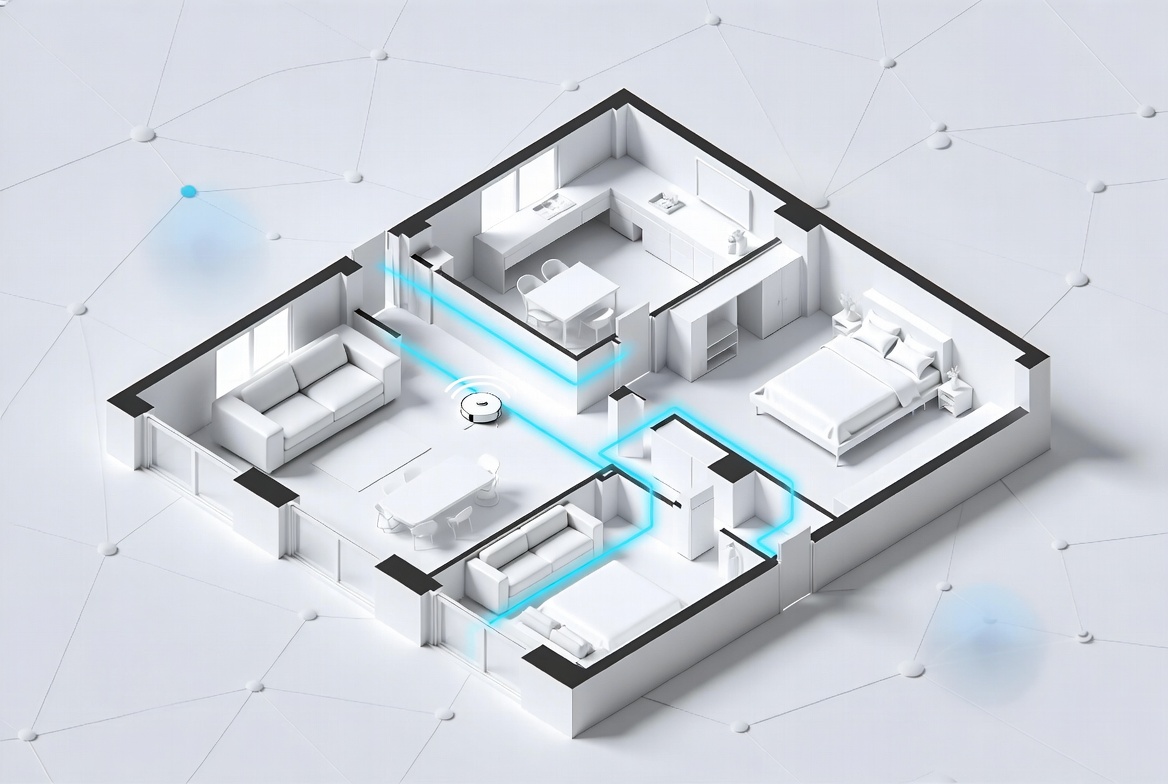
Modern robot vacuums are no longer simple appliances; they navigate with cameras, lasers, and sophisticated sensors that build detailed maps of your rooms. These devices learn where furniture sits, which routes are fastest, and how often each room is cleaned, storing much of this information in apps or remote servers. Over time, the result can be a surprisingly complete digital picture of your living space and habits.
Behind the smooth user experience is a constant flow of data. Cleaning logs, room maps, and device diagnostics can add up to a long‑running record of household routines, including when people are usually home or away. When this information sits alongside data from other connected devices, it can help build an intimate profile of a family without anyone consciously deciding to share it.

Most advanced cleaners rely on a combination of visual and non‑visual sensors to move efficiently. Camera‑based navigation allows a vacuum to capture images of walls, furniture, and sometimes people, while laser and infrared systems measure distance and shape. Together, these signals enable accurate mapping, obstacle avoidance, and optimized routes.
From a user perspective, this technology is impressive and convenient. The robot remembers where the sofa stands, learns narrow passages, and can avoid falling down stairs. The trade‑off is that your home's interior becomes a dataset: room sizes, object locations, and walking paths can all be inferred from navigation logs and maps created during routine cleaning.
When a robot vacuum generates a map of your home, that map is usually stored somewhere—on the device, in an app, or on remote servers. Over time, these maps may be updated as you rearrange furniture, renovate rooms, or move between homes. What starts as a simple floor plan can evolve into a long‑term record of your living environment.
If those maps are combined with timestamps, cleaning frequency, and usage data, the device can indirectly trace daily patterns. For example, regular cleaning at the same time may indicate your work schedule, while frequent activity in certain rooms might hint at where people spend most of their time. None of this requires human analysis; it can all happen quietly in software.
The most obvious risk comes from devices that capture images or video while navigating. During testing and development, some units have collected photos of users in private moments, which were later accessed by human reviewers as part of data‑labeling processes. In rare but troubling incidents, these images have surfaced outside controlled environments.
What makes this risk particularly unsettling is that it often feels invisible to the user. A robot vacuum moving across the floor may look harmless, yet its camera can see into bedrooms, bathrooms, and home offices unless restrictions are set. If images are stored or transmitted beyond the home, they can potentially be misused, mishandled, or exposed during breaches.
Even without cameras, robot vacuums generate rich telemetry data: cleaning duration, travel routes, error codes, and system status. This stream can be frequent enough to resemble a large volume of messages per week. Over months, such data reveals consistent patterns about how a home is used.
Aggregated across many households, these patterns can inform broad market insights, but at the individual level they can also help build behavioral profiles. The size of the home, the presence of obstacles, the number of devices, and the timing of activity all contribute to a picture of lifestyle, occupation type, and household routines. This profiling may not be malicious, yet it still raises important questions about consent and control.
Most people assume a vacuum cannot hear them, but recent research has challenged that assumption. By treating navigation sensors as improvised microphones, experts have shown it is technically possible to reconstruct audio from subtle vibrations and reflected signals. Even without a dedicated microphone, a device can sometimes infer sound patterns.
This does not mean every cleaner is actively eavesdropping. It does, however, demonstrate that a compromised or creatively misused device could be repurposed for listening. The more capable and connected a robot is, the more important it becomes to consider how its sensors might be used outside their original design.
In practice, few households want to think about their vacuum acting as a listening tool. Yet many people regularly hold important discussions at home—about finances, work, health, or family matters. If the devices in those spaces are capable of collecting sound or inferring speech, even indirectly, the privacy stakes increase.
The key takeaway is not panic but awareness. Any device with advanced sensors and network access should be treated as a potential source of unintended information. Proper configuration, restricted placement, and careful network management can significantly reduce the chance that everyday conversations become part of a data trail.
Studies of home robots show that families often underestimate how much data their devices collect. Participants frequently express unease about machines roaming freely through private spaces, especially when they are uncertain what is being recorded. This discomfort grows as people learn that their routines can be inferred from seemingly harmless metrics.
Daily schedules, room preferences, and social interactions can all be sensed indirectly. For example, repeated cleaning around toys may signal the presence of young children, while frequent passes near medical equipment could point to health conditions. Although any single data point seems minor, together they form an intimate profile.
Devices that move through homes inhabited by children and older adults raise additional concerns. Young people may not understand that a friendly‑looking robot can capture images or data about them, and older adults may assume that appliances are simple tools rather than sophisticated computers. This gap in understanding can leave vulnerable users exposed.
In situations involving health monitoring or assisted living, some robots operate at the edge of traditional healthcare boundaries. Information collected in those contexts may not always be protected by medical privacy rules. Families should therefore consider not only what data is gathered but also which legal safeguards apply.
For households that value privacy above automation, traditional vacuums remain a straightforward solution. Upright and handheld models with no wireless modules, apps, or cameras do not create digital records of the home. They may require more manual effort, but they offer a clear benefit: what happens in your home stays in your home.
These devices are particularly attractive for sensitive spaces such as bedrooms, bathrooms, and home offices. When cleaning is handled by tools that cannot connect to external servers, there is no risk of images, maps, or usage data traveling beyond the front door. In an increasingly connected world, this simplicity is powerful.
Not all robot vacuums rely on cameras or dense cloud services. Some models navigate primarily through gyroscopes and accelerometers, using internal motion data rather than visual mapping. Others store maps locally and offer optional connectivity that can be disabled without breaking basic functions.
These low‑data designs often trade a bit of efficiency for better privacy. They may repeat certain areas, take longer routes, or offer fewer advanced app features, yet they create and transmit far less sensitive information. Many privacy‑conscious users consider this a worthwhile compromise.
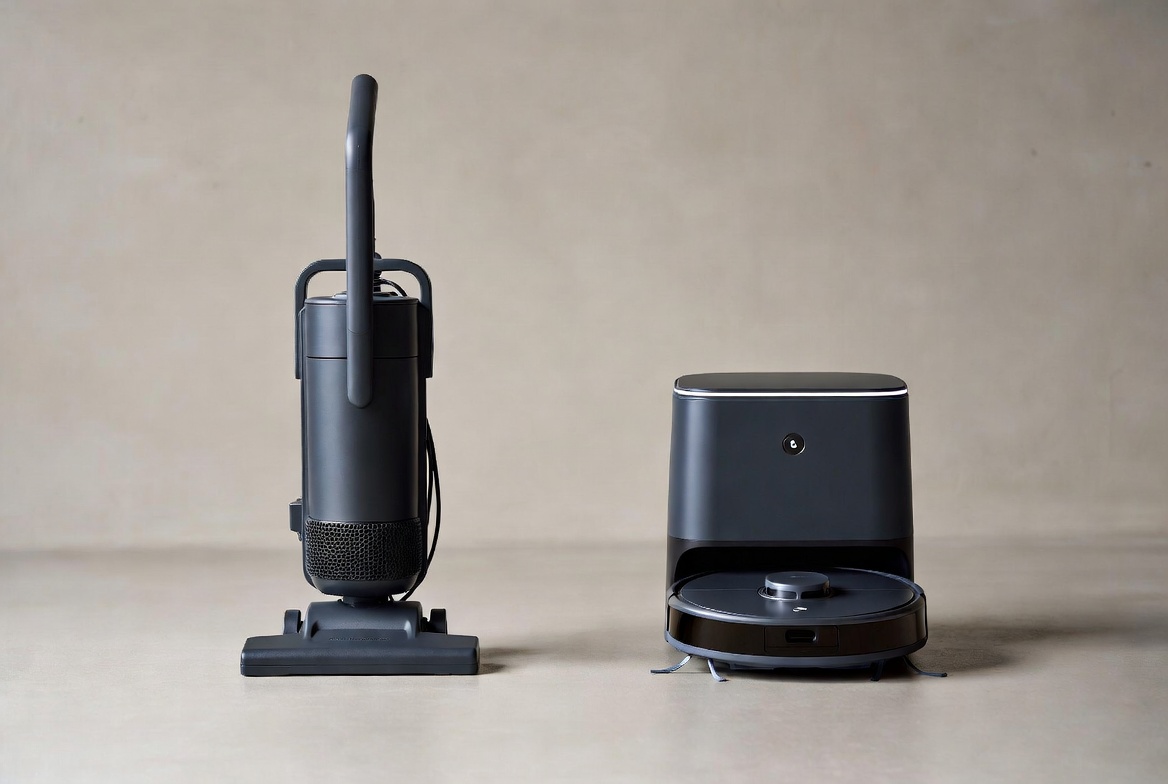
Ningbo Eyunhome Electric Technology Co.,Ltd. is a Chinese manufacturer specializing in upright, handheld, corded, and cordless vacuum solutions for global customers. The company provides professional customization services for brands and distributors who need tailored designs, performance profiles, and visual styling aligned with specific market segments.
Because many of its products focus on conventional and semi‑connected formats rather than fully camera‑equipped robots, they naturally generate less data about end‑user homes. For privacy‑aware buyers and partners, this emphasis on reliable cleaning with controlled connectivity can be an advantage, reducing the risk that household routines become part of large analytics systems.
From an industry standpoint, customization offers a path to align product capabilities with regional expectations around data use. Through OEM and ODM projects, manufacturers can design vacuums that limit data collection, favor local processing, or omit certain sensors entirely. Brands targeting privacy‑sensitive customers can specify these requirements from the outset.
This kind of responsible design allows retailers and importers to position vacuum lines not only on performance and price, but also on trust and discretion. In markets where awareness of digital privacy is rising, products that clearly minimize data capture can stand out as more reassuring choices for families.
At home, the most powerful tools are the menus you may rarely open. Many vacuums offer options to disable remote access, restrict map storage, or turn off certain sensors. Users can often choose whether to allow image capture, enable advanced mapping, or store cleaning histories beyond basic logs.
A practical habit is to review these settings shortly after installation and again whenever major updates arrive. By deliberately turning off features you do not need and limiting permissions, you reduce the volume of data generated. This does not eliminate all risk, but it ensures that your device reflects your actual comfort level.
Good network hygiene is as important as careful configuration. Placing smart appliances on separate or guest networks keeps them away from personal computers, phones, and work devices. Strong passwords and multi‑step verification for apps further lower the chance of unauthorized access.
Inside the home, physical and virtual boundaries matter. Many vacuums support no‑go zones or restricted areas that prevent them from entering sensitive rooms. Combining these controls with deliberate network management offers a layered approach: even if a device is compromised, the most private spaces remain off‑limits.
Manufacturers hold significant influence over how much data their products collect. Thoughtful design can minimize default data capture, avoid unnecessary visual sensors, and favor local processing where possible. Transparent settings that clearly explain each option help users make informed decisions.
When new models are planned, product teams can ask simple but powerful questions: Does this feature truly require remote servers? Can maps be stored only on the device? Are images needed at all, or could a non‑visual system suffice? Aligning features with genuine user benefit rather than technical novelty leads to more balanced devices.
Trust does not end at launch. Regular security updates, clear documentation, and honest communication about data practices are essential over the entire lifespan of a vacuum. If policies change, users should be informed in language they can understand, not buried in complex legal text.
Brands that commit to this level of openness can build strong loyalty among households and business partners. In a landscape where many devices compete on specifications alone, a reputation for discretion and reliability becomes a powerful differentiator.
For most people, completely avoiding automation is unrealistic. Robot vacuums genuinely reduce manual work and help keep busy homes in better shape. The challenge is to find a mix of tools and settings that delivers convenience without sacrificing peace of mind.
One effective approach is to combine devices: use a robot for shared spaces such as living rooms and hallways, and rely on traditional vacuums for private areas like bedrooms and home offices. Configure the robot to respect boundaries and limit data sharing, while keeping the most sensitive rooms served by offline tools.
Before bringing any new cleaner into your home, consider a simple checklist:
- Does it rely on cameras for navigation or mapping?
- Can it perform core tasks with minimal or no remote connectivity?
- Are settings for maps, images, and data retention easy to find and adjust?
- Does the brand explain clearly what information is collected and why?
- Is there a realistic plan for ongoing security updates and support?
Answering these questions helps you choose devices that align with your values, not just your cleaning expectations. With a bit of preparation, it is possible to enjoy smart cleaning while keeping control over what your vacuum truly knows about you.
Robot vacuums and other home robots sit at a fascinating intersection of convenience and privacy. They make floors cleaner and routines easier, yet they also gather information about the spaces and people they serve. Understanding how they work is the first step toward making them safe companions rather than silent observers.
Whether you prefer fully connected robots or simple upright models, the most important decisions are yours: which devices you invite into your home, which features you enable, and how closely you manage their behavior over time. Thoughtful choices today can ensure that automated cleaning remains a genuine improvement in daily life, not a hidden source of worry.
1. Can a robot vacuum work without sending any data back to the manufacturer?
Some models can operate with limited or no cloud connectivity, especially when mapping and remote control features are disabled, but not all devices support this mode of use.
2. Is a traditional corded vacuum always safer for privacy?
Devices with no wireless modules, apps, or cameras do not create or transmit digital records of your home, making them inherently safer from a data‑privacy standpoint.
3. Should I be worried about my vacuum recording my children?
Any camera‑equipped device can capture images of children in shared spaces, and existing legal protections may not cover all scenarios, so households should set clear boundaries and room restrictions.
4. How often should I review my vacuum's privacy settings?
It is wise to review permissions and data‑sharing options after major app updates or firmware changes to ensure new features have not expanded data collection without your knowledge.
5. Are privacy‑focused robot vacuums less effective at cleaning?
Models that avoid cameras and advanced lasers can be less efficient in navigation and coverage, but many users find the trade‑off acceptable when privacy is a top priority.
1. Vacuum Wars – Are Robot Vacuums Spying on You? A Deep Dive into Smart Cleaner Privacy Risks https://vacuumwars.com/are-robot-vacuums-spying-on-you/
2. ESET WeLiveSecurity – Gathering Dust and Data: How Robotic Vacuums Can Spy on You https://www.welivesecurity.com/en/privacy/gathering-dust-and-data-how-robotic-vacuums-can-spy-on-you/
3. AdGuard – Robot Vacuum Cleaners Can Spy on You. What Are the Risks? https://adguard.com/en/blog/robot-vaccuum-photo-leak.html
4. ScienceDaily – Could Your Vacuum Be Listening to You? https://www.sciencedaily.com/releases/2020/11/201117210102.htm
5. The Economic Times – The Spy That Cleans Your Floors: Home Robots and Intimate Data Profiles https://economictimes.com/news/international/us/the-spy-that-cleans-your-floors-researchers-say-home-robots-could-be-building-intimate-profiles-of-american-families
6. Choice – What Your Robot Vacuum Knows About You https://www.choice.com.au/data-protection-and-privacy/data-collection-and-use/who-has-your-data/articles/what-your-robot-vacuum-knows-about-you
7. Ningbo Eyunhome Electric Technology Co.,Ltd. – Customized Vacuum Cleaner, Wireless Vacuum, Handheld Vacuum Solutions https://www.eyunhome.net/


