
Views: 210 Author: Eyunhome Vacuum Publish Time: 2026-08-13 Origin: Site


Content Menu
● Portable Vacuum vs Upright Vacuum: Quick Comparison
● What Is a Portable Vacuum Cleaner?
● What Is an Upright Vacuum Cleaner?
● Why Portable Vacuum Cleaners Are Growing
>> Portable Vacuum Limitations
● Why Upright Vacuums Still Matter
● Cleaning Performance: Look Beyond Motor Power
>> For Carpets
>> For Pet Hair
● Filtration, Dust Management, and Home Comfort
● Corded vs Cordless: The Real Consumer Decision
>> A Practical Selection Framework
● What Consumers Are Choosing Today
● Product Development Insight for Brands
● Choose the Vacuum That Fits the Job
● FAQ
>> 1. Is a portable vacuum powerful enough for everyday home cleaning?
>> 2. Which is better for pet hair: a portable vacuum or an upright vacuum?
>> 3. Are cordless portable vacuums suitable for large houses?
>> 4. Why does my vacuum lose suction over time?
>> 5. Is an upright vacuum better for carpets?
>> 6. What should importers check before sourcing vacuum cleaners?
>> 7. Can one vacuum cleaner meet every household need?
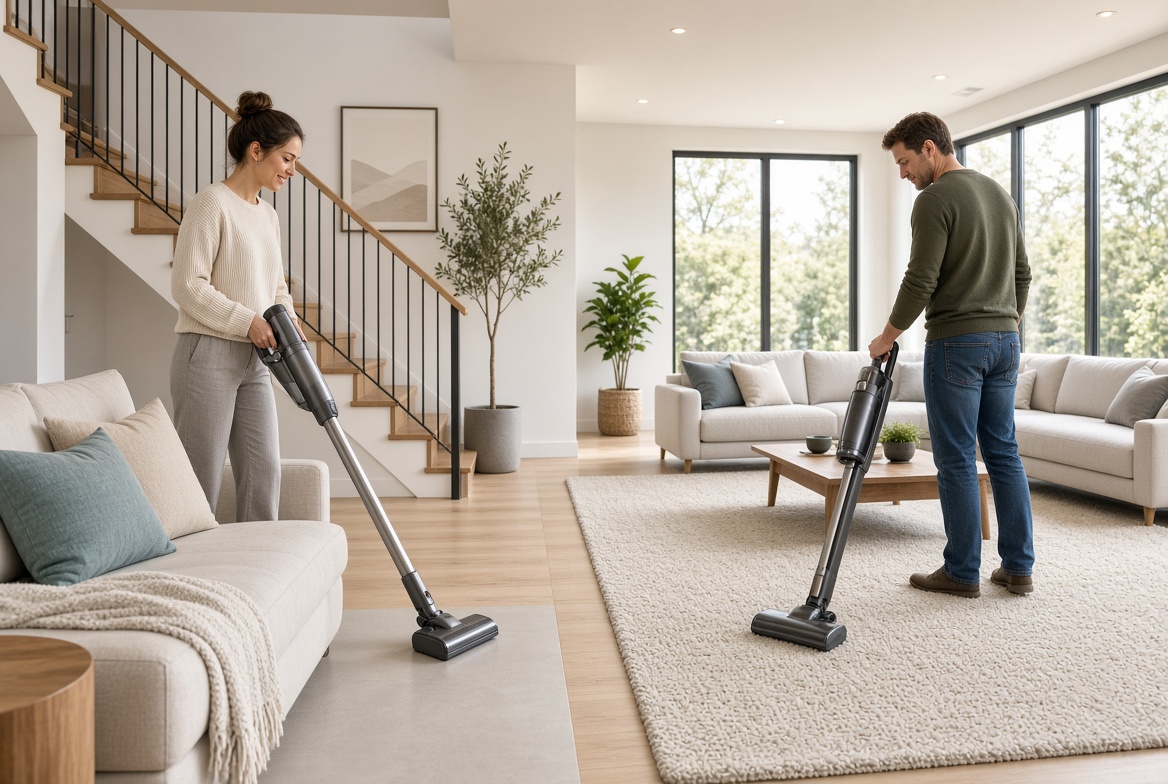
Choosing between a portable vacuum and an upright vacuum is no longer simply about suction. Today's consumers compare cleaning speed, storage space, battery freedom, carpet performance, filtration, noise, maintenance, and long-term value before making a purchase.
As a manufacturer working with global vacuum brands, retailers, and importers, we see a clear pattern: portable designs are gaining attention for convenience, while upright vacuum cleaners remain a practical choice for deeper cleaning in carpeted and larger homes. The winning product depends on the consumer's living space, floor mix, cleaning habits, and expectations.
| Feature | Portable Vacuum | Upright Vacuum |
|---|---|---|
| Best for | Quick cleaning, stairs, cars, small homes, daily touch-ups | Large homes, carpets, heavy debris, routine deep cleaning |
| Weight | Usually lighter and easier to carry | Usually heavier but stable on floors |
| Power source | Often cordless battery power; corded options also exist | Usually corded, although cordless upright models are growing |
| Runtime | Limited by battery capacity on cordless models | Continuous operation when connected to mains power |
| Carpet cleaning | Suitable for light-to-medium cleaning with a motorized floor head | Often stronger for embedded dirt and thicker carpets |
| Dust capacity | Smaller bins require more frequent emptying | Larger bins or bags reduce interruption |
| Storage | Compact and easy to store in apartments | Requires more closet or floor storage space |
| Reach | Excellent for stairs, furniture, vehicles, and high areas | Best for wide, open floor areas |
| Typical buyer | Urban households, pet owners, younger consumers, frequent cleaners | Families, carpet-heavy homes, value-focused deep-cleaning buyers |
The key takeaway is simple: portable vacuum cleaners win on flexibility, while upright vacuum cleaners often win on capacity and sustained cleaning performance.
A portable vacuum cleaner is designed for mobility. It may be handheld, stick-shaped, cordless, compact corded, or convertible between several forms. Its main benefit is that consumers can quickly pick it up, clean a mess, and store it without the effort associated with a larger appliance.
For many buyers, "portable vacuum" now means a cordless stick vacuum with a detachable handheld unit. This format has become especially attractive in apartments, homes with multiple floors, and households that clean small areas several times per week instead of completing one long weekly cleaning session.
A well-designed portable vacuum can support several daily tasks:
- Cleaning crumbs after meals
- Removing pet hair from sofas and bedding
- Vacuuming stairs without carrying a full-size machine
- Reaching under furniture with a low-profile floor head
- Cleaning vehicle seats, footwells, and trunk areas
- Removing dust from curtains, shelves, and narrow gaps
However, portability should not be confused with universal suitability. A lightweight product with a small dust cup, weak airflow, or short battery runtime can disappoint consumers who need to clean large carpeted spaces.
An upright vacuum cleaner combines the floor head, dust collection system, motor, and handle in one standing unit. It is usually pushed across the floor rather than carried in the hand. This structure gives it a strong advantage in open rooms, wall-to-wall carpeting, and homes that generate more dust, hair, and debris.
From a product-development perspective, the upright format gives manufacturers more internal space for a larger motor, wider cleaning head, bigger dust bin or bag, and more robust brush-roll system. Those factors can make upright vacuums highly effective for regular carpet maintenance.
An upright vacuum is often the better fit when consumers need:
- A wider cleaning path for faster coverage
- More consistent performance during long cleaning sessions
- Strong agitation for carpet fibers
- Higher dust capacity for busy family homes
- Less frequent charging or bin emptying
- A stable, all-in-one solution for primary floor care
Independent testing frameworks commonly examine carpet dirt removal, airflow, filtration, hard-floor pickup, noise, maneuverability, and ease of emptying. This is important because a high motor wattage figure alone does not prove that a vacuum will clean better in real homes.
The demand for portable and cordless vacuum cleaner solutions reflects lifestyle changes. Smaller homes, busier schedules, pet ownership, and consumer preference for instant cleaning all support compact designs.
Portable products also create a more frequent-cleaning behavior. A consumer may hesitate to bring out a heavy upright vacuum for a small spill. But they are more likely to use a lightweight cordless vacuum immediately. Over time, this convenience can make a home appear cleaner even if each cleaning session is shorter.
Market research also points to continued interest in cordless, lightweight, and smart cleaning products. One industry forecast identifies compact cordless solutions as an important driver of household vacuum demand, with the cordless/stick category accounting for a large share of revenue in its 2024 analysis.
Convenience is the main selling point. Consumers value a product that can move from kitchen to bedroom, stairs to car, or floor to ceiling without plugging and unplugging.
Other advantages include:
- Lightweight handling for older users or smaller households
- Easy storage in apartments, dormitories, and compact homes
- Detachable handheld function for upholstery and vehicles
- Better access to corners, ceilings, and furniture gaps
- Cordless freedom for fast, unplanned cleaning
- Attractive design opportunities for modern retail positioning
For private-label buyers, portable vacuum cleaners also offer room for differentiation. Brands can customize battery packs, accessories, floor heads, display screens, color finishes, charging docks, dust-bin structures, and packaging according to target market needs.
The most common challenge is runtime. Battery-powered models must balance weight, cost, charging time, runtime, suction level, and battery life. Running continuously in maximum-power mode can significantly reduce usable cleaning time.
Portable vacuums may also have smaller dust bins. This is manageable for quick daily cleaning, but it becomes less convenient in homes with pets, children, large rugs, or high levels of tracked-in dirt.
A buyer should therefore compare more than claimed suction. They should examine:
1. Runtime at both standard and high-power settings
2. Battery replacement availability
3. Charging method and charging time
4. Floor-head design for hard floors and carpets
5. Hair-wrap resistance around the brush roll
6. Dust-bin emptying hygiene
7. Filter access, washing instructions, and replacement cost
Despite the popularity of cordless models, upright vacuums remain highly relevant. They serve buyers who prioritize deep carpet cleaning, high capacity, and long operating time over compact storage.
A major consumer buying guide notes that upright vacuums are especially suitable for wall-to-wall carpet and thicker area rugs because their weight is positioned over the powerhead, helping the cleaner work more deeply into carpet fibers.
For retailers, an upright vacuum often provides a strong "main vacuum" proposition. It is a recognizable solution for households that want one dependable appliance to manage regular floor cleaning.
Capacity is a major advantage. A larger dirt container or bag means fewer interruptions, which matters in larger homes and high-traffic environments.
Upright vacuum cleaners are often preferred for:
- Wall-to-wall carpeting
- Thick rugs and high-pile carpet
- Large living areas
- Homes with several residents
- Pet households with frequent hair buildup
- Consumers who prefer corded cleaning power
- Buyers who want a single primary vacuum
The broad floor head can also improve cleaning speed. A wider path covers more surface area per pass, which makes an upright vacuum especially efficient in open-plan rooms.
Upright models are not ideal for every home. Their larger body can be less convenient for tight apartments, narrow staircases, vehicle interiors, and above-floor cleaning.
They may also feel heavy for consumers with limited mobility. A corded upright requires access to electrical outlets, and its cable must be managed during use and storage. These limitations are why many households increasingly combine an upright vacuum for deep cleaning with a small portable vacuum for daily tasks.
One of the most common purchasing mistakes is assuming that a higher wattage number automatically means stronger real-world cleaning. Motor input power, airflow, suction, brush-roll design, nozzle sealing, filtration, and floor type all affect the final result.
Laboratory methods for vacuum performance measure multiple characteristics. ASTM F558, for example, covers airflow, suction, air power, and input power under defined test conditions. The standard also cautions that maximum air power does not directly represent the air power available during actual cleaning tasks.
For consumers and product buyers, the better question is: How well does the vacuum remove debris from the intended surface?
Hard-floor cleaning requires controlled airflow and a floor head that captures dust without scattering larger debris. Soft rollers, adjustable suction, sealed edges, and anti-static design can improve performance on tile, wood, laminate, and vinyl floors.
Portable vacuums frequently perform well here because their lightweight floor heads are easy to maneuver. However, a poor brush design can push rice, cereal, or pet food forward rather than pulling it into the dust bin.
Carpet cleaning requires a different balance. The vacuum must lift surface debris while agitating dust embedded below the fibers. Upright vacuums commonly have an advantage because they can use a heavier motorized head, a more substantial brush roll, and sustained corded operation.
ASTM F608 provides a method for evaluating embedded dirt removal effectiveness in household and commercial vacuum cleaners. It focuses on embedded carpet dirt rather than surface litter, reinforcing why carpet performance should be assessed separately from hard-floor pickup.
Pet owners are not only looking for strong suction. They need a brush roll that resists hair wrapping, a dust bin that empties cleanly, and specialized tools for upholstery and bedding.
For this group, the best portable vacuum may be a cordless stick model with a mini motorized tool. The best upright vacuum may include a tangle-resistant brush roll, hose, pet tool, and sealed filtration system. Product positioning should reflect these practical needs instead of relying on generic "pet-friendly" claims.
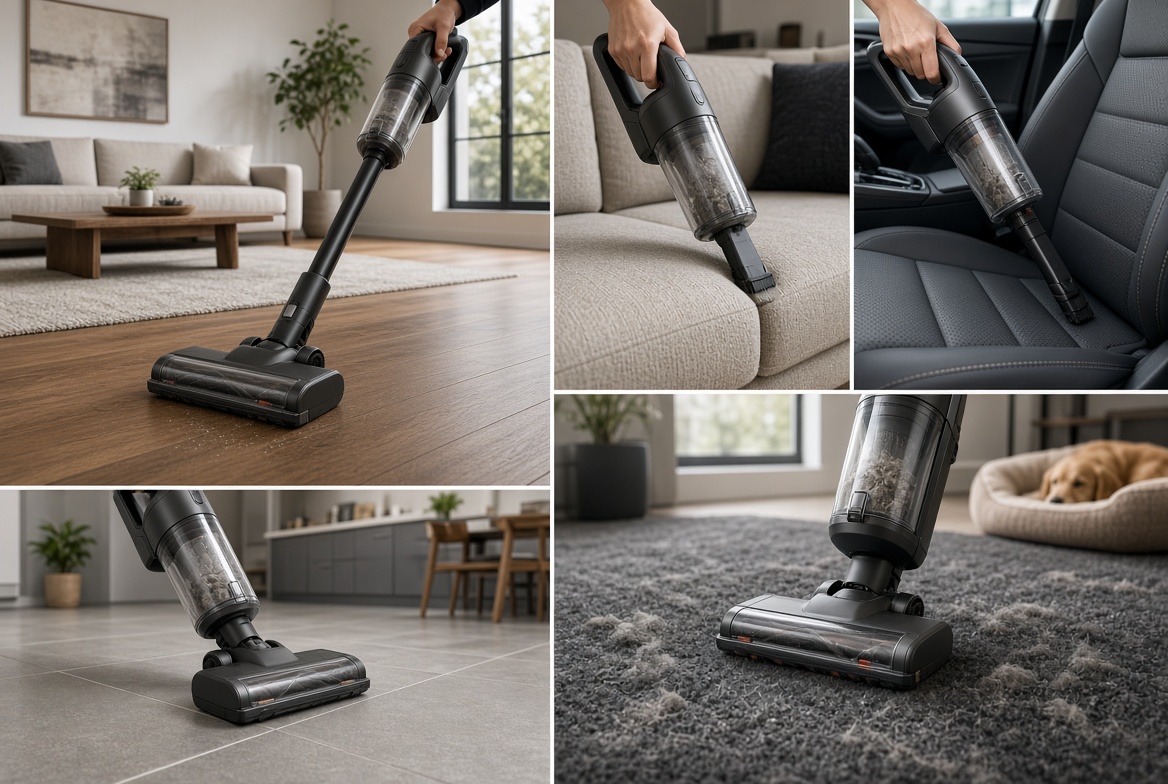
Filtration is a major decision factor, particularly for consumers who care about fine dust containment. A vacuum cleaner should not only collect dirt; it should also help retain what it collects.
The European Commission's consumer guidance highlights dust re-emission as an important but frequently overlooked part of cleaning performance. In practical terms, buyers should review the full air path: dust-bin seal, cyclone or bag system, pre-filter, post-motor filter, and maintenance instructions.
When comparing portable vacuum vs upright vacuum models, ask these questions:
- Is the dust system sealed from intake to exhaust?
- Is the filter washable, replaceable, or both?
- Can the dust cup be emptied without creating a large dust cloud?
- Are replacement filters easy to source locally?
- Does the product provide a clear maintenance reminder?
- Is the filter system designed for the market's expected use conditions?
For brands, filtration design is also a long-term service issue. A product may perform well when new but lose customer satisfaction if the consumer cannot easily clean or replace its filters.
The portable vacuum versus upright vacuum discussion often overlaps with the corded versus cordless decision. Yet these are not exactly the same category. A portable vacuum can be corded, and an upright vacuum can be cordless.
Cordless products offer freedom of movement. They appeal to consumers who value speed and convenience, but brands must communicate realistic runtime under different power modes. Transparent battery information helps prevent returns and negative reviews.
Corded products provide consistent operating time. They are often preferred for deep-cleaning tasks, large homes, and commercial-style cleaning routines. The trade-off is cable management and reduced mobility.
Consumers can use this simple checklist before choosing:
1. Measure the home: Small apartments and limited storage favor portable designs; large carpeted homes may favor uprights.
2. Identify floor types: Hard floors suit many portable vacuums; thick carpet often benefits from a capable upright.
3. Consider cleaning frequency: Daily quick cleaning supports cordless portability; weekly deep cleaning supports larger capacity.
4. Check household needs: Pets, children, allergies, and long hair affect tool, bin, and filtration requirements.
5. Review maintenance: Filters, brush rolls, batteries, and bins should be easy to access and maintain.
6. Compare total ownership value: Consider spare batteries, replacement filters, warranty support, and expected product life.
Consumers are not abandoning upright vacuums. Instead, they are choosing more specialized products based on their homes and cleaning routines.
Portable vacuum cleaners are increasingly attractive to urban households, renters, pet owners, and consumers who want fast daily cleaning. Upright vacuum cleaners remain valuable for families, carpeted homes, and buyers who need uninterrupted cleaning time with a larger dust capacity.
The strongest consumer proposition is often not "portable is better" or "upright is better." It is matching the right cleaning format to the user's environment.
| Consumer Situation | Better Starting Choice | Why |
|---|---|---|
| Studio apartment or compact flat | Portable vacuum | Easy storage, fast cleanup, simple maneuverability |
| Large carpeted family home | Upright vacuum | Deep cleaning capability, larger bin, extended operating time |
| Home with pets | Either, depending on layout | Choose anti-tangle brush rolls and dedicated pet tools |
| Multi-story property | Portable vacuum | Easier to carry up stairs and use in separate rooms |
| Heavy weekly cleaning routine | Upright vacuum | More capacity and fewer charging interruptions |
| Car, sofa, mattress, and stairs | Portable vacuum | Handheld flexibility and targeted attachments |
| Retail brand building a full range | Both categories | Covers convenience-led and performance-led consumer segments |
For vacuum cleaner brands and sourcing teams, product selection should begin with the target customer rather than a product trend. A premium cordless portable vacuum needs battery consistency, ergonomic balance, strong accessory integration, and serviceable filters. A competitive upright vacuum needs stable floor-head performance, reliable brush-roll design, manageable noise, and durable structural components.
At Ningbo Eyunhome Electric Technology Co., Ltd., we support global partners with upright, handheld, corded, and cordless vacuum cleaner solutions. Our OEM and ODM approach helps brands build products around their own market requirements, including appearance, accessories, functional configuration, packaging, and after-sales expectations.
A successful range may include a high-capacity upright vacuum for deep cleaning, a lightweight stick vacuum for everyday floors, and a handheld model for cars and upholstery. This creates a clearer product ladder and gives consumers a reason to remain with the same brand as their needs change.
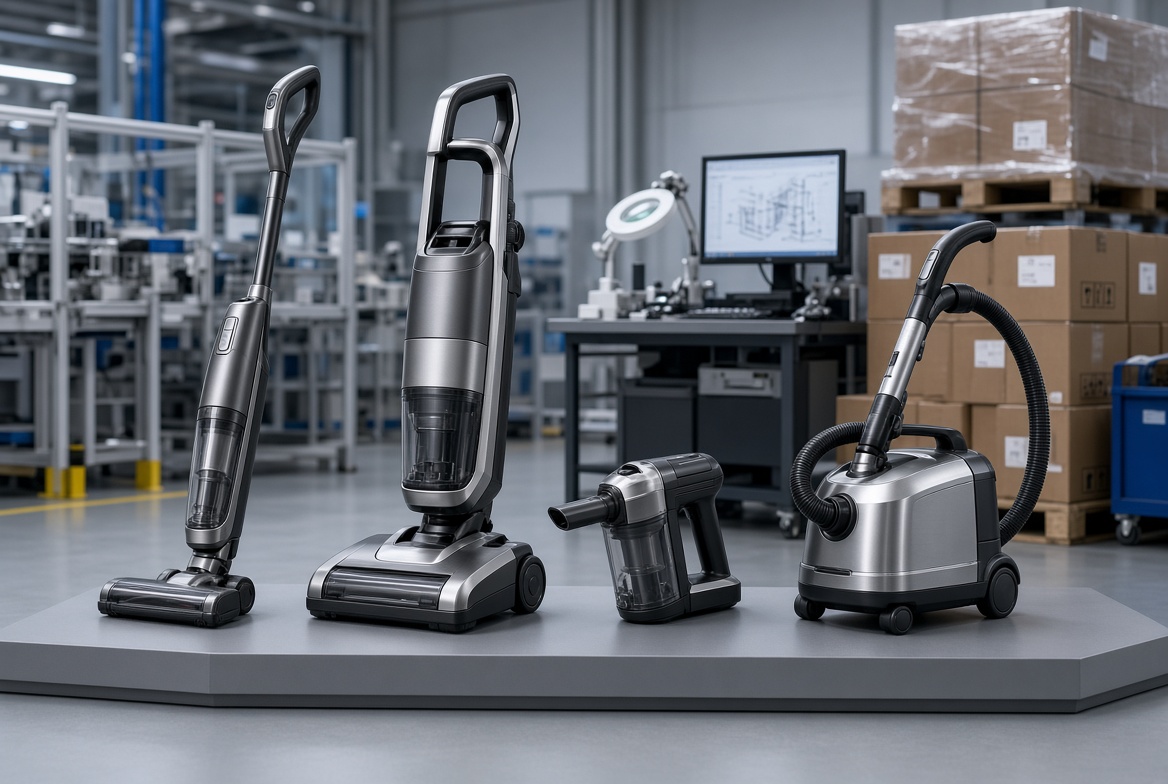
A portable vacuum is the smarter choice for mobility, quick cleanups, compact storage, and flexible above-floor cleaning. An upright vacuum is the stronger choice for larger areas, thick carpets, longer cleaning sessions, and higher dust capacity.
If you are developing a vacuum cleaner range for your market, contact Ningbo Eyunhome Electric Technology Co., Ltd. to discuss a tailored OEM or ODM solution that aligns with your target price point, product positioning, performance requirements, and after-sales strategy.
Yes, a quality portable vacuum can handle everyday hard-floor cleaning, light carpet maintenance, crumbs, pet hair, and spot cleaning. For large homes or deep carpet cleaning, an upright vacuum may be a better primary machine.
Both can work well when they include a motorized brush roll, anti-tangle design, and pet-hair tools. A portable vacuum is more convenient for sofas and stairs, while an upright model is often better for large carpeted rooms.
They can be suitable if the battery runtime, charging system, and dust capacity match the home size. For larger houses, consider a removable battery system or a corded upright vacuum for deep-cleaning sessions.
Common causes include a full dust bin, blocked floor head, hair wrapped around the brush roll, clogged filters, or an air leak. Regular maintenance is essential for consistent performance.
In many cases, yes. Upright vacuums often have a larger motorized floor head, stronger carpet agitation, and longer operation time, which can improve cleaning on thick rugs and wall-to-wall carpet.
Importers should assess target-market compliance, product testing, motor and battery specifications, filtration, accessory packages, spare-part availability, packaging, quality-control procedures, production capacity, and warranty support.
Some versatile models can cover many tasks, but no single format is perfect for every home. Many consumers prefer a portable model for daily cleaning and a larger upright vacuum for periodic deep cleaning.
1. [Fortune Business Insights — Vacuum Cleaner Market Size, Share and Forecast] [fortunebusinessinsights]
2. [Data Bridge Market Research — Global Household Vacuum Cleaners Market] [databridgemarketresearch]
3. [ASTM International — F558 Standard Test Method for Air Performance Characteristics of Vacuum Cleaners] [store.astm]
4. [BSI Knowledge — ASTM F608 Standard for Carpet Embedded Dirt Removal] [knowledge.bsigroup]
5. [Consumer Reports — Vacuum Cleaner Buying Guide] [consumerreports]
6. [European Commission — Efficient Vacuum Cleaners Consumer Guide] [energy-efficient-products.ec.europa]


