
Views: 236 Author: Eyunhome Vacuum Publish Time: 2026-08-18 Origin: Site


Content Menu
● Stick Vacuum vs Upright Vacuum at a Glance
● Why Hard Floors Need a Different Cleaning Approach
● Stick Vacuum Performance on Hard Floors
>> Key strengths of a stick vacuum
● Upright Vacuum Performance on Hard Floors
>> Key strengths of an upright vacuum
● Which Vacuum Cleans Hard Floors Better?
● The Floor Head Matters More Than the Label
>> What to look for in a hard-floor head
● Practical Hard-Floor Test Checklist for Buyers
● Selecting the Right Product for Your Market
● Expert Recommendation for Product Development
● Build Your Hard-Floor Vacuum Program With Eyunhome
● FAQ
>> Is a stick vacuum better than an upright vacuum for hardwood floors?
>> Can an upright vacuum scratch hard floors?
>> Do cordless stick vacuums have enough power for hard floors?
>> What vacuum head is best for tile and laminate floors?
>> Are upright vacuums better for pet hair on hard floors?
>> How should vacuum suppliers test hard-floor cleaning performance?
>> What is the best vacuum category for a private-label hard-floor product?
For hard-floor cleaning, a well-designed stick vacuum usually delivers the better everyday user experience, while an upright vacuum remains the stronger choice for long cleaning sessions, larger debris loads, and mixed-floor environments. The real winner depends less on the vacuum category alone and more on the floor head, debris type, power system, filtration, and cleaning routine.
At Ningbo Eyunhome Electric Technology Co., Ltd., we work with global buyers who need vacuum cleaner programs that balance cleaning performance, usability, durability, and market positioning. From our product-development perspective, the question is not simply "stick vacuum vs upright vacuum." It is: which product architecture gives the intended customer the most reliable hard-floor result at the right price point?
Hardwood, laminate, tile, vinyl, stone, and polished concrete require a vacuum that can collect fine dust without scattering crumbs, scratching delicate surfaces, or leaving debris along edges. This guide compares stick vacuums and upright vacuums across the factors that matter most to consumers, retailers, distributors, and private-label vacuum brands.
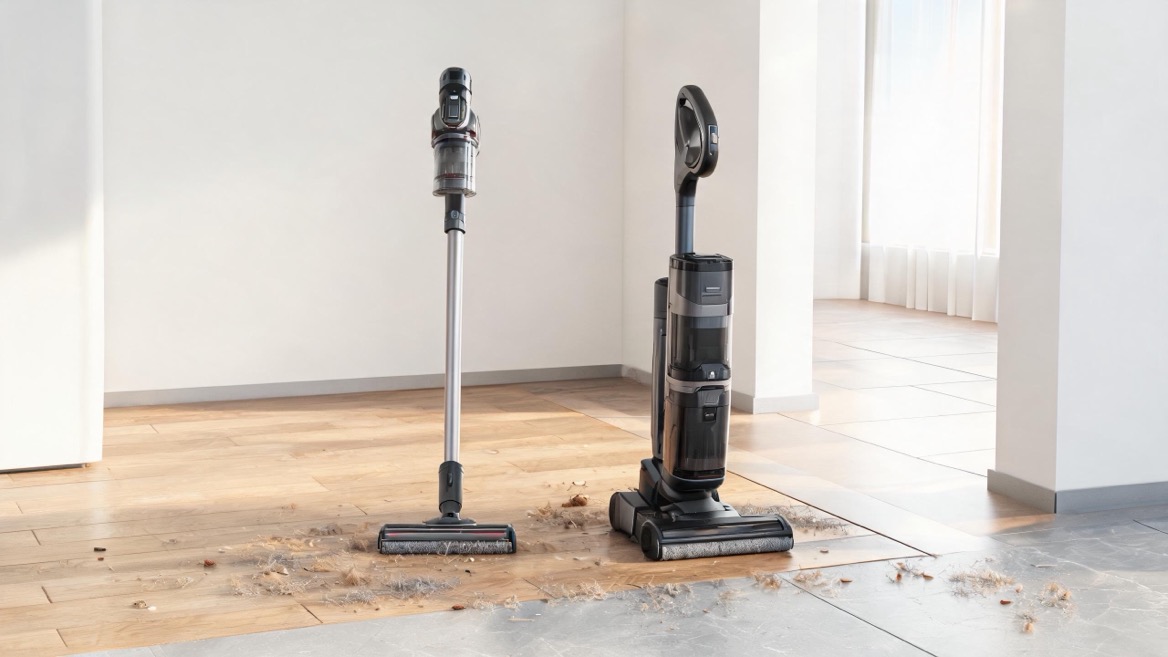
| Feature | Stick Vacuum | Upright Vacuum |
|---|---|---|
| Best for | Daily hard-floor cleaning, apartments, quick pickups | Large homes, extended sessions, mixed floors |
| Maneuverability | Excellent; slim body and swivel steering | Good, but bulkier around furniture |
| Weight | Usually lighter and easier to carry | Usually heavier due to larger motor and dust bin |
| Cord freedom | Often cordless | Often corded, though cordless models exist |
| Runtime | Limited by battery capacity | Continuous power for corded versions |
| Dust-bin capacity | Smaller | Larger |
| Edge and low-profile access | Usually better | Depends heavily on floor-head design |
| Fine-dust pickup | Strong with a sealed head and soft roller | Strong with the correct hard-floor setting |
| Large debris handling | Can be excellent with an anti-scatter inlet | Often reliable, but some heads may push debris |
| Storage | Compact; may mount on a wall | Requires more floor or closet space |
For households with mostly hard floors, the difference often comes down to convenience. A cordless stick vacuum is easy to pick up for a 30-second cleanup after meals, pet activity, or entryway traffic. That higher usage frequency can produce a cleaner home than a more powerful machine that stays stored away.
However, an upright vacuum can still be the practical choice for buyers who prioritize a large dust capacity, corded operating time, robust construction, and all-in-one floor-care performance.
Hard floors do not trap debris the way carpet does. That sounds easier, but it creates a different challenge: dirt remains visible and mobile.
Fine dust can collect in plank joints and grout lines. Hair can cling to static-prone surfaces. Rice, cereal, pet kibble, and other larger particles may be pushed forward by an unsuitable floor head instead of being drawn inside.
A hard-floor vacuum should therefore manage four jobs well:
- Fine particle pickup from smooth surfaces and narrow gaps
- Large-debris collection without snowplowing or scattering
- Gentle floor contact to reduce the risk of marks or scratches
- Edge cleaning along skirting boards, cabinet bases, and furniture legs
Performance testing for dry vacuum cleaners includes hard-floor debris pickup, while testing methods for cordless models also address hard-floor runtime, noise, cleaning energy use, and hard-floor cleaning with crevices. This is important because a high motor specification alone does not prove that a vacuum performs well in real homes.
A stick vacuum is generally built around a slim wand, compact motor unit, and low-profile floor head. This format is particularly effective on hard floors because it is easy to steer under beds, sofas, tables, and cabinets.
Fast access encourages more frequent cleaning. Users can remove a cordless stick vacuum from its charging dock and clean a kitchen or hallway in seconds. For high-traffic hard-floor areas, this matters more than occasional deep cleaning.
Low-profile floor heads reach difficult areas. A slim brush head can move beneath furniture that a conventional upright cannot access easily.
Soft rollers protect smooth surfaces. A soft roller or dedicated hard-floor roller can improve contact with tile, vinyl, laminate, and sealed wood. It also helps capture fine powder while lifting larger particles from the surface.
Swivel steering improves control. In our experience developing hard-floor vacuum solutions, a responsive swivel joint often makes more difference to customer satisfaction than small increases in listed motor power.
Convertible handheld use adds value. A stick vacuum may convert into a handheld cleaner for stairs, upholstery, car interiors, shelves, and desk areas. This creates a broader cleaning solution without requiring a separate appliance.
Independent testing cited by CHOICE found that stick vacuums generally achieved good to very good hard-floor results, with an average hard-floor score of 76%. At the same time, results varied greatly across models, demonstrating why head design, airflow management, and sealing must be evaluated instead of assuming every stick vacuum performs equally.
The primary limitation is operating time. Cordless models depend on battery capacity, selected power mode, brush-roll load, and the user's cleaning habits.
For example, maximum-power mode can be useful for concentrated debris near doorways or pet feeding areas, but it should not be the assumed mode for cleaning an entire home. A practical product should offer a balanced standard mode with sufficient runtime for daily hard-floor maintenance.
Other limitations include:
- Smaller dust bins that require more frequent emptying
- Battery recharge intervals
- Reduced pickup if filters are not maintained
- Potentially weaker performance with very heavy debris loads
- Varying battery replacement expectations across markets
For private-label and OEM buyers, the lesson is clear: battery specifications must be supported by an honest, well-designed runtime strategy, not only by a high peak-power claim.
An upright vacuum combines the motor, dust bin, handle, and floor head in one vertically oriented structure. Its traditional advantage is powerful, sustained cleaning for larger spaces and carpeted areas.
On hard floors, an upright vacuum can perform very well when it has the right nozzle configuration. This may include a hard-floor mode, adjustable suction, a brush-roll shutoff function, or a soft-brush attachment.
Continuous cleaning power. A corded upright does not require recharge planning. This makes it suitable for longer cleaning tasks, multi-room homes, rental properties, hospitality applications, and professional light-duty use.
Large dust capacity. Uprights usually hold more debris than stick vacuums. This is useful for households with pets, children, multiple occupants, or frequent outdoor dirt.
Stable full-home operation. The larger body can accommodate a larger motor, dust container, filtration path, and accessory storage system.
Good debris capacity for bulk pickups. For repeated collection of hair, dry leaves, pet litter, cereal, or other visible debris, a larger bin reduces interruptions.
Broader mixed-floor capability. Buyers who need one machine for hard floors and carpet may prefer an upright with adjustable settings and a suitable brush-roll system.
An upright vacuum can be less comfortable in a hard-floor-focused home when it is heavy, wide, or difficult to maneuver around furniture. A rigid floor head may also create a common consumer complaint: pushing debris away rather than collecting it.
The design risks are especially noticeable with:
- Large crumbs and pet kibble
- Long hair near floor edges
- Narrow furniture gaps
- Low-clearance areas under sofas and beds
- Lightweight rugs that may lift into the nozzle
For manufacturers, one of the most important design checks is large-debris behavior. Testing should include forward and reverse passes with common household debris, not just fine dust. A vacuum that performs well with laboratory dust but scatters rice in a kitchen will disappoint end users.
For most consumers with primarily hard floors, a cordless stick vacuum with a soft roller and an anti-scatter floor head performs better in daily use.
That conclusion is based on the full cleaning experience, not solely on motor output. The best hard-floor vacuum must be easy to reach for, easy to steer, gentle on surfaces, and capable of collecting both dust and visible debris.
An upright vacuum may perform better when the buyer needs:
- Long, uninterrupted cleaning sessions
- A larger dust bin
- A corded power source
- Stronger performance across carpets and hard floors
- A more substantial appliance for large-area cleaning
CHOICE notes that traditional corded vacuums generally performed well on hard floors in its testing history, while the larger performance differences appeared on carpet. This suggests that on smooth flooring, usability and floor-head engineering can be more decisive than vacuum format alone.
A common mistake is choosing a vacuum based only on the words "stick" or "upright." For hard-floor performance, the floor head often has greater influence than the machine's external shape.
Soft roller material. A soft roller can maintain floor contact and support gentle debris pickup on sealed wood, tile, vinyl, and laminate.
Anti-scatter inlet geometry. The front opening should allow larger particles to enter instead of being pushed forward.
Controlled brush-roll speed. Excessive agitation is not always useful on hard floors. The objective is pickup, not aggressive surface brushing.
Sealed airflow path. Strong airflow should be directed through the floor head and filtration system rather than escaping through gaps.
Edge-cleaning channels. Side suction paths and well-positioned air inlets help collect debris along walls and cabinetry.
Hair-management design. A comb structure or anti-tangle brush design can reduce the time users spend cutting wrapped hair from the roller.
For an OEM/ODM project, these components should be reviewed during sample validation. Product teams should test on the actual floor types used in the target market, including tile grout, laminate seams, textured vinyl, and wood plank joints.
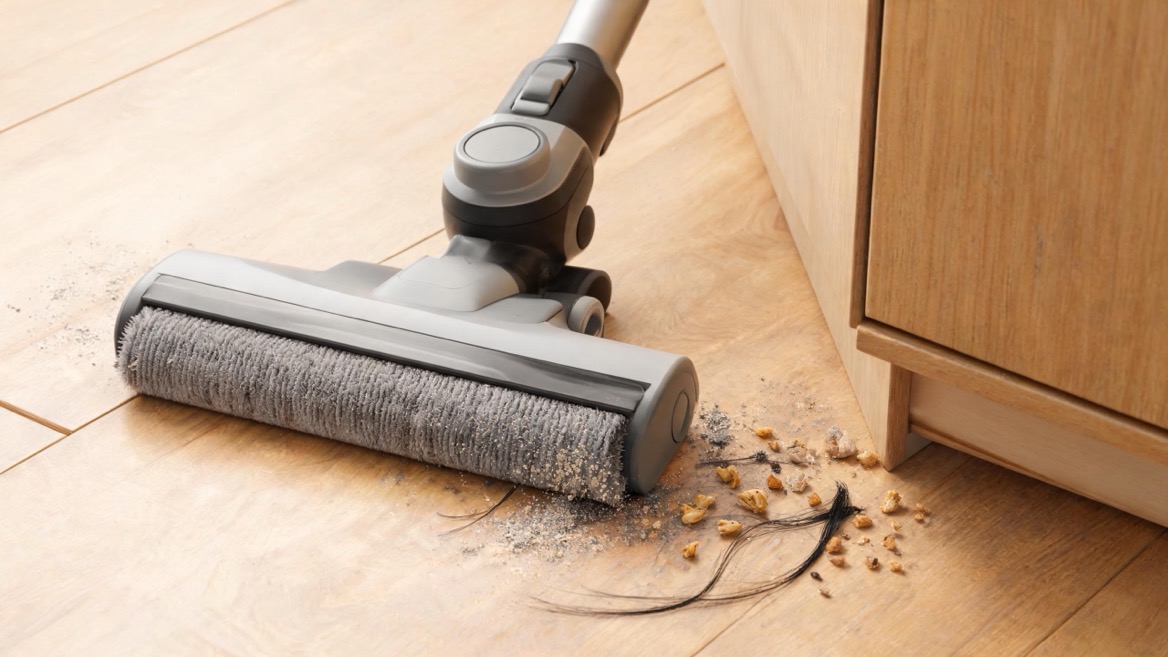
Before selecting a stick vacuum or upright vacuum supplier, buyers should request structured performance validation.
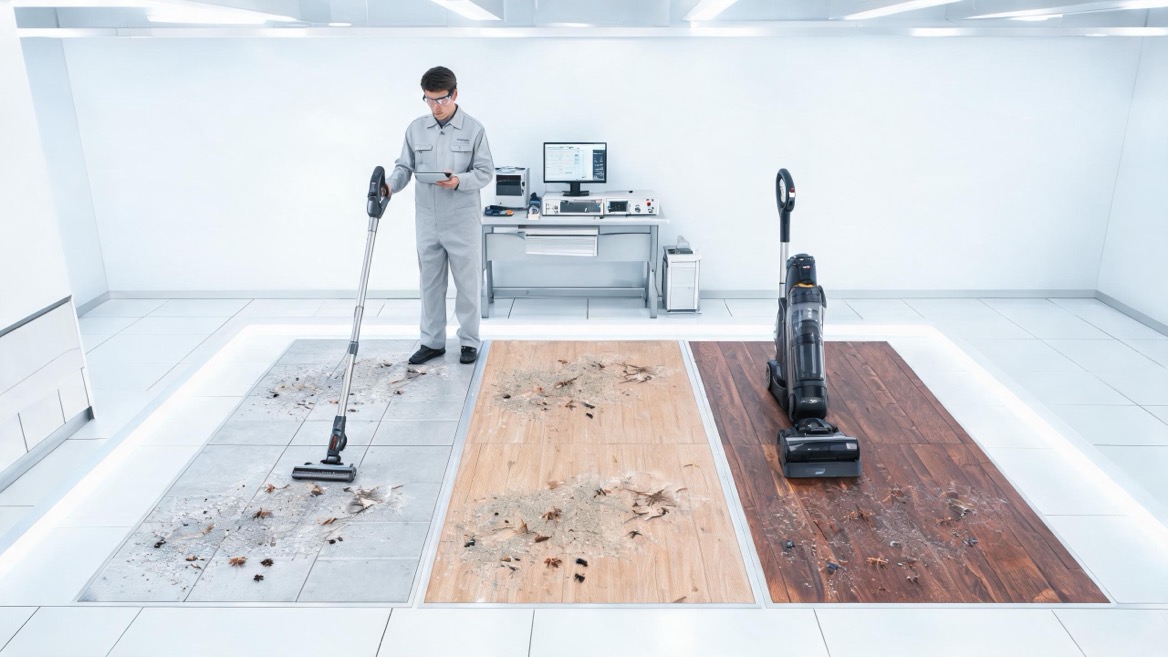
1. Test fine dust on a smooth hard-floor panel.
2. Test particles in crevices, seams, or grout-like gaps.
3. Test large debris such as cereal, rice, kibble, and dry leaves.
4. Test edge pickup alongside a wall or cabinet base.
5. Test hair pickup and brush-roll tangling.
6. Test runtime in the normal cleaning mode, not only the highest mode.
7. Test noise at typical user distance.
8. Check whether the dust bin can be emptied without touching collected debris.
9. Inspect the roller and wheels for potential floor-marking risks.
10. Repeat testing after filter loading to understand real-use consistency.
International performance methods for household vacuum cleaners cover essential characteristics relevant to users, including hard-floor debris pickup. Cordless testing methods are designed so results can be compared with mains-connected vacuum testing approaches.
| Buyer Need | Recommended Direction |
|---|---|
| Small apartments and urban homes | Cordless stick vacuum with wall mount and soft roller |
| Hardwood, tile, vinyl, or laminate-focused homes | Stick vacuum with dedicated hard-floor head |
| Large homes with frequent cleaning | Upright vacuum with large bin and hard-floor setting |
| Pet-owning households | Stick or upright model with anti-tangle roller and sealed filtration |
| Mixed carpet and hard-floor homes | Upright vacuum with brush-roll control, or a premium stick vacuum with interchangeable heads |
| Value retail program | Corded upright or corded stick vacuum with proven hard-floor nozzle |
| Premium private-label range | Cordless stick vacuum with multi-stage filtration, dock, display, and hard-floor roller |
A strong product range does not need to force one design on every market. Many distributors benefit from offering both categories: a lightweight stick vacuum for convenience-led buyers and an upright vacuum for capacity-led buyers.
From a manufacturing and product-planning standpoint, the highest-potential hard-floor vacuum program is often a stick vacuum platform with a purpose-built soft roller, anti-tangle structure, controlled airflow, removable battery option, and easy-empty dust bin.
This format aligns with how many consumers now clean: short, frequent sessions rather than one long weekly task. It also gives brands flexibility to create multiple versions from one platform through motor options, battery configurations, filtration grades, colors, accessories, and packaging.
However, upright vacuums should not be treated as outdated. They remain valuable for markets where consumers expect corded reliability, large dust capacity, robust physical presence, and extended cleaning coverage.
The most successful choice is the one that matches the target user's floor type, cleaning frequency, home size, and price expectations.
Whether your brand needs a lightweight cordless stick vacuum, a dependable corded upright vacuum, or a tailored product line for diverse retail channels, Ningbo Eyunhome Electric Technology Co., Ltd. can support your program from product concept to production.
Our OEM/ODM services can help you evaluate product architecture, floor-head configuration, battery options, accessories, branding, packaging, quality-control requirements, and after-sales support. Contact Eyunhome to discuss a hard-floor vacuum solution designed for your market, target price, and customer expectations.
Usually, yes. A stick vacuum with a soft roller, low-profile head, and good anti-scatter design is often easier to use on hardwood floors. It can reach under furniture and is convenient for frequent dust and crumb pickup.
It can if the floor head uses unsuitable bristles, damaged wheels, abrasive materials, or an aggressive brush-roll setting. Choose a model with a hard-floor mode, brush-roll control, soft contact points, and clean wheels.
A well-engineered cordless stick vacuum can provide more than enough practical cleaning performance for normal hard-floor dust, hair, and crumbs. Buyers should assess real pickup tests, standard-mode runtime, and floor-head design rather than relying only on a peak-power number.
A soft roller or dedicated hard-floor head is usually the best option. It should combine gentle surface contact, strong fine-dust pickup, side-edge cleaning, and an inlet that allows larger debris to enter without scattering.
They can be effective, especially when long runtime and a large dust bin are needed. But a stick vacuum with an anti-tangle soft roller can be equally practical for daily pet hair removal, particularly in homes with mostly hard flooring.
They should test fine dust, debris in crevices, large particles, edge cleaning, hair pickup, noise, normal-mode runtime, bin emptying, and performance after filter loading. Testing should reflect the real floor types and debris found in the intended market.
For a convenience-led and premium market, a cordless stick vacuum is often the strongest choice. For a value-focused, high-capacity, or mixed-floor program, a corded upright vacuum can offer a compelling alternative.
1. [IEC 62885-2:2021 — Surface cleaning appliances: Dry vacuum cleaner performance measurement methods]
2. [IEC 62885-4:2020 — Cordless dry vacuum cleaner performance measurement methods]
3. [CHOICE — Stick vs corded vacuums: Which type is better?]
4. [IEC TS 62885-1:2026 — General requirements on test material and test equipment]


