
Views: 257 Author: Eyunhome Vacuum Publish Time: 2026-09-16 Origin: Site


Content Menu
● Why Handheld Vacuum Cleaners Remain a High-Value Product Category
● What Users Expect From the Best Handheld Vacuum Cleaner
>> Strong Cleaning Performance for Real-World Debris
>> Practical Battery Runtime and Charging Time
>> Comfortable Handling and Balanced Weight
● Essential Features for a Competitive Handheld Vacuum
>> Motorized Pet Brush for Upholstery and Hair
>> Washable Filters and Fine-Dust Control
>> Crevice Tools, Brush Nozzles, and Multi-Use Attachments
● Cordless, Corded, or 2-in-1: Which Solution Fits Your Market?
● A Practical Supplier Evaluation Checklist for Buyers
>> Product Engineering and Customization Capability
>> Quality Control From Components to Final Packing
>> Compliance and Market Readiness
● How Eyunhome Supports Handheld Vacuum Development
● Turn Customer Feedback Into Better Product Decisions
● Choose a Handheld Vacuum Platform That Can Grow With Your Brand
>> What is the best handheld vacuum cleaner for pet hair?
>> How long should a cordless handheld vacuum run?
>> Is a corded or cordless handheld vacuum better?
>> What should importers check before ordering handheld vacuums from China?
>> What is the difference between OEM and ODM vacuum cleaner services?
>> Why is dustbin design important in a handheld vacuum?
>> Can a handheld vacuum replace a full-size vacuum cleaner?
Handheld vacuum cleaners have become an essential category for brands serving modern homes, pet owners, car-care users, apartment residents, and consumers who need fast daily cleaning. A well-designed handheld vacuum cleaner can handle crumbs on kitchen counters, pet hair on upholstery, dust in tight gaps, debris in vehicle interiors, and small spills that do not justify taking out a full-size machine.
For importers, private-label brands, distributors, and retailers, however, selecting the right handheld vacuum is not simply about choosing the highest suction figure. A successful product must balance cleaning power, runtime, filtration, ergonomics, dustbin design, accessories, charging convenience, product reliability, compliance requirements, packaging, and long-term service support.
Ningbo Eyunhome Electric Technology Co., Ltd. develops and manufactures handheld, cordless, corded, upright, stick, and portable vacuum cleaner solutions for global markets. With flexible OEM and ODM capabilities, the company helps buyers turn product requirements into scalable, market-ready cleaning appliances.
This guide explains what makes a handheld vacuum competitive, how buyers can compare models intelligently, and how an experienced China vacuum cleaner manufacturer can support a stronger product launch.

A handheld vacuum is designed for quick cleaning convenience. It is compact, easy to store, simple to operate, and usually ready within seconds. Unlike a full-size upright or canister vacuum, it is made for targeted messes rather than whole-home cleaning sessions.
That makes handheld vacuums highly relevant across many daily-use scenarios:
- Cleaning pet hair from sofas, beds, cushions, and stairs.
- Removing food debris from dining areas and kitchen counters.
- Cleaning car seats, floor mats, door pockets, and narrow gaps.
- Picking up dust from drawers, shelves, keyboards, and home-office areas.
- Reaching corners, upholstery seams, and other difficult spaces.
- Supporting fast cleaning in apartments, dormitories, RVs, and small homes.
From a product-planning perspective, handheld models also offer attractive advantages. They are typically smaller than full-size vacuum cleaners, easier to ship, suitable for accessory bundles, and adaptable for different retail segments.
A compact body does not mean a simple product decision. The best handheld cordless vacuum is usually the result of careful engineering trade-offs. Increasing battery capacity may improve runtime, but it can also raise weight and charging time. Increasing motor power may improve pickup, but it may increase noise, heat, and energy consumption. A larger dustbin reduces emptying frequency, but it can make the product less compact.
For this reason, the strongest products are not those with the most extreme single specification. They are the models that deliver a well-matched user experience for a clearly defined market.
Consumer feedback and professional product testing consistently show that buyers judge handheld vacuums through a combination of practical experiences. Suction matters, but it is not the only factor that determines satisfaction.
A buyer may be disappointed by a powerful machine if it is heavy, difficult to empty, uncomfortable to hold, or unable to capture fine dust effectively. Conversely, a less expensive model can perform well in its market if it is lightweight, dependable, easy to maintain, and designed for everyday debris.
Consumers expect a handheld vacuum to remove more than loose dust. A good machine should handle mixed household debris, including crumbs, hair, grit, dry food particles, paper fragments, and tracked-in dirt.
When evaluating cleaning performance, buyers should look beyond a single suction-pressure number. Vacuum pressure can be useful, but actual pickup is influenced by several connected factors:
- Motor output and efficiency.
- Airflow through the system.
- Air-path design.
- Nozzle shape and seal.
- Brush-roll performance.
- Filter condition.
- Battery output under load.
- Attachment selection.
- Dustbin fill level.
For example, a crevice tool may perform better than a wide nozzle in narrow vehicle gaps. A motorized brush may be more effective than direct suction for embedded pet hair on upholstery. A wider mouth can be useful for larger crumbs or dry debris.
The most useful product-development question is not "What is the maximum suction number?" It is: What cleaning task should this model perform best?
Cordless handheld vacuums are built around convenience, so battery performance is central to the user experience. Independent testing of handheld cordless vacuum cleaners has found that average runtime at maximum power can be around 11 minutes, although runtime varies significantly by battery size, motor mode, airflow resistance, attachments, and test conditions.
For many users, 10 to 20 minutes of productive operation is enough for daily spot cleaning. The key is that the product should deliver stable output during that time and clearly communicate expected runtime.
A manufacturer and buyer should define runtime according to the intended market position:
| Product Position | Typical User Need | Recommended Battery Strategy |
|---|---|---|
| Entry-level handheld vacuum | Light crumbs, desks, small surfaces | Compact battery, simple charging, low product weight |
| Car vacuum cleaner | Seats, mats, narrow gaps, repeated use | Balanced runtime, crevice accessories, stable power output |
| Pet hair handheld vacuum | Upholstery, stairs, bedding, furniture | Motorized brush, strong airflow, optimized filtration |
| Premium cordless vacuum | Multi-surface cleaning and accessory use | Multi-mode output, stronger battery pack, convenient charging base |
| Portable travel vacuum | Small spaces and occasional cleaning | Lightweight construction, compact storage, USB or dedicated charging option |
Charging time also affects satisfaction. A consumer may accept a longer recharge period if runtime, cleaning performance, and product price are appropriate. However, a long charging cycle becomes a major weakness when paired with short operating time and weak pickup.
A handheld vacuum is held close to the body, often with one hand. Weight distribution, handle angle, trigger placement, and body shape can influence user comfort as much as total product weight.
A lightweight product is generally easier to use, particularly for stairs, overhead areas, cars, and extended pet-hair cleaning. But extremely light designs may sacrifice dustbin capacity, battery runtime, or motor size.
The goal is balanced usability, not simply the lowest possible weight.
During product development, brands should test the machine in realistic positions:
1. Horizontal cleaning on furniture.
2. Vertical cleaning on curtains or car seat backs.
3. Low-angle cleaning under seats.
4. Reach cleaning in corners and ceiling edges.
5. Repetitive use with a crevice tool.
6. Dustbin removal and reinstallation with one hand.
These tests often reveal design issues that specification sheets cannot show.
The most competitive handheld vacuums combine a core cleaning system with accessories and maintenance features that solve specific user problems.
A motorized brush attachment is one of the most valuable upgrades for pet-focused models. It helps lift hair, fibers, and embedded debris from fabric surfaces where direct suction alone may be less effective.
This feature is especially relevant for:
- Pet owners.
- Upholstery cleaning.
- Stairs with carpet or fabric covering.
- Car seats.
- Bedding and cushions.
- Fabric office chairs.
However, the brush design must be durable. A brush roll that tangles easily, stalls under resistance, or breaks during normal use can create costly service problems. Brush materials, axle structure, motor load protection, and hair-release design should be verified during sample evaluation.
Dustbin emptying is a small product detail with a large effect on perceived quality. Users dislike touching debris, struggling with stiff latches, or removing multiple parts to empty a small container.
Bottom-opening dustbins can offer a more hygienic and convenient experience because debris drops directly into a waste bin. Transparent dustbins can also help users see when emptying is needed.
A good dustbin system should be:
- Easy to open with one hand.
- Secure during normal use.
- Difficult to open accidentally.
- Easy to remove for deep cleaning.
- Large enough for the intended task.
- Designed to minimize dust leakage during disposal.
For car vacuum cleaners, a compact dustbin may be acceptable. For pet hair or household cleaning, a larger container can reduce interruption and improve usability.
Filtration plays an important role in product quality, especially when a vacuum is used indoors. Basic filters may capture visible debris but may not perform equally well with finer particles. Higher-grade filtration systems can improve user confidence and support premium positioning.
The right filtration design depends on the target market and price level. A practical system may include:
- A primary screen or cyclone stage for larger debris.
- A washable pre-filter.
- A fine filter for smaller dust.
- A sealed air path that reduces bypass leakage.
- Clearly marked maintenance instructions.
Brands should avoid making filtration claims that cannot be verified through testing. Instead, product descriptions should focus on the actual design, maintenance method, and intended user benefit.
Accessories transform a basic handheld vacuum into a more flexible cleaning system. Buyers should select attachments according to their target use cases rather than adding tools only for appearance.
The most useful accessory set often includes:
- Crevice tool: For car gaps, sofa seams, corners, and narrow spaces.
- 2-in-1 brush tool: For dusting shelves, vents, keyboards, and delicate surfaces.
- Motorized mini brush: For pet hair, stairs, upholstery, and bedding.
- Flexible hose: For hard-to-reach vehicle interiors or high shelves.
- Blower nozzle: For electronics gaps, workshop dust, or outdoor debris, where suitable.
A well-planned accessory system can help a brand create multiple versions from one core platform. This supports product differentiation without requiring a completely new vacuum architecture.
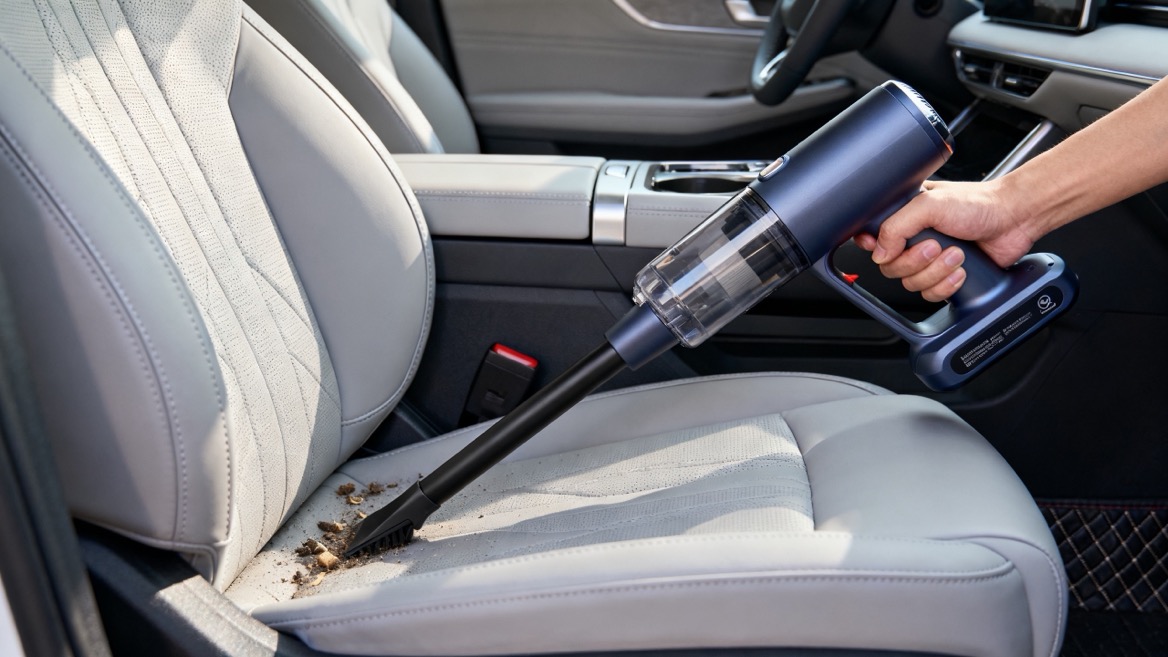
The right product format depends on the customer, distribution channel, price point, and cleaning scenario. Each format has strengths and limitations.
| Vacuum Type | Main Advantage | Best Use Cases | Buyer Considerations |
|---|---|---|---|
| Cordless handheld vacuum | High mobility and fast convenience | Cars, pet hair, furniture, quick cleanups | Battery quality, runtime, charging time, weight |
| Corded handheld vacuum | Continuous power without recharging | Workshops, garages, long cleaning sessions | Cable length, plug requirements, power safety |
| Cordless stick vacuum | Whole-home flexibility | Apartments, hard floors, mixed surfaces | Floor brush design, battery pack, docking, dustbin |
| Corded stick vacuum | Stable power and value | Budget markets, larger routine cleaning tasks | Motor durability, cord storage, noise, filtration |
| 2-in-1 vacuum cleaner | Converts between stick and handheld use | Consumers seeking one versatile appliance | Locking mechanism, structural strength, accessory compatibility |
| Portable car vacuum | Compact and targeted cleaning | Automotive retail, travel, vehicle-care markets | Storage, nozzle reach, vehicle charging options |
For example, a private-label brand selling through automotive channels may prioritize a compact car vacuum with a long crevice tool, storage bag, washable filter, and vehicle-friendly charging solution. A home-appliance retailer may instead prefer a cordless handheld vacuum with a pet brush, charging base, premium packaging, and larger dustbin.
Choosing a vacuum cleaner manufacturer is as important as selecting the product concept. A product may look attractive during the sampling stage but create risk later if the supplier lacks stable quality control, production capacity, certification support, or responsive after-sales service.
Before placing an order, buyers should evaluate the manufacturer in a structured way.
Ask whether the supplier can support meaningful customization instead of only logo printing. Depending on the project, OEM and ODM options may include:
- Housing color and surface finish.
- Brand logo and labeling.
- Battery configuration.
- Motor selection.
- Dustbin capacity.
- Filter configuration.
- Accessory combinations.
- Packaging artwork.
- User manual localization.
- Charging solution.
- Product performance positioning.
A manufacturer with an engineering team can help identify design conflicts early. For example, a buyer may request a larger battery, larger dustbin, and lower product weight at the same time. These goals may conflict physically and commercially. Experienced engineers can offer practical alternatives before tooling and mass production begin.
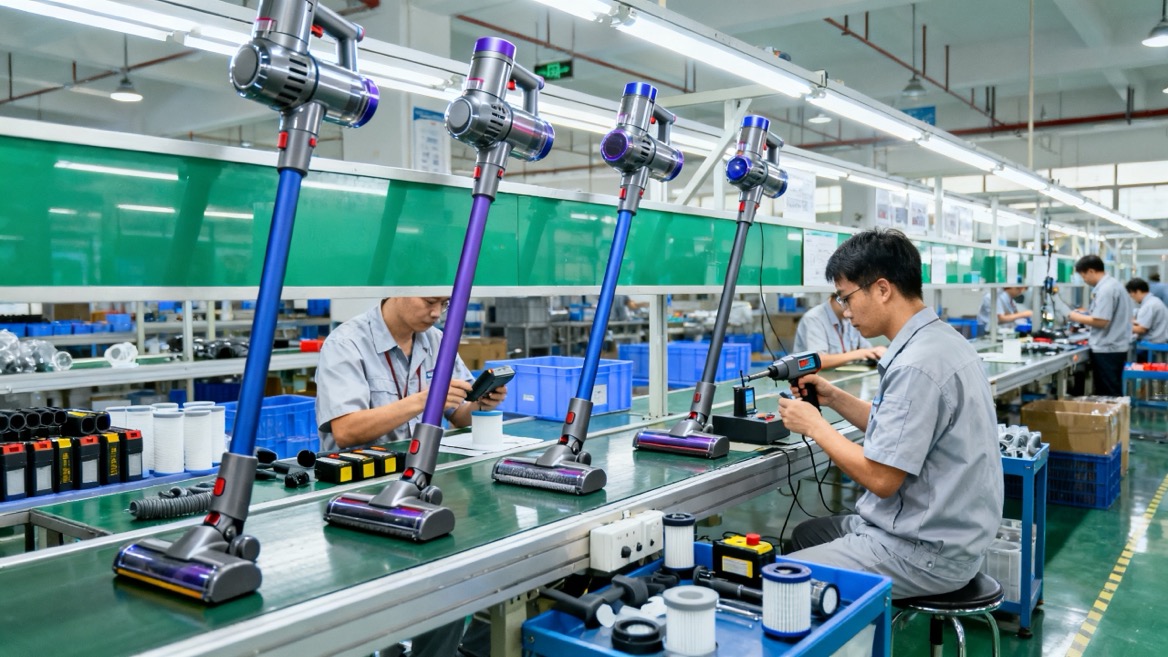
Vacuum quality is built through many details: motor consistency, battery safety, assembly accuracy, seal integrity, button operation, noise level, charger performance, plastic fit, and final inspection.
Buyers should discuss the quality process clearly, including:
1. Incoming inspection for major components.
2. In-process assembly checks.
3. Functional testing before packing.
4. Charging and battery checks where applicable.
5. Appearance inspection.
6. Drop, vibration, and packaging evaluation.
7. Random final inspection before shipment.
8. Traceability for batch and component management.
A practical quality agreement should define the test standard, inspection level, defect classification, packaging requirements, and corrective-action process.
Product compliance requirements vary by market. Depending on destination and product configuration, buyers may need safety, electromagnetic compatibility, material, battery, and environmental documentation.
Ningbo Eyunhome states that its vacuum cleaner products are available with certifications and approvals including CE, EMC, LVD, RoHS, REACH, CB, GS, CCC, KC, and BSCI-related manufacturing credentials. Buyers should confirm which documentation applies to the specific model, market, charger, battery configuration, and order destination before production begins.
Compliance should be addressed at the design stage, not after the product is finished. Early planning reduces redesign risk, testing delays, and shipment disruptions.
Ningbo Eyunhome Electric Technology Co., Ltd. was established in 2011 and specializes in battery-powered cleaning products, including handheld, portable, cordless stick, corded stick, and 2-in-1 vacuum solutions. The company reports operating under a structured quality-management system and supporting international customers with customization, stable manufacturing, and after-sales assistance.
For buyers seeking a China handheld vacuum cleaner manufacturer, Eyunhome can support the process from early concept selection through volume production.
Its product portfolio demonstrates several useful platform directions:
- Cordless stick models with lithium batteries and detachable dust containers.
- Compact handheld vacuums with vacuuming and blowing functions.
- Corded stick vacuums with multi-cyclone filtration and motorized floor brushes.
- Brushless motor platforms for quieter operation, improved durability, and stronger cleaning performance.
- Brushed motor options for cost-sensitive, daily cleaning products.
One portable model, for example, combines vacuuming, blowing, and vacuum-storage nozzle functions in a compact format. This type of multifunctional design can help retailers differentiate a product beyond basic crumb pickup.
The company also reports approximately 15 years of research and production experience, a 15,000-square-meter production base, annual output capacity of 720,000 units, and business coverage across more than 30 countries and regions. Exact project feasibility should still be reviewed according to the required model, order size, component selection, packaging needs, and target delivery schedule.
Consumer comments are one of the best sources of product-development insight. Positive reviews can reveal which features deserve emphasis. Negative reviews can identify expensive weaknesses before a wider launch.
When reviewing customer feedback from competing handheld vacuums, look for repeated themes rather than isolated opinions.
| Common Customer Comment | Product Meaning | Development Response |
|---|---|---|
| “It picks up pet hair well.” | Brush and airflow work effectively on fabrics | Keep the powered tool; improve anti-tangle performance |
| “The battery dies too quickly.” | Runtime does not match the cleaning expectation | Increase battery capacity, improve motor efficiency, clarify runtime |
| “It is heavy for a handheld.” | Weight distribution or battery size reduces comfort | Rebalance the center of gravity; optimize housing and battery placement |
| “Emptying is messy.” | Dustbin design creates friction | Use a bottom-release bin or easier removal mechanism |
| “The filter gets dirty quickly.” | Fine dust reaches the filter too early | Improve pre-filtration, cyclone design, and cleaning guidance |
| “It is loud but powerful.” | Noise may be acceptable if performance is strong | Offer acoustic improvements without sacrificing pickup |
| “The attachments are useful.” | Versatility increases perceived value | Build accessory bundles for distinct retail channels |
The best approach is to convert feedback into a product requirement document. Instead of saying "make it better," define measurable goals such as:
- Minimum runtime in standard mode.
- Target dustbin capacity.
- Maximum preferred product weight.
- Required accessory list.
- Pet-hair pickup requirement.
- Number of charging cycles.
- Target noise range.
- Packaging drop-test standard.
- Filter washability requirement.
- Spare-part availability plan.
This process helps align brand, supplier, engineering, quality, and purchasing teams.
A strong handheld vacuum program is not only about one model. It is about building a product platform that can support multiple price points, accessory bundles, colors, and sales channels.
A brand may begin with a basic portable vacuum cleaner, then expand into:
- A car-focused version with extended tools.
- A pet-hair version with a motorized brush.
- A premium brushless-motor version.
- A 2-in-1 handheld and stick configuration.
- A gift-set model with upgraded packaging.
- A compact travel model.
- A cordless household cleaning range with shared accessories.
Platform development can reduce sourcing complexity, simplify parts management, support brand consistency, and create repeat-order opportunities.
The most successful products are designed around real cleaning behavior. Consumers want a vacuum that is ready when needed, easy to hold, simple to empty, and dependable over time. Retailers need a product with clear selling points and manageable return rates. Brands need quality stability, customization flexibility, and a manufacturing partner that understands the commercial requirements behind the product.
If you are developing a handheld vacuum cleaner, cordless stick vacuum, car vacuum, or custom cleaning appliance range, work with a manufacturer that can translate your target customer needs into a manufacturable product specification.
Contact Ningbo Eyunhome Electric Technology Co., Ltd. today to discuss your OEM or ODM vacuum cleaner project, request product information, evaluate available platforms, and develop a solution for your market.
A handheld vacuum with a motorized mini brush is generally the best option for pet hair on sofas, stairs, bedding, car seats, and upholstery. Look for strong airflow, a brush roll designed to resist tangling, washable filtration, and a dustbin that is easy to empty.
Runtime depends on the motor, battery capacity, selected mode, filter condition, and attachment used. For quick household or car cleaning, many users find 10 to 20 minutes practical. Premium models may provide longer runtime or multiple power modes.
Cordless models offer easier movement and are ideal for cars, stairs, furniture, and fast cleaning. Corded models provide continuous power and may be better for longer cleaning sessions, garages, workshops, or budget-focused markets. The best choice depends on the target user and retail position.
Importers should confirm product performance, battery safety, applicable certifications, sample quality, accessory configuration, packaging, inspection requirements, production lead time, spare-parts support, and after-sales procedures. A written product specification should be agreed before mass production.
OEM service typically produces a product under the buyer's brand with specified customization, such as logo, color, packaging, and selected features. ODM service may allow the buyer to adapt an existing manufacturer-developed platform into a differentiated product more quickly and efficiently.
A dustbin should be easy to open, empty, clean, and reinstall. If emptying is inconvenient or messy, users may perceive the whole product as low quality even if cleaning performance is good. Bottom-opening systems and transparent containers can improve the experience.
A handheld vacuum is best for spot cleaning, upholstery, car interiors, stairs, small spills, and hard-to-reach areas. It usually cannot fully replace a full-size upright, canister, or stick vacuum for large floor areas, deep carpet cleaning, or whole-home cleaning routines.
1. Vacuum Wars. [The Best Handheld Vacuums of 2026: Our Top Picks]. Product evaluation methodology, comparison criteria, runtime observations, filtration considerations, attachment analysis, and handheld vacuum performance insights.
2. Ningbo Eyunhome Electric Technology Co., Ltd. [China Upright, Handheld, Corded & Cordless Vacuum Cleaner Manufacturer & Supplier]. Product categories, manufacturing capabilities, product specifications, customization services, production information, and company-provided quality statements.
3. Ningbo Eyunhome Electric Technology Co., Ltd. [Company Introduction]. Company background, manufacturing location, product focus, quality process statements, and listed compliance-related approvals.
4. Hong Kong Trade Development Council. [Ningbo Eyunhome Electric Technology Co., Ltd. Supplier Profile]. Supplier identity and manufacturer listing information.
5. Hong Kong Trade Development Council. [Rechargeable Vacuum Cleaner Product Listing]. Product-category and supplier-marketplace information.


