
Views: 277 Author: Eyunhome Vacuum Publish Time: 2026-07-31 Origin: Site


Content Menu
● Why pet hair is harder to clean
● What makes an upright vacuum effective for pet hair
>> Filtration that traps dander
● Upright vs cordless for pet homes
● New factors many buyers overlook
>> Bin size and emptying behavior
>> Noise level and pet comfort
● What a trustworthy manufacturer should provide
● How to choose the right model
● Manufacturer-focused buying insight
● FAQ
>> 1. Are upright vacuums better for pet hair?
>> 2. Do I need HEPA filtration for pet hair?
>> 3. What brush roll works best for pet hair?
>> 4. Is a bagged vacuum better for pet owners?
>> 5. What other attachment is most useful for pet hair?
Pet hair is more than a visible mess. It embeds in carpet fibers, clings to upholstery, and often carries dander that affects indoor air quality. For homes with shedding dogs or cats, the best upright vacuum for pet hair is the one that combines strong suction, a tangle-resistant brush roll, and reliable filtration.
Pet hair behaves differently from ordinary dust. It sticks to fabric, wraps around brush bars, and settles into corners, baseboards, and stairs. Once it mixes with dander and fine debris, basic floor cleaning tools often struggle to remove it in a single pass.
That is why pet-focused vacuums are usually built with three priorities in mind: strong pickup power, anti-tangle brush systems, and better filtration. In reviews and product guidance, these same features appear repeatedly as the most important factors for pet owners.

A good upright vacuum should do more than look powerful on paper. It needs to lift hair from deep carpet pile, maintain airflow as the bin fills, and stay easy to maneuver around furniture and pet zones. For many buyers, upright models remain attractive because they typically deliver stronger carpet performance and larger dust capacity than smaller formats.
For pet hair, suction matters because embedded strands are harder to dislodge than surface debris. Multiple expert guides emphasize suction power as the first thing to evaluate, especially for carpets and upholstery. In practical terms, a vacuum that keeps consistent suction as the dust cup fills will usually outperform a model with a higher headline number but weaker real-world pickup.
Pet hair around the brush roll is one of the most common frustrations. Modern pet vacuums increasingly use anti-hair-wrap or tangle-resistant roller designs to reduce manual cleaning and keep performance steady. This is especially useful in multi-pet homes, where shedding is constant and brush maintenance can become a daily task.
Pet owners often need more than visible cleaning. Fine dander can remain in the air and recirculate through the home, so a sealed filtration system or HEPA-style filter is a major advantage. If allergies are part of the problem, filtration should be treated as a core buying criterion rather than a bonus feature.
A useful upright vacuum should include tools for upholstery, stairs, crevices, and furniture. Reviews consistently highlight attachments such as motorized mini brushes and crevice tools because pet hair collects in soft surfaces and tight spaces. These tools matter because pet cleaning is rarely limited to the floor.
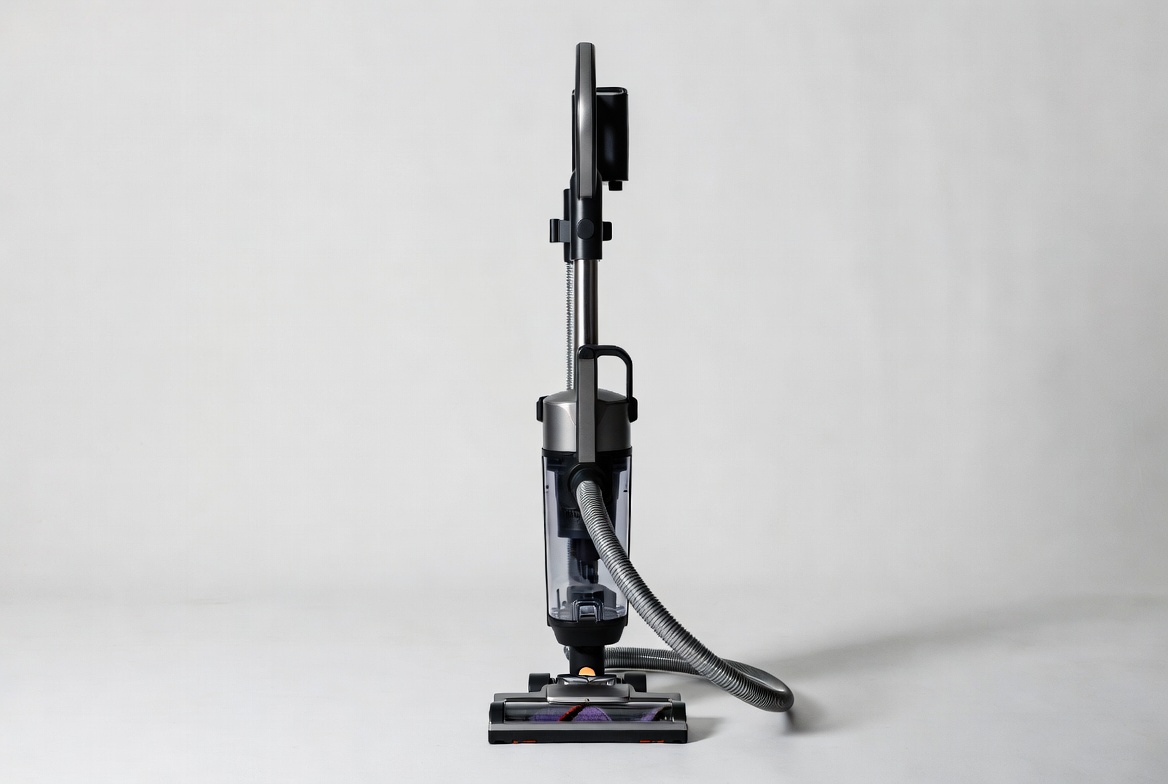
Upright vacuums are often the better choice when the home has large carpeted areas, heavy shedding, or multiple pets. Cordless vacuums are easier to carry and can be more convenient for quick cleanup, but they may trade away runtime, bin size, or sustained carpet power.
| Factor | Upright vacuum | Cordless vacuum |
|---|---|---|
| Carpet performance | Usually stronger for deep cleaning | Good for daily maintenance |
| Dust capacity | Often larger | Usually smaller |
| Maneuverability | Good, but heavier | Easier to carry and store |
| Pet hair on stairs and furniture | Good with attachments | Very convenient in handheld mode |
| Best for | Heavy shedding and large spaces | Fast cleanups and mixed surfaces |
Most buying guides stop at suction, filters, and brush rolls. That is useful, but incomplete. In real households, the best pet vacuum must also support maintenance, odor control, and cleaning routine fit, because a vacuum that is annoying to empty or difficult to service will not stay effective over time.
A larger dust cup or bag can reduce interruptions during cleaning, especially in homes with multiple pets. Bagged systems can also reduce dust exposure during disposal, which matters for allergy-sensitive households. This is a practical benefit, not just a convenience feature.
Noise can affect both pets and owners. Several expert guides note that quieter operation is worth considering, especially for anxious pets that react to loud appliances. If your pets dislike vacuum noise, look for models designed to balance power with lower acoustic disruption.
Pet homes often deal with fur and smell at the same time. Some vacuums include odor-neutralizing technologies or carbon-based odor control, which can make a noticeable difference in shared living spaces. This is especially relevant for carpets, pet beds, and furniture that trap odors.
For brands and distributors, the vacuum itself is only part of the story. A dependable OEM/ODM partner should support product development, stable production, quality control, and after-sales service. Chinese vacuum manufacturing suppliers commonly emphasize custom development, certification support, sample lead time, and export-ready production capabilities.
For business buyers, this means the right supplier should be able to offer:
- Multiple product formats, including upright, handheld, corded, and cordless models.
- Custom branding support, including packaging and product appearance.
- Market-ready compliance support, especially for export channels.
- Stable delivery and responsive communication, which reduce launch risk.
- After-sales support, which protects brand reputation after shipment.
This matters because pet hair cleaning products are highly competitive, and product reliability often shapes review quality, repeat purchase behavior, and retailer confidence.
If you are selecting an upright vacuum for pet hair, use the following decision process:
1. Start with your flooring.
Carpet-heavy homes need stronger brush action and more consistent suction.
2. Check the filter system.
If allergies matter, prioritize a sealed filtration design that traps fine particles and dander.
3. Look at brush-roll design.
Anti-tangle technology saves time and keeps pickup performance stable.
4. Review the attachments.
Upholstery and crevice tools are essential for pet beds, sofas, stairs, and cars.
5. Consider emptying and upkeep.
Larger bins or bagged systems can reduce dust exposure and cleaning interruptions.
6. Match the vacuum to your daily routine.
The best machine is the one you will actually use often enough to keep fur under control.
From an industry perspective, pet-hair vacuums sell best when they solve everyday frustration quickly. That means the product page should explain the problem clearly, then show how the vacuum removes hair from carpets, fabric, stairs, and corners. It also helps to present performance in practical terms, such as how well the machine handles shedding seasons, long-pile rugs, and soft furnishings.
For OEM and ODM development, the strongest pet-hair models typically combine:
- High-suction motor performance.
- Tangle-resistant brush engineering.
- Filtration suited to dander control.
- Lightweight handling or easy conversion for secondary cleaning tasks.
- Attachments that support whole-home cleaning.
A strong product strategy is not just about making a vacuum with more power. It is about building a machine that fits real pet-owner behavior and reduces the friction that prevents regular cleaning. Contact us to get more information!

Yes, especially in carpeted homes or homes with heavy shedding. Upright vacuums often provide stronger carpet cleaning and larger dust capacity than smaller vacuum formats.
If anyone in the home has allergies or sensitivity to dander, a high-quality sealed filtration system is strongly recommended. HEPA-style filtration helps trap fine particles that would otherwise recirculate.
An anti-tangle or tangle-resistant brush roll is usually best because it reduces hair wrap and keeps the vacuum easier to maintain.
It can be. Bagged designs often reduce dust exposure during disposal and can be useful for allergy-sensitive households or homes with a lot of hair.
A motorized upholstery tool is one of the most useful attachments because pet hair commonly collects on sofas, pet beds, stairs, and car seats.
1. TechRadar, "The best vacuum for pet hair 2024: keep fur and dander under control" — [https://www.techradar.com/home/vacuums/best-vacuum-for-pet-hair] [techradar]
2. Good Housekeeping, "9 Best Vacuums for Pet Hair of 2026" — [https://www.goodhousekeeping.com/appliances/g22073192/best-vacuum-for-pet-hair/] [goodhousekeeping]
3. RTINGS, "The 5 Best Vacuums For Pet Hair of 2026" — [https://www.rtings.com/vacuum/reviews/best/pet-hair] [rtings]
4. Dyson, "Pet Vacuum Cleaners" — [https://www.dyson.com/vacuum-cleaners/pets] [dyson]
5. Natl Allergy, "HEPA Filter Vacuum Cleaners" — [https://www.natlallergy.com/vacuums] [natlallergy]
6. Joybuy, "Pet Hair Vacuum: Top Picks & Expert Guide for 2026" — [https://www.joybuy.de/blog/pet-hair-vacuum-guide-2026/oC5KkbWK] [joybuy]
7. Houseclean Electric, "Vacuum Cleaner OEM/ODM Manufacturer China" — [https://vacuumsupplier.net/oem] [vacuumsupplier]
8. Vacuum Cleaners China, "Vacuum Cleaners China | Vacuum Cleaner Manufacturer" — [https://vacuumcleanerchina.com/] [vacuumcleanerchina]


