
Views: 257 Author: Eyunhome Vacuum Publish Time: 2026-09-09 Origin: Site


Content Menu
● Why Hardwood Floors and Area Rugs Need Different Cleaning Modes
>> Hardwood Floor Cleaning Priorities
>> Area Rug Cleaning Priorities
● The Best Vacuum Types for Mixed Hard Floors and Rugs
● Features That Matter Most When Buying a Vacuum
>> 1. Soft Roller or Brush-Roll Shutoff
>> 2. Adjustable Suction Power
>> 4. Filtration and Sealed Dust Management
>> 5. Hair-Removal Convenience
● How to Vacuum Hardwood Floors Without Causing Damage
>> Step 1: Inspect the Floor Before Cleaning
>> Step 2: Select Hard-Floor Mode
>> Step 3: Start Along Edges and Furniture
>> Step 4: Use Slow, Overlapping Passes
>> Step 5: Empty the Dustbin Before It Is Overfilled
● How to Vacuum Area Rugs Safely and Effectively
>> Low-Pile and Synthetic Rugs
● A Simple Decision Checklist Before You Buy
● Product Development Insight for Vacuum Brands
● Build a Better Mixed-Floor Vacuum Program
>> What is the best vacuum setting for hardwood floors?
>> Can a vacuum brush roll scratch hardwood floors?
>> Is a cordless vacuum powerful enough for hardwood and rugs?
>> Should I use the same vacuum head on hardwood and area rugs?
>> How often should I vacuum hardwood floors?
>> How do I prevent a vacuum from losing suction?
>> Can OEM/ODM vacuum manufacturers customize a model for my market?
Choosing the best vacuum for hardwood floors and area rugs is not simply about buying the model with the highest suction rating. A home with both sealed wood flooring and rugs needs a vacuum that can remove fine dust, crumbs, hair, and embedded debris without scratching the floor finish, scattering particles, or pulling delicate rug fibers.
For most buyers, the ideal solution is a versatile upright, cordless stick, or canister-style vacuum with a soft roller or brush-roll shutoff, adjustable suction, reliable filtration, and the right attachments for edges and upholstery. For importers, retailers, and private-label brands, these requirements also define what a competitive vacuum cleaner should deliver in today's global market.
Ningbo Eyunhome Electric Technology Co., Ltd. develops upright, handheld, corded, and cordless vacuum cleaner solutions for brands and businesses that need dependable OEM/ODM manufacturing, stable production capacity, and responsive after-sales support. This guide explains how to select a vacuum that performs confidently across hardwood floors and area rugs—and what features matter most in product development and procurement.

Hardwood floors and area rugs may sit side by side, but they collect debris in very different ways.
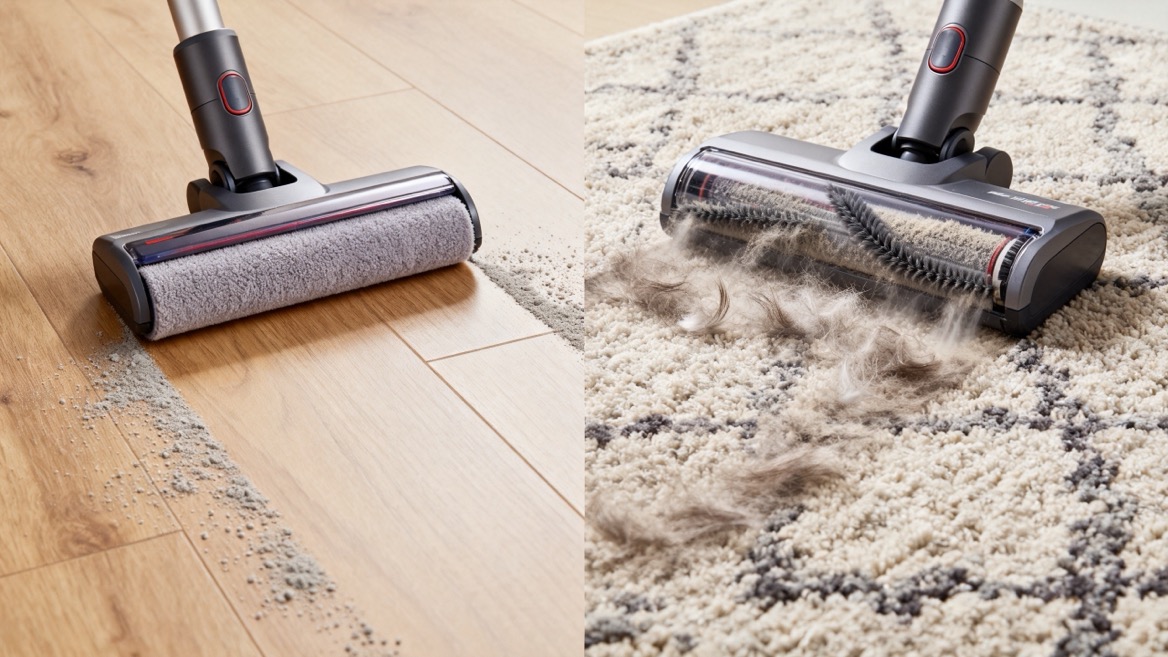
On hardwood, dust, pet hair, sand, food crumbs, and small particles remain close to the surface. The main challenge is lifting this debris efficiently while preventing larger grit from being pushed across the floor. A hard floor vacuum should glide smoothly, maintain close contact with the surface, and avoid aggressive bristles that may damage delicate finishes.
Area rugs, in contrast, trap dirt below the fibers. Fine dust, hair, and debris can settle deep into the rug pile, particularly in high-traffic zones near entrances, sofas, dining tables, and beds. Effective rug cleaning usually needs more airflow, more agitation, or both.
That is why the best vacuum for hardwood floors and area rugs should allow users to switch between floor types quickly.
For wood flooring, the priority is gentle debris pickup rather than aggressive scrubbing. A suitable vacuum should include one or more of the following features:
- A soft roller head for smooth surfaces
- A brush-roll on/off function
- Soft bristles rather than stiff nylon bristles
- Rubberized wheels that reduce the risk of marks
- Strong edge suction for baseboards and corners
- A low-profile floor head that reaches under furniture
- A sealed dust collection path and effective filter system
Floor-care specialists commonly recommend choosing a vacuum with soft bristles, no brush roll, or the ability to disable the rotating brush when cleaning wood and other hard surfaces. This helps reduce the chance of debris scattering and minimizes unnecessary contact between abrasive particles and the floor finish.
For area rugs, the vacuum needs enough cleaning force to remove material caught in the pile. However, more power is not always better. Excessive suction can make a lightweight or delicate rug difficult to move across, pull at fringe, or stress fine fibers.
Look for these functions:
- Adjustable suction power
- A motorized brush roll for low- and medium-pile rugs
- A carpet or rug mode
- Height adjustment where applicable
- A turbo brush or mini motorized tool for stairs and upholstery
- A brush roll that resists hair wrap
- Easy switching between hard-floor and rug modes
A vacuum with adjustable suction gives users more control. Higher suction is useful for thicker rugs and carpeted zones, while gentler settings can improve handling on lightweight rugs and help protect delicate materials.
There is no single vacuum format that works best for every household. The right choice depends on the size of the home, number of rugs, pet ownership, cleaning frequency, storage space, and user preference.
| Vacuum Type | Best For | Key Advantages | Considerations |
|---|---|---|---|
| Cordless stick vacuum | Daily cleaning, apartments, quick pickups | Lightweight, convenient, easy to store, often converts to handheld | Runtime and dustbin capacity should match the cleaning area |
| Corded upright vacuum | Larger homes, regular rug cleaning, pet hair | Strong continuous power, wide cleaning paths, large dust capacity | Can be heavier and less convenient for stairs |
| Canister vacuum | Wood floors, low furniture, mixed surfaces | Excellent maneuverability, gentle floor tools, flexible hose reach | Requires separate body movement and storage space |
| Handheld vacuum | Cars, upholstery, sofas, small spills | Portable and targeted cleaning | Not intended as the main whole-home vacuum |
| 2-in-1 stick vacuum | Multi-purpose cleaning | Combines floor cleaning and handheld convenience | Performance depends on motor, battery, floor head, and filtration design |
For homes that are mostly hardwood with several area rugs, a cordless stick vacuum with a soft roller and a separate motorized rug head can be an excellent everyday solution. For larger spaces with multiple thick rugs, a corded upright vacuum may offer more consistent power and longer uninterrupted cleaning sessions.
Consumer testing organizations assess vacuum performance across bare floors, carpets, debris pickup, pet-hair capture, and other practical factors. Their testing also indicates that stick vacuums can be sufficient for homes focused primarily on hardwood floors, depending on cleaning needs.
A product description may list many features, but a few design choices make the greatest real-world difference. Buyers should focus on how the vacuum interacts with both the floor and the user.
This is one of the most important features for hardwood floor care.
A soft roller is designed to collect fine dust and larger debris from smooth surfaces. It can be more effective than a traditional stiff-bristle brush at pulling particles into the intake path without scattering them forward.
A brush-roll shutoff is equally valuable. It allows the user to stop the rotating brush when moving from an area rug to hardwood. This creates a simpler suction-focused cleaning mode for hard surfaces.
Practical rule: If the vacuum has a traditional rotating brush roll, confirm that it can be turned off or that the model includes a dedicated hard-floor head.
Different floor types require different airflow behavior.
High suction can improve deep cleaning on rugs, but it may make a lightweight rug difficult to clean. Lower suction can improve movement on delicate rugs and may be enough for routine hardwood cleaning.
A variable power setting gives users control over:
- Thick or dense area rugs
- Low-pile rugs
- Delicate woven rugs
- Pet-hair cleanup
- Fine dust on hardwood
- Curtains, upholstery, and vehicle interiors
For brand owners, adjustable suction is also a meaningful product differentiator. It helps position a vacuum as a flexible solution rather than a single-purpose appliance.
The floor head determines how effectively the vacuum reaches debris and how easily it moves around a room.
A strong design should consider:
- A wide enough intake path for efficient cleaning
- A low front profile for cleaning beneath furniture
- Smooth wheels or protective strips
- Effective edge cleaning
- Easy roller removal
- A clear path that reduces hair and fiber blockage
- LED lighting, if appropriate for the product category
LED lights are not essential, but they can improve the user experience by making dust visible along baseboards, under beds, and beneath sofas.
Fine dust is a major issue on hardwood because it is highly visible, especially in direct sunlight. A vacuum should not only collect particles—it should also reduce the chance that fine dust escapes back into the room.
A well-designed filtration system may include:
- Cyclonic separation for larger debris
- Pre-motor filtration
- High-efficiency exhaust filtration
- Washable filters where suitable
- Proper gasket and seal design
- Easy-to-empty dustbin construction
For consumers with pets, allergies, or frequent dust concerns, filtration quality can strongly influence satisfaction. For OEM and ODM projects, filter accessibility and replacement availability should be considered early in product planning.
Hair wrap is one of the most common user complaints about vacuum cleaners. It affects brush-roll performance, creates maintenance work, and may reduce airflow over time.
A vacuum designed for mixed flooring should make hair removal simple through:
- Anti-tangle brush-roll geometry
- Easily removable rollers
- Access windows or removable covers
- Cutting grooves for hair removal
- A cleaning comb or included maintenance tool
The best design is not necessarily one that claims to eliminate all hair wrap. It is one that makes routine maintenance fast, intuitive, and safe.
Even a good vacuum can cause avoidable problems if used incorrectly. The following process helps users clean hardwood floors more effectively.
Before vacuuming, check for large or sharp objects such as screws, gravel, broken plastic, pet kibble, or hard toy pieces. These items can be dragged under the floor head or lodged in the brush roll.
Pay special attention to entryways. Grit carried in on shoes can act like sandpaper when repeatedly moved across a wood surface.
If your vacuum has a hard-floor setting, activate it. If it has a brush-roll control, switch the brush roll off unless the manufacturer specifically recommends its soft roller for hardwood use.
This helps prevent debris from being flung forward and reduces unnecessary brush contact with the floor.
Dust gathers along baseboards, under cabinets, and around furniture legs. Use the main floor head slowly along these zones, then use a crevice tool where the floor head cannot reach.
A vacuum with strong edge cleaning can reduce the need for follow-up sweeping.
Fast passes may leave behind fine debris, especially when the dust is light in color or blends into the wood grain. Move in overlapping lines and avoid repeatedly dragging the same head over visible grit.
For daily touch-ups, one controlled pass may be enough. For deeper cleaning, work across the room in two directions.
An overfilled dustbin can reduce airflow and make cleaning less effective. Empty the bin regularly, especially after cleaning rugs, pet areas, or high-traffic entrances.
Routine maintenance guidance also emphasizes keeping filters clean, clearing the brush roll, and allowing washable filters to dry fully before reinstalling them.
Area rugs vary widely in pile height, backing, material, and construction. A vacuum setting that works well on a durable synthetic rug may be too aggressive for a lightweight flatweave or a rug with fringe.
Low-pile rugs are generally the easiest to vacuum. Use a motorized brush or rug mode when appropriate, and make several slow passes in high-traffic areas.
If the rug lifts or bunches, lower the suction setting or use a suction-only floor tool.
Medium-pile area rugs often benefit from moderate brush-roll agitation. Avoid pushing the vacuum too quickly. A slower movement gives the airflow and brush roll more time to lift trapped debris.
Check the brush roll regularly if the rug sheds fibers.
High-pile rugs can be challenging for powerful vacuums. High suction may cause the floor head to seal tightly against the rug, reducing maneuverability.
For these rugs:
- Use lower suction where available
- Raise the nozzle height on compatible upright vacuums
- Avoid aggressive brush action if the rug manufacturer advises against it
- Test a small, less visible area first
- Use an upholstery or suction-only tool when needed
For wool, silk, antique, hand-knotted, or fringed rugs, follow the rug manufacturer's care instructions. In many cases, a suction-only tool or gentle attachment is safer than a rotating brush.
Never run a motorized brush directly over fringe. Clean fringe with a handheld attachment or use gentle suction while supporting the fibers.
Use this checklist to narrow your options before selecting a vacuum for hardwood floors and area rugs.
| Buyer Question | Why It Matters | Recommended Feature |
|---|---|---|
| Do you have sealed hardwood floors? | Helps avoid scratching and debris scattering | Soft roller or brush-roll shutoff |
| Do you own pets? | Pet hair can clog rollers and filters | Anti-tangle brush roll and washable filter |
| Are your rugs thick or high pile? | Strong suction can make cleaning difficult | Adjustable suction and height control |
| Do you clean stairs, cars, or sofas? | Floor-only models are less flexible | Handheld conversion and crevice tools |
| Is storage limited? | Large units may be inconvenient | Compact cordless stick or foldable design |
| Do you clean large areas at once? | Short runtime interrupts cleaning | Corded model, removable battery, or longer runtime |
| Do you need private-label products? | Brand differentiation matters | OEM/ODM customization capability |
For retailers, importers, e-commerce sellers, and established appliance brands, the mixed-flooring category offers a clear opportunity: consumers do not want separate machines for hardwood and rugs if one well-designed vacuum can handle both.
A competitive product should solve the friction points users notice every week:
- Switching between floor types should be simple
- The floor head should not scatter debris on hardwood
- Rug cleaning should feel powerful but controllable
- Hair removal should not require complicated disassembly
- Filters and bins should be easy to access
- Battery, charger, motor, and replacement parts should be supported over the product lifecycle
- Packaging, instruction manuals, and accessories should align with the target market
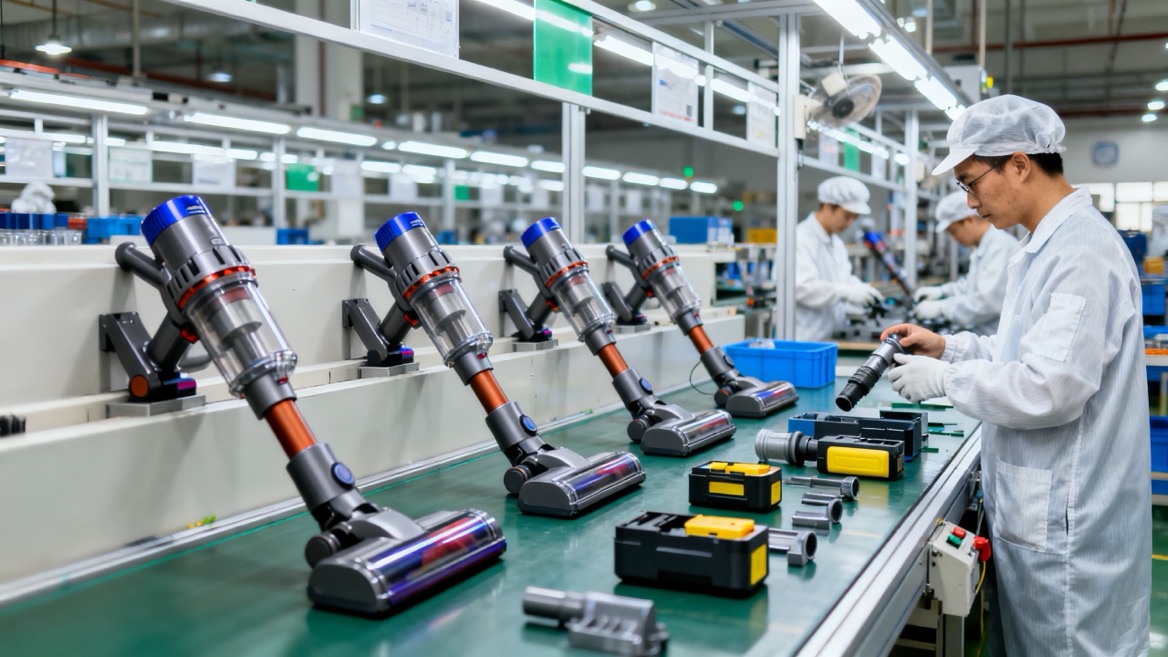
At Ningbo Eyunhome Electric Technology Co., Ltd., OEM/ODM development can be structured around your market requirements—from upright and corded platforms to lightweight cordless stick and handheld vacuum solutions. The right project begins with a clear brief: target price range, cleaning scenario, floor-head configuration, battery expectations, accessories, branding, packaging, certification requirements, and after-sales service strategy.
A vacuum cleaner is not only a motor and a dustbin. It is a daily-use appliance whose value depends on handling, reliability, cleaning confidence, and ease of maintenance.
The best vacuum for hardwood floors and area rugs balances gentle floor care, controllable rug cleaning, useful attachments, easy maintenance, and dependable long-term performance. For consumers, the right machine makes routine cleaning faster and safer. For brands, it creates a more convincing product story and a better ownership experience.
If you are sourcing a reliable upright, handheld, corded, or cordless vacuum cleaner for your brand, contact Ningbo Eyunhome Electric Technology Co., Ltd. to discuss your OEM/ODM requirements. Share your target market, expected price range, preferred floor-care features, branding needs, and order plan—and build a vacuum solution designed for real households and global buyers.
For hardwood floors, use a hard-floor mode, soft roller, or suction-only setting whenever possible. If the vacuum has a traditional rotating brush roll, turn it off unless the manufacturer states that the roller is specifically designed for sealed hardwood.
A brush roll can create risk if it uses stiff bristles, carries trapped grit, or is not intended for hard floors. A soft roller, soft bristles, or brush-roll shutoff is a safer choice for sealed hardwood surfaces.
Many cordless vacuums are suitable for routine hardwood cleaning and low- to medium-pile area rugs. The best choice depends on runtime, floor-head design, suction settings, dustbin capacity, and the amount of rug cleaning required. Larger homes or thick rugs may benefit from a corded upright vacuum.
Not always. A soft roller or suction-only head is often better for hardwood, while a motorized brush roll may perform better on rugs. A vacuum with multiple cleaning modes or interchangeable heads offers greater flexibility.
For most homes, vacuuming once or twice a week helps control dust and grit. Homes with pets, children, open windows, or heavy foot traffic may need more frequent cleaning, especially near entrances and dining areas.
Empty the dustbin before it becomes full, clean or replace filters according to the manual, remove hair from the brush roll, and check the hose and intake path for blockage. Washable filters should be completely air-dried before being reinstalled.
Yes. A capable vacuum manufacturer can support customization in areas such as color, branding, packaging, accessories, floor-head configuration, battery capacity, filtration, plug type, instruction manuals, and product positioning. The exact options depend on the selected platform, order volume, tooling needs, and compliance requirements.
1. [Eureka US: Best Vacuum for Hardwood Floors and Area Rugs]
2. [Bona: Vacuums for Wood and Tile Floors]
3. [Consumer Reports: Best Vacuums for Hardwood Floors]
4. [Consumer Reports: Best Vacuums of 2026]
5. [The New York Times Wirecutter: How to Clean a Vacuum Cleaner]
6. [Modern Castle: Best Vacuums for Hardwood Floors]


