
Views: 257 Author: Eyunhome Vacuum Publish Time: 2026-11-18 Origin: Site


Content Menu
● How Often Should You Vacuum Carpet, Rugs, and Hard Floors?
>> How Often Should You Vacuum Carpet and Area Rugs?
>> How Often Should You Vacuum Hardwood, Laminate, and Tile?
● How Often Should You Vacuum With Pets, Kids, or Allergies?
>> Pets: Clean Where Hair Collects First
>> Children and Busy Households: Follow the Mess, Not the Headcount
>> Allergies: Look at Filtration as Well as Frequency
● A Two-Week Plan to Find Your Ideal Vacuuming Schedule
● Why Does the Floor Still Look Dirty After Vacuuming?
● Which Vacuum Fits the Way You Clean?
>> What Retailers and Distributors Should Test Before Selecting a Model
● Source Vacuum Cleaners for Your Market
>> Is Vacuuming Once a Week Enough?
>> Should You Vacuum Every Day if You Have a Dog or Cat?
>> Should You Dust or Vacuum First?
>> Can You Vacuum Carpet Too Often?
>> Can a Robot Vacuum Replace an Upright or Handheld?
>> Should You Vacuum Before Mopping?
How often should you vacuum your home? Start with once a week for lightly used carpet and most hard floors, twice a week for carpet with moderate foot traffic, and daily spot vacuuming in busy carpeted areas or places where pets shed heavily. You don't need to do the whole house every day. A better schedule separates the areas that collect dirt quickly from the rooms that can wait.
Think about what happens in each room, not just what the floor is made of. A hardwood entryway that gets sandy every afternoon may need more attention than a carpeted guest room that nobody has used all week. The right schedule is the one that gets dirt off the floor before it spreads, without making cleaning harder than it needs to be.

Use this table as a starting point. Where your flooring or rug manufacturer gives more specific care instructions, follow those first.
| Floor or area | Starting frequency | What to do |
|---|---|---|
| Lightly used carpet or area rug | Once a week | Cover the whole surface, including accessible edges. |
| Carpet with moderate foot traffic | Twice a week | Clean the whole area, paying extra attention to paths between rooms. |
| Busy carpeted hallways and pet zones | Daily when buildup warrants it | Focus on the areas people walk through and the places pets sleep or play. |
| Hardwood, laminate, or tile | About once a week in lightly soiled rooms | Use a compatible hard-floor head and remove visible grit or crumbs sooner. |
| Kitchen, dining area, or entryway | As soon as dry debris collects | Spot-clean around doors, chairs, and food preparation areas rather than vacuuming the entire floor again. |
Vacuum twice a week if the carpet gets regular use. Once a week is a reasonable baseline for a quiet room. Where shoes, pets, and daily activity bring in more dirt, make a short pass over the busiest sections each day rather than adding another full-room clean.
Move the floor head slowly enough to pick up what is in its path, and overlap your passes so you don't leave narrow strips untouched. If a busy lane still needs work, make a second pass from a different direction where the carpet's care instructions allow it. Check the rug label before using a powered brush, especially on delicate rugs or around fringe.
A weekly pass is a practical starting point when there's little visible debris. Don't wait for cleaning day if you can already feel grit underfoot. On hardwood, tracked-in dirt can scratch or dull the finish, so it's worth cleaning the area just inside the door as soon as it looks gritty.
Use a head approved for the surface. For wood flooring, that generally means a hard-floor attachment rather than a rotating beater bar. On tile, check the grout lines and edges where crumbs collect. An ordinary dry vacuum is for dry debris; clean up liquid spills separately unless the machine is expressly designed for wet pickup.
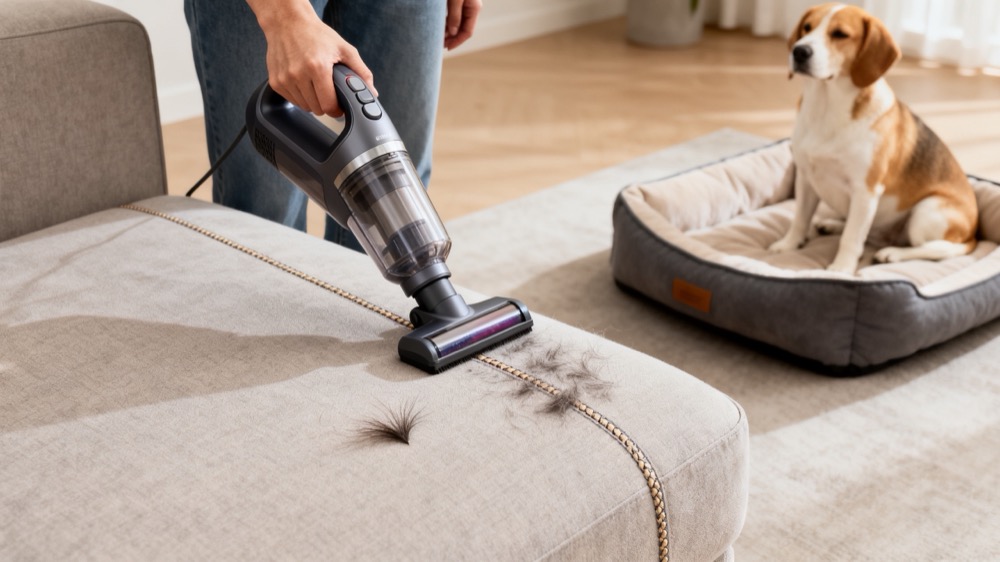
Start with daily spot vacuuming in the areas where a shedding pet spends the most time. Check around the bed, under the sofa edge, and along the usual route from the door. If hair isn't collecting by the next day, try every other day. Leave rooms the pet rarely enters on their regular schedule.
Don't overlook the sofa if your pet sleeps there. A suitable upholstery attachment can reach seams and cushion gaps that a floor head can't. If the tool pulls at fabric or snags loose threads, stop and check the furniture's care instructions.
A household that eats most meals at the dining table may need daily crumb pickup under the chairs but only weekly cleaning in its bedrooms. Start with the spots that get visibly dirty between full cleans. In a playroom, that might mean checking around a low table and along the rug edge rather than redoing the entire room.
A vacuum with a sealed system and a high-efficiency particulate air (HEPA) filter is worth considering when household dust is a concern. The filter captures fine particles from air that passes through it; the seal matters because air can otherwise escape around the filter. A filter label alone doesn't tell you how well the assembled machine contains dust.
Vacuuming can also stir up dust. If someone is sensitive to it, have them stay out of the room while another person vacuums, where practical. Pay attention to emptying, too: a machine that contains dust well during use can still release a cloud when its bin is opened. Vacuuming is one part of managing indoor dust, not a substitute for medical care.
Instead of deciding that every floor needs cleaning twice a week, try a schedule you can adjust based on what you notice:
1. Pick your busiest spots. Mark the entrance, main walkway, and any pet or dining area that usually needs attention first.
2. Set a weekly baseline. Clean lightly used rooms once a week and moderately used carpet twice a week. Check the busiest spots daily, but clean only the areas that need it.
3. Inspect before each scheduled clean. Look at the same spots each time: the mat edge, the rug beside the sofa, and the floor under the dining chairs. Note whether grit, hair, or crumbs are already back.
4. Adjust one zone at a time. If the hallway is gritty by Wednesday but the living room still looks clean, add a hallway pass. Don't put the entire house on a more demanding schedule.
For example, in a home with a dog, a tiled kitchen, and a living room rug, the routine might be a quick pass around the dog bed and kitchen table each evening, a full rug clean on Wednesday and Saturday, and a weekly pass through the bedrooms. If the dog sheds more heavily for a few weeks, clean the rug's favorite sleeping spot more often without changing the rest of the schedule.
Before adding another cleaning day, check whether the debris is being missed during the pass or brought in afterward. Those problems call for different fixes.
| What you notice | What to check first |
|---|---|
| Crumbs scatter in front of the head on tile | Try the approved hard-floor head or switch off the powered brush if the model allows it. |
| Hair stays on a rug after several passes | Check for hair wrapped around the brush roll and confirm that the head is suitable for the rug. |
| Pickup gets weaker during the session | Check for a full bin or bag, a blockage, or a filter that needs service. |
| Dust remains along walls while the center looks clean | Try the crevice tool or a head that can reach closer to the baseboard. |
| The entryway is clean after vacuuming but gritty again that evening | The vacuum may be doing its job. Shorten the cleaning interval at the entrance rather than changing the whole-house routine. |
Follow the manual when servicing the vacuum. Wash only filters marked washable, and let them dry completely before reinstalling them. If pickup is still weak after maintenance, test the head on a small patch of the same floor before deciding that the room needs more frequent vacuuming.
Upright and handheld describe the machine's format; corded and cordless describe its power source. Consider both. A machine that works well for a long carpet session may be less convenient for the three minutes you spend picking up crumbs after dinner.
- An upright can suit larger carpeted rooms if its floor head is appropriate for the carpet and easy to steer.
- A handheld is useful for stairs, furniture seams, and small dry messes. It's better suited to those tasks than to cleaning an entire floor.
- A corded unit avoids charging interruptions during longer sessions. Check whether the cord and hose reach the places you actually clean.
- A cordless unit can make short, frequent cleanups easier. Compare runtime with the intended floor head and power mode attached, not just the longest advertised runtime.
- A robot vacuum can handle routine pickup on accessible floors. Keep a manual vacuum available for stairs, upholstery, and spots the robot regularly misses.
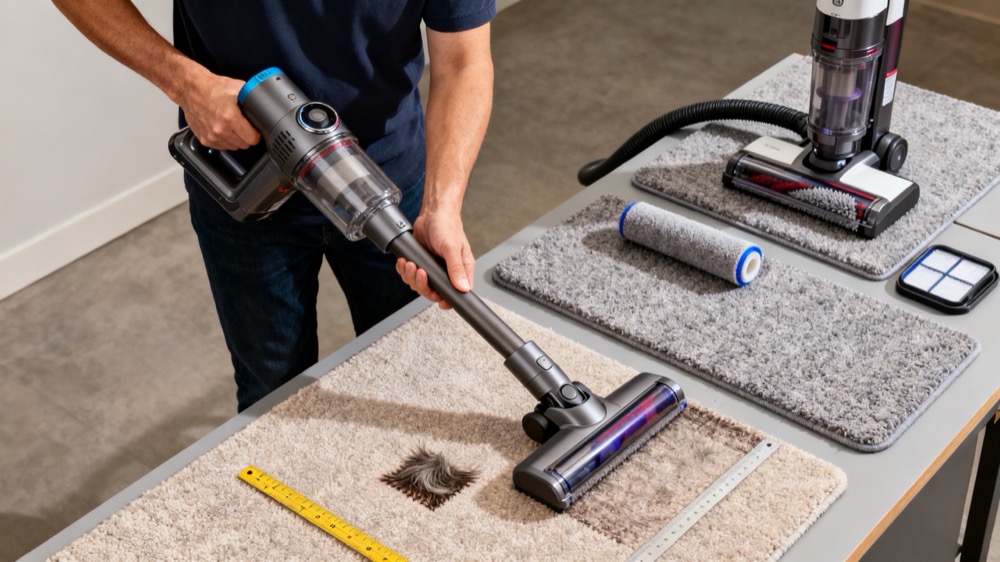
Start with the buyer's task, not a single suction figure. For a cordless model sold for quick pet cleanups, try it on the same rug with the same amount of hair across samples. Record how many passes it takes, whether hair wraps around the brush, and how easy the bin is to empty. For a corded upright intended for larger carpeted rooms, pay attention to steering, room-to-room reach, and the effort needed to clean along walls.
Ask how the supplier measured runtime or filtration and under what conditions. Review access to replacement filters, brush rolls, and batteries where applicable. A sample that cleans well on day one is only part of the decision; buyers also need to know how customers will maintain it after purchase.
Ningbo Eyunhome Electric Technology Co., Ltd. is a Chinese vacuum cleaner manufacturer offering upright, handheld, corded, and cordless solutions for retailers, distributors, and private-label brands. We provide OEM/ODM services, stable production, and after-sales support for international markets.
Send us your target market, preferred vacuum format, primary floor types, and expected order volume. Request a shortlist of suitable models and discuss sample evaluation, customization, and replacement-part support before choosing a configuration.
It can be enough for lightly used carpet and hard floors that don't collect much debris. If grit, crumbs, or pet hair reappear well before cleaning day, increase the frequency in those areas first.
Daily spot vacuuming is useful where a shedding pet sleeps or spends a lot of time. You don't have to vacuum every room daily. During lighter shedding periods, every other day may work for the same areas.
Dust surfaces first, then vacuum the floor. That way, you can pick up any dust that falls while cleaning shelves, tables, and other surfaces rather than having to vacuum the same area again.
Frequency isn't the only issue. What matters is whether the head and brush settings suit the carpet. A short pass over a busy lane with a compatible head is different from repeatedly using a powered brush on a rug whose care label calls for suction only.
It can reduce manual cleaning on floors it can reach, but it won't clean stairs or upholstery. After a few runs, inspect the edges, corners, and areas around furniture to see which spots still need manual attention.
Yes, for routine cleaning on a floor that can be mopped: remove dry grit and crumbs first. Then use only the amount of moisture and the cleaning method your flooring manufacturer recommends.
- Vacuum Wars, Christopher White, [How Often Should You Vacuum Your Home?] — updated April 21, 2025. Background on floor types, household activity, pet zones, and robot vacuum maintenance cleaning. [vacuumwars]
- The Carpet and Rug Institute, [The Basics of Carpet Cleaning: Create a Vacuum Schedule] — February 1, 2019. Industry guidance on daily, twice-weekly, and weekly vacuuming for different carpet traffic levels. [carpet-rug]
- Shaw Industries, [Hardwood Maintenance Guidelines] — hardwood care guidance and restrictions on rotating beater bars. [pdmsview.shawinc]
- American Lung Association, [Not All Vacuums Are Created Equal: Pick the Best One for Your Health] — April 21, 2025. Guidance on sealed filtration, dust containment, maintenance, and vacuuming technique. [lung]
- Asthma Australia, [Can a HEPA Filter Vacuum Help With Allergies and Asthma?] — August 24, 2023. Guidance on dust stirred up during vacuuming and reducing exposure while cleaning. [asthma.org]


