
Views: 238 Author: Eyunhome Vacuum Publish Time: 2026-09-10 Origin: Site


Content Menu
● Why Pet Hair on Furniture Is a Unique Cleaning Challenge
● Portable Vacuum vs Full-Size Vacuum: Quick Comparison
● Portable Vacuums for Pet Hair on Furniture
>> Where Portable Vacuums Perform Best
>> Key Strengths of a Portable Vacuum
>> Limitations of Portable Vacuums
● Full-Size Vacuums for Pet Hair on Furniture
>> Where Full-Size Vacuums Perform Best
>> Important Full-Size Features for Upholstery Cleaning
>> Limitations of Full-Size Vacuums
● Cleaning Performance: What Actually Removes Pet Hair?
>> Suction Alone Is Not Enough
>> Why Anti-Tangle Designs Matter
>> Filtration and Dander Control
● Portable Vacuum vs Full-Size Vacuum by Buyer Type
● A Practical Furniture-Cleaning Method
>> Step 1: Remove Loose Hair First
>> Step 2: Select the Correct Tool
>> Step 3: Work in Multiple Directions
>> Step 4: Clean Seams and Edges Separately
>> Step 5: Empty the Bin Before It Is Packed
>> Step 6: Maintain the Brush and Filter
● Product Development Insights for Vacuum Brands
>> Consider a Two-Product Pet Hair Range
>> Features Worth Prioritizing
● Which Vacuum Is Better for Pet Hair on Furniture?
● Choose a Reliable Vacuum Manufacturing Partner
>> Is a portable vacuum strong enough for pet hair on a sofa?
>> Is a full-size vacuum better than a handheld vacuum for pet hair?
>> What vacuum attachment is best for pet hair on furniture?
>> Can pet hair damage a vacuum cleaner?
>> Should a pet hair vacuum have a HEPA filter?
>> Are cordless vacuums good for pet hair on furniture?
>> What should importers look for in an OEM pet hair vacuum?
Pet hair on sofas, chairs, cushions, pet beds, and fabric-covered furniture is more difficult to remove than many buyers expect. The right choice between a portable vacuum and a full-size vacuum depends on how deeply hair is embedded, the amount of furniture to clean, the frequency of cleaning, and whether the machine must also handle floors, stairs, vehicles, and other household surfaces.
For brands, distributors, and retailers building a pet-cleaning product range, this comparison is equally important. A portable model offers fast, targeted upholstery cleaning and easy storage. A full-size vacuum offers broader coverage, larger capacity, and stronger performance for whole-home cleaning. The most competitive pet hair vacuum solutions often combine both strengths through an upright, cordless stick, handheld, or corded design with the right attachments and filtration system.
Ningbo Eyunhome Electric Technology Co., Ltd. supports global vacuum cleaner brands with upright, handheld, corded, and cordless vacuum cleaner solutions, including flexible OEM/ODM development, stable manufacturing support, and product configurations designed for different market needs. The company is listed as a verified manufacturer in Zhejiang, China.

Pet hair does not behave like ordinary dust. Fine hair can cling to fabric through static electricity, while longer hair can wrap around brush rolls, settle into seams, and become embedded in upholstery fibers. This means a vacuum that performs well on hard floors may not always deliver the same result on a couch or upholstered chair.
Furniture cleaning also involves different angles and constraints. Users need to reach:
- Sofa cushions and the narrow gaps between them
- Armrests, headrests, and recliner joints
- Upholstered dining chairs
- Fabric ottomans and benches
- Pet beds, blankets, and throws
- Stairs and car seats
- High-backed furniture and delicate fabrics
A good vacuum for pet hair on furniture requires more than strong suction. It needs an effective tool head, manageable weight, controlled airflow, dependable filtration, and a design that lets users work close to the surface without damaging the fabric.
Industry testing and product reviews consistently identify motorized pet tools, anti-tangle brush rolls, sealed filtration, and strong suction as important features for removing fur and dander from upholstery and carpet.
The choice is not simply "small versus large." It is a decision about cleaning behavior, expected performance, product positioning, and buyer expectations.
| Feature | Portable Vacuum for Pet Hair | Full-Size Vacuum for Pet Hair |
|---|---|---|
| Best use | Fast upholstery, vehicle, stair, and spot cleaning | Whole-home cleaning, carpets, floors, and larger furniture areas |
| Typical form | Handheld, mini cordless vacuum, compact corded unit | Upright, canister, corded stick, or cordless stick vacuum |
| Furniture access | Excellent for cushions, seams, corners, and pet beds | Good when equipped with a hose and motorized pet tool |
| Cleaning coverage | Limited to small or medium cleaning tasks | High coverage for multiple rooms and mixed surfaces |
| Capacity | Smaller dust cup | Larger dust bin or dust bag |
| Weight | Usually lighter and easier to carry | Heavier, although lift-away and cordless designs improve handling |
| Runtime | Limited for cordless models | Longer for corded models; varies for cordless full-size units |
| Deep-cleaning potential | Depends heavily on the mini motorized tool | Often stronger for embedded hair when paired with suitable attachments |
| Storage | Compact and easy to store | Requires more storage space |
| Buyer appeal | Convenience-focused pet owners | Families, multi-pet homes, and whole-home cleaning users |
| Product role | Complementary cleaning device or entry-level pet solution | Primary household vacuum solution |
The practical conclusion is simple: portable vacuums win on speed and convenience, while full-size vacuums win on coverage and sustained cleaning capability.
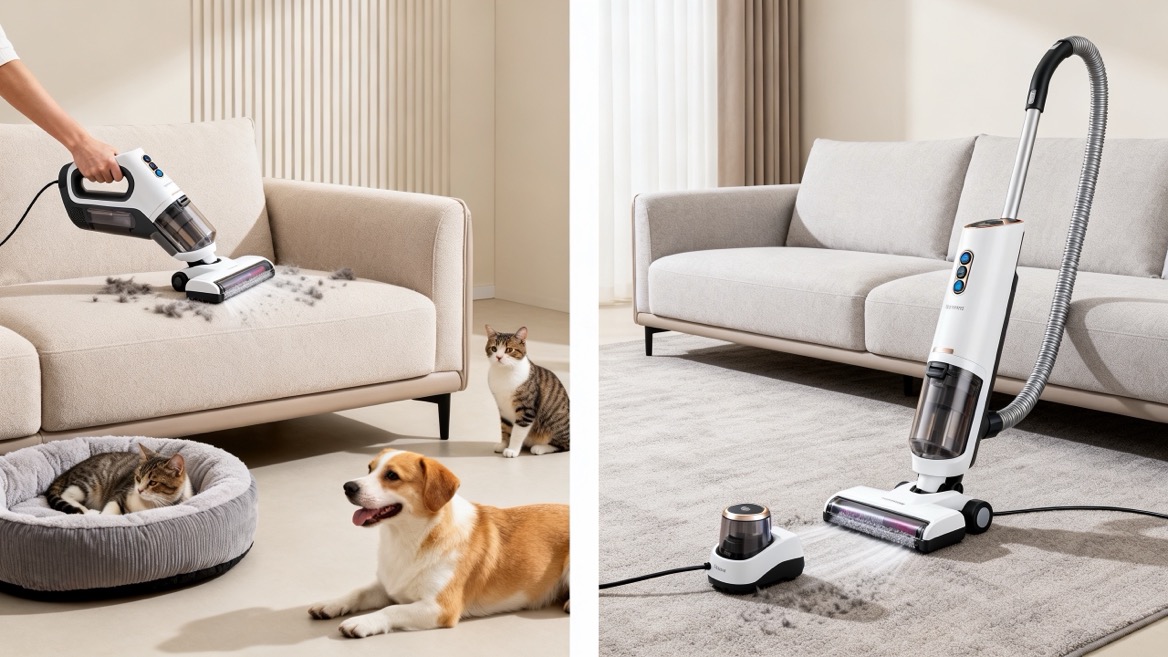
A portable vacuum is designed for direct, immediate cleaning. It is the machine users reach for when they see fresh pet hair on a sofa before guests arrive, when a cat bed needs attention, or when a dog has left fur on the car seat after a trip.
Portable pet hair vacuums are especially effective when the cleaning area is small and the user needs precise control. A handheld model can be brought directly to the sofa rather than requiring the user to pull a larger appliance into the room.
A portable vacuum is often the better choice for:
- Daily sofa and chair touch-ups
- Removing fur from pet beds
- Cleaning fabric-covered car seats
- Cleaning stair treads
- Reaching narrow cushion gaps
- Removing hair from throws, blankets, and pillows
- Serving elderly users or buyers who prefer lightweight appliances
- Providing a secondary vacuum for bedrooms, offices, or vehicles
For these tasks, the most useful attachment is often a mini motorized pet brush. Unlike a simple suction nozzle, a powered brush helps loosen and lift hair that has become caught in upholstery fibers. For soft furniture, the brush must balance agitation and fabric protection.
The main advantage is immediate usability. A compact model can be stored close to where pet hair appears most often. This improves cleaning frequency, which matters because removing fresh hair is easier than trying to remove several days of compressed fur.
Portable models also create a clear value proposition for retailers: they solve a specific and highly visible consumer problem. Buyers understand the purpose quickly. "Clean pet hair from sofas, stairs, and cars" is easier to communicate than a broad claim about total-home cleaning.
Other advantages include:
- Fast deployment for unexpected cleaning tasks
- Excellent maneuverability around cushions and seams
- Low storage requirements in apartments and smaller homes
- Easy portability for car cleaning and multi-room touch-ups
- Lower entry price potential than many premium full-size models
- Strong accessory-led differentiation through pet brushes, crevice tools, and rubber nozzles
A portable vacuum should not be marketed as a universal replacement for a full-size vacuum unless its performance and runtime genuinely support that claim. Small dust cups fill quickly when handling long pet hair. Cordless handheld products may also lose effective runtime when operated in high-power mode.
The most common limitations are:
- Smaller bin capacity
- Shorter cordless runtime
- Less practical for whole-room cleaning
- Lower sustained airflow in some compact designs
- More frequent filter cleaning
- Potential hair wrap on basic brush designs
- Reduced effectiveness on deeply embedded fur if the tool is not motorized
For brand owners, this means the product specification must match the intended user scenario. A lightweight portable vacuum can succeed strongly as a "daily pet hair tool," but it may disappoint users if positioned as a primary vacuum for a large, multi-pet household.
A full-size vacuum is usually the primary cleaning appliance in a home. It is designed to clean floors, carpets, rugs, and larger areas over longer sessions. When it includes a hose, upholstery nozzle, mini motorized brush, or detachable handheld section, it can also perform very well on furniture.
The advantage of a full-size model is not simply size. It is the ability to deliver a more complete cleaning system.
Full-size vacuums are ideal for homes where pet hair is present across several surfaces. A shedding dog or multiple cats can leave fur on carpets, area rugs, sofas, beds, and stairs. In this environment, buyers often need one machine that can manage the full cleaning routine.
A full-size vacuum is usually the stronger option for:
- Large homes and multi-room cleaning
- Thick carpets and rugs
- High-volume shedding pets
- Multiple-pet households
- Weekly deep cleaning
- Furniture plus floor cleaning in the same session
- Buyers with larger storage areas
- Retailers seeking a flagship pet cleaning model
Independent testing highlights the value of powerful suction, maneuverability, and dedicated tools for cleaning pet fur from carpets, couches, and vehicles.
A full-size vacuum can be highly effective on furniture when the design includes the right accessories. The main floor head alone is not enough. Buyers need a system that can transition from floor cleaning to targeted upholstery cleaning without excessive effort.
Useful features include:
- A flexible hose with adequate reach
- A detachable handheld unit or lift-away structure
- A motorized mini brush for cushions and pet beds
- A crevice tool for sofa seams
- A soft dusting brush for delicate furniture
- A tangle-resistant brush roll
- Easy-release dust cup access
- Washable or replaceable filtration components
- A sealed airflow path for improved dust containment
A full-size machine with a poor hose connection or a difficult attachment process can create friction for the user. In contrast, a model that allows a quick transition from floor head to pet tool can improve perceived product quality substantially.
The greatest limitation is convenience for small jobs. If a user only needs to remove hair from one cushion, retrieving a large upright vacuum may feel excessive. This can lead to delayed cleaning and more visible fur accumulation.
Other possible disadvantages include:
- Larger storage footprint
- Heavier handling weight
- Less convenient for vehicle cleaning
- More complex assembly in certain product designs
- Higher logistics and packaging requirements
- Potentially higher retail pricing
- More components requiring quality control
For OEM/ODM buyers, full-size product development also involves broader engineering considerations. These include motor selection, brush roll design, hose durability, noise control, dust-cup sealing, floor-head performance, packaging protection, and compliance requirements for target markets.
The best vacuum for pet hair on furniture is not necessarily the one with the highest advertised power figure. Real cleaning results depend on how the vacuum converts motor power into usable airflow, suction, brush agitation, and surface contact.
Strong suction helps pull loose hair into the vacuum. However, hair embedded in woven upholstery often needs mechanical agitation. This is why a mini motorized pet tool can be more effective than a plain nozzle, even when both tools are connected to the same vacuum body.
For upholstery, the most useful combination is:
1. Strong and stable airflow.
2. A properly designed motorized brush or rubberized pet tool.
3. A suction opening that maintains contact with the fabric.
4. A brush roll that resists tangling.
5. A dust collection path that does not clog easily with long hair.
Long hair and pet fur can wrap around brush rolls. Over time, this reduces brush rotation, weakens cleaning performance, and forces users to cut tangled hair away manually.
Anti-tangle systems can use comb structures, specialized bristle layouts, optimized roller geometry, or hair-separation designs. These features are especially valuable for pet-focused vacuum products because buyers are likely to judge the machine by how much maintenance it creates after cleaning.
Pet-focused vacuum guidance commonly emphasizes anti-tangle brush rolls, motorized pet tools, and sealed HEPA filtration as important design elements for homes with shedding animals.
Visible hair is only part of the problem. Pet dander and fine dust may remain in upholstery and can become airborne during cleaning. A well-designed filtration system helps capture fine particles before air exits the vacuum.
HEPA filtration is commonly defined as capturing at least 99.97% of particles measuring 0.3 microns under the applicable test conditions. However, the filter alone does not guarantee full-system performance. The vacuum body, dust-bin seals, gasket quality, and airflow design also matter.
For product development, brands should avoid vague filtration claims. Instead, clearly specify the filter type, whether the system is sealed, how users clean or replace the filter, and what testing supports the claim in the intended market.
Different users need different solutions. This is where product positioning becomes more important than simply comparing specifications.
| Buyer Type | Better Choice | Why |
|---|---|---|
| Apartment resident with one cat | Portable vacuum or cordless stick vacuum | Compact storage and quick sofa cleaning are priorities |
| Family with one shedding dog | Full-size vacuum with pet tool | Better for floors, rugs, furniture, and regular deep cleaning |
| Multi-pet household | Full-size vacuum plus portable unit | High hair volume benefits from a primary machine and fast touch-up tool |
| Car owner with pets | Portable vacuum | Better reach, portability, and storage for vehicle use |
| Retail customer seeking a gift | Portable pet hair vacuum | Clear use case, accessible price point, easy product demonstration |
| Premium appliance brand | Full-size vacuum with detachable handheld unit | Supports a complete cleaning system and higher-value feature set |
| E-commerce seller | Both categories | Portable products create impulse demand; full-size models raise average order value |
| Hospitality or rental-property operator | Full-size vacuum with furniture tools | Better for repeated cleaning across mixed surfaces |
The vacuum type matters, but user technique also affects results. A simple cleaning method can improve pet hair removal from upholstery and reduce unnecessary repeat passes.
For heavy shedding, use a rubber brush, lint tool, or dry microfiber cloth before vacuuming. This gathers loose surface hair and prevents the vacuum inlet from becoming overloaded.
Use a mini motorized brush for durable upholstery with embedded hair. Use a soft brush or non-motorized upholstery nozzle for delicate fabrics, loose weaves, or furniture that could snag.
Vacuuming only in one direction may leave hair trapped in the weave. Move slowly forward and backward, then change direction across the fabric grain.
Use a crevice tool around cushion edges, under removable cushions, and in recliner joints. These are common areas where hair accumulates but remains hidden.
Pet hair takes up significant space. A packed dust cup can reduce airflow and make the cleaning process less effective. Empty the bin after heavy furniture cleaning rather than waiting until it is completely full.
Check the pet tool regularly for wrapped hair. Follow the product's instructions for cleaning washable filters and allow filters to dry completely before reinstalling them. Proper maintenance helps protect airflow and long-term performance.
For importers, retailers, and private-label brands, the portable versus full-size decision should begin with the target user rather than a generic product catalog.
A portable pet hair vacuum can be positioned around speed, convenience, mobility, and upholstery focus. A full-size vacuum can be positioned around whole-home capability, deep cleaning, larger capacity, and multi-surface performance.
A practical commercial strategy is to offer both categories under one pet-care product line:
- A compact handheld or portable vacuum for sofas, cars, pet beds, and daily cleanup.
- A full-size upright, cordless stick, or corded vacuum for floors, rugs, furniture, and deeper weekly cleaning.
This approach gives distributors more price points, supports bundle promotions, and allows consumers to choose between a quick-cleaning device and a complete home-cleaning solution.
For pet hair furniture cleaning, product teams should consider:
- Motorized mini pet brush
- Anti-tangle brush design
- Easy-empty dust cup
- Washable filter system
- Sealed filtration structure where applicable
- Detachable handheld configuration
- Flexible hose or extension tool
- Lightweight handheld handling
- Stable battery performance for cordless models
- Cord length and cord management for corded models
- Noise reduction considerations for pet-sensitive households
- Clear accessory storage and product instructions
Noise can also influence buying decisions. Standard vacuum cleaners may operate around 75–80 dB or more, and lower-noise designs can be relevant for households with skittish pets.
A portable vacuum is better when the user needs quick, lightweight, targeted cleaning for furniture, pet beds, stairs, and vehicles. It is especially useful for daily maintenance and small living spaces.
A full-size vacuum is better when pet hair appears throughout the home and the user needs one appliance for upholstery, carpets, hard floors, rugs, and larger cleaning sessions. It becomes even more effective for furniture when it includes a flexible hose and motorized pet attachment.
The strongest recommendation for serious pet households is often not an either-or decision. It is a full-size primary vacuum paired with a portable pet hair vacuum for immediate upholstery and vehicle cleaning.
For private-label brands, importers, and retailers, this creates an opportunity to build a complete pet hair cleaning range rather than relying on a single product category.
Whether you are developing a lightweight handheld vacuum for pet hair on sofas or a full-size upright vacuum for complete household cleaning, product success depends on engineering, manufacturing consistency, accessory design, quality control, and dependable after-sales support.
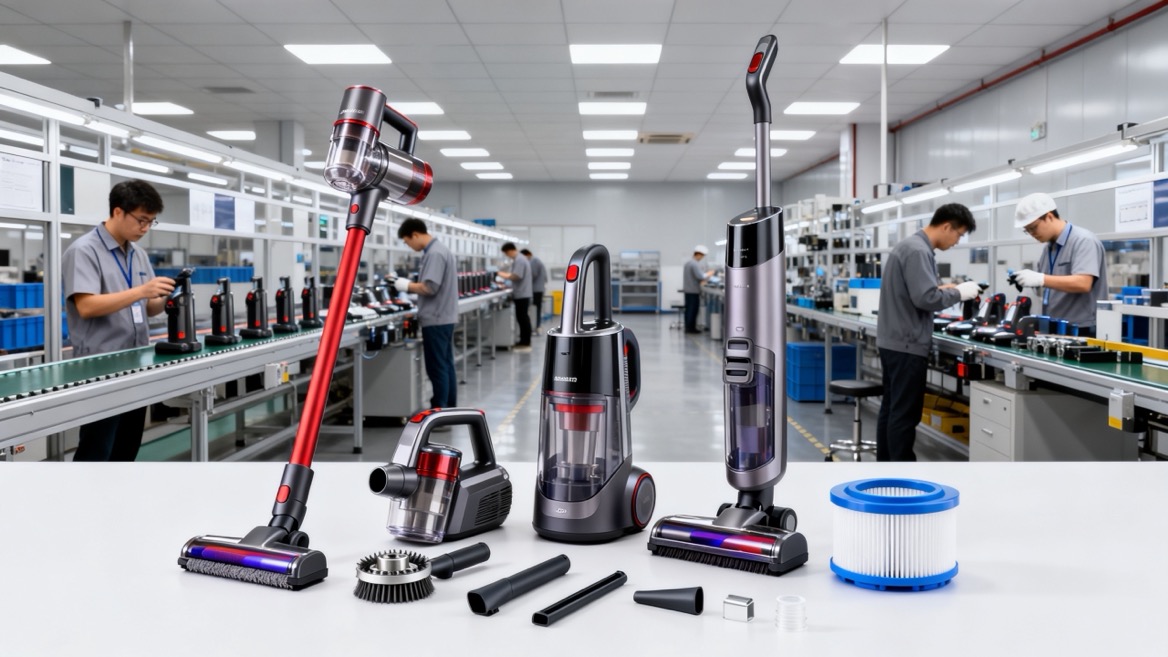
Ningbo Eyunhome Electric Technology Co., Ltd. can support vacuum cleaner brands seeking upright, handheld, corded, and cordless product solutions for international markets. With OEM/ODM support, stable production capability, and a focus on practical household-cleaning applications, the company can help transform product concepts into market-ready vacuum cleaner programs.
Contact Ningbo Eyunhome Electric Technology Co., Ltd. to discuss your target market, preferred vacuum format, pet hair cleaning requirements, accessory configuration, branding needs, and OEM/ODM project specifications.
Yes, a portable vacuum can remove pet hair from a sofa effectively when it has stable suction and a suitable upholstery attachment. For embedded hair, a mini motorized pet brush is usually more effective than a basic crevice nozzle.
A full-size vacuum is generally better for complete home cleaning because it can cover floors, rugs, carpets, stairs, and furniture in one cleaning session. A handheld vacuum is better for fast, localized furniture and vehicle cleaning.
A mini motorized pet brush is usually the best attachment for durable upholstery because it combines suction with brush agitation. A soft upholstery brush or non-motorized nozzle is safer for delicate fabrics.
Pet hair can reduce performance if it wraps around brush rolls, blocks the inlet, fills the dust cup, or clogs filters. Regularly emptying the bin, removing tangled hair, and maintaining filters helps protect the vacuum.
A HEPA filter can be valuable for households concerned about fine dust and pet dander. However, overall performance also depends on whether the vacuum has a well-sealed airflow system and properly maintained filters.
Cordless vacuums are highly convenient for furniture because they are easy to carry and do not require access to a power outlet. Buyers should compare runtime, battery charging time, dust-cup capacity, and high-power performance before choosing a model.
Importers should evaluate suction and airflow performance, mini pet-tool design, anti-tangle capability, filtration, battery or motor specifications, noise level, accessory package, product testing, packaging, certifications required for the destination market, spare-parts planning, and after-sales support.
1. RTINGS. "[The 5 Best Vacuums For Pet Hair of 2026]." Accessed September 8, 2026.
2. The New York Times Wirecutter. "[The Best Vacuum for Pet Hair]." Published July 13, 2025.
3. Business Insider. "[The Best Vacuums for Pet Hair]." Accessed September 8, 2026.
4. HowStuffWorks. "[What Type of Vacuum Cleaner Works Best for Pet Hair?]." Published December 6, 2010.
5. Hong Kong Trade Development Council. "[Ningbo Eyunhome Electric Technology Co., Ltd.]." Accessed September 8, 2026.
6. U.S. Environmental Protection Agency. "[What Is a HEPA Filter?]." Accessed September 8, 2026.


