
Views: 291 Author: Eyunhome Vacuum Publish Time: 2026-07-20 Origin: Site


Content Menu
● Introduction: Why Source Stick Vacuums from China
● How to Evaluate Reliable Stick Vacuum Manufacturers
>> Factory Certifications and Compliance
>> R&D and Engineering Capability
>> QC Processes and Production Stability
● Technical Considerations for Stick Vacuum Programs
>> Motor Technology and Suction Performance
>> Filtration, Cyclonic Separation, and Materials
● Industrial Cluster Advantage in China
● Top 10 Stick Vacuum Cleaner Manufacturers in China
>> 1. Ningbo Eyunhome Electric Technology Co.,Ltd.
>> 4. Klinsmann
>> 8. Haier
>> 9. Gree
>> 10. Representative SME OEM Factories
● Comparison Table: Capacity, MOQ, and Customization Focus
● Buyer's Guide: From First Contact to Mass Production
>> Verify Factory Identity and Documentation
>> Sample Development and Performance Testing
>> Logistics Planning and Packaging
>> Contracts, QC Checkpoints, and Pre‑Shipment Inspections
● Common Pitfalls in Stick Vacuum Sourcing and How to Avoid Them
>> Materials Downgrade After Sample Approval
>> Battery Substitution and Inconsistent Runtime
● Compliance and Product Revision Management
● Market Outlook for 2025–2026
● Summary
● FAQs
China has developed a comprehensive ecosystem for producing stick vacuum cleaners, from high‑speed motors and lithium batteries to plastic injection and final assembly. Over the past decade, stick vacuums have shifted from niche products to mainstream floorcare appliances, backed by domestic demand and export growth. For procurement managers, this means a large choice of factories, a variety of technical platforms, and a broad range of price and quality levels.
Manufacturing clusters in regions such as Suzhou, Shenzhen, and Ningbo support dense networks of component suppliers and experienced engineers. These clusters enable rapid product iteration, competitive quotations, and scalable production capacity. When approached strategically, sourcing from China allows buyers to secure long‑term partners with stable quality, predictable lead times, and the ability to support brand growth.

Selecting a manufacturer for long‑term cooperation should start from a structured evaluation framework rather than purely from unit price. Procurement managers can reduce risk by considering the following dimensions:
A reliable factory maintains valid quality and safety certifications and can show them transparently. Key elements include:
- Quality management systems such as ISO9001, supported by documented procedures and regular audits.
- Product safety and environmental certifications aligned with target markets, such as CE, RoHS, and EMC for Europe, and UL/ETL/FCC for North America.
- Clear mapping between specific stick vacuum models and test reports, including model numbers and hardware revisions.
Verifying certificates with issuing bodies and checking their validity dates helps to filter out unreliable suppliers early in the process.
Stick vacuums have become more complex, especially cordless models. Strong manufacturers:
- Design or co‑design the motor, airflow path, and cyclonic system to achieve stable suction rather than relying on marketing claims alone.
- Develop battery packs with appropriate capacity, cell brands, and battery management systems to balance runtime, safety, and product cost.
- Offer engineering support for private molds, structural adjustments, and performance tuning based on feedback from pilot batches.
Factories with in‑house engineers and test facilities are generally better equipped to support continuous improvement and customization.
Beyond certifications, day‑to‑day execution determines real quality. Reliable factories tend to:
- Implement incoming material inspections for motors, batteries, plastics, and PCBs.
- Use in‑line testing and final functional checks to control suction performance, noise, and runtime.
- Conduct reliability tests such as drop tests, dust loading cycles, and aging tests for battery packs.
- Maintain documented lead times and show historical on‑time delivery performance.
Procurement teams should pay attention to how the factory responds to schedule changes and capacity constraints, especially during peak seasons.
Understanding key technical aspects of stick vacuums helps buyers ask targeted questions and compare factories more effectively.
Modern stick vacuums often use high‑speed brushless DC motors capable of achieving strong suction with improved efficiency and lower noise. When benchmarking performance, buyers should:
- Look at motor wattage together with metrics such as kPa and air watts.
- Test suction with real floor heads and attachments, not only with sealed‑intake measurements.
- Evaluate performance on different surfaces, including carpets and hard floors, to understand practical cleaning capability.
Focusing only on maximum kPa figures can lead to misleading evaluations; air watts and real‑world tests provide a more balanced view.
Cordless stick vacuums rely on lithium‑ion batteries, which introduce both performance advantages and safety responsibilities. Important aspects include:
- Defined battery capacity, cell brand, and pack configuration, documented in technical specifications and contracts.
- Battery management systems that prevent over‑charge, over‑discharge, and overheating.
- Compliance with transport regulations for dangerous goods, including appropriate packaging and labeling for air and sea freight.
By locking battery parameters and periodically checking packs, buyers can reduce the risk of unexpected changes between samples and mass production.
Filtration design affects both cleaning performance and long‑term user satisfaction:
- Multi‑cyclone systems that separate dust before it reaches the filter help prevent clogging and maintain suction.
- Genuine fine‑particle filtration requires more than a marketing label; systematic testing and long‑term use simulations produce more reliable outcomes.
- Durable plastics, robust joints on extension tubes, and wear‑resistant brush rolls contribute to product lifespan and customer satisfaction.
When evaluating samples, buyers should inspect materials, fit‑and‑finish, and ergonomics, and simulate typical usage over time.
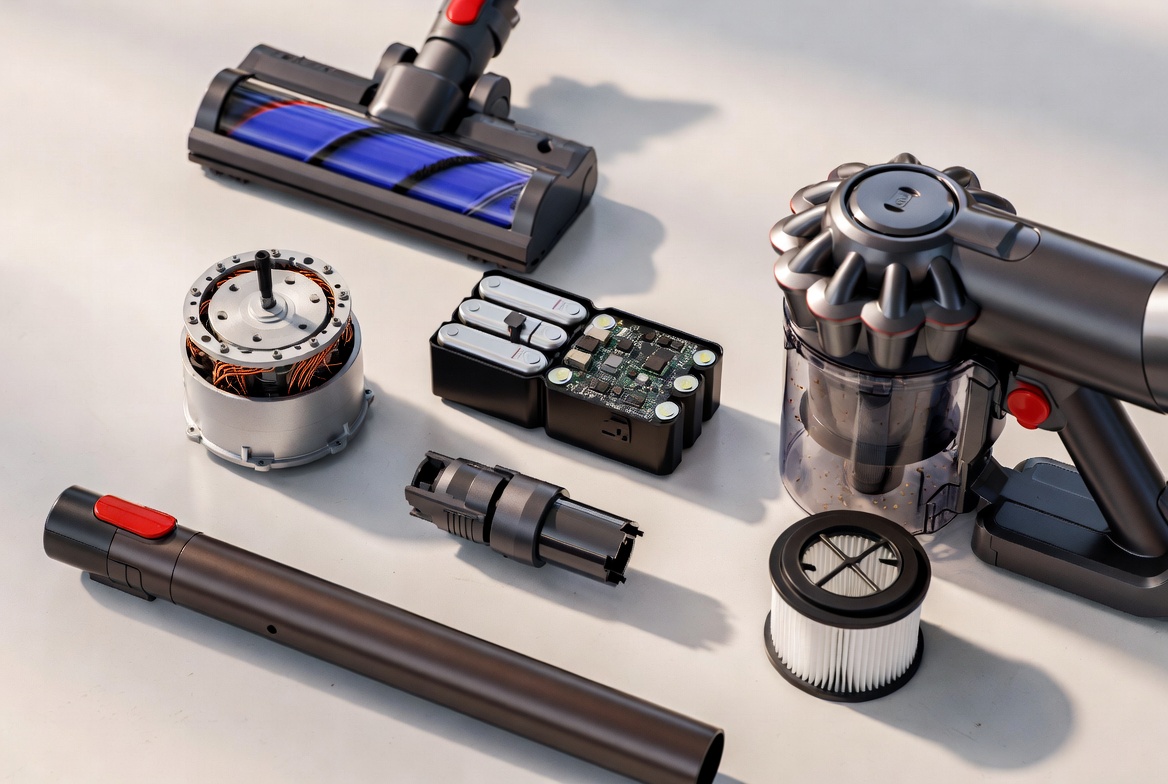
The manufacturing base for vacuums in China benefits from geographic specialization. For example:
- Suzhou hosts several large vacuum factories and motor producers, supporting high volume and strong technical expertise.
- Shenzhen brings in advanced electronics, control boards, and connectivity functions, laying the foundation for smart and connected floorcare devices.
- Ningbo and other cities in Zhejiang province focus on export‑oriented small appliances, with factories serving various mid‑sized international brands and regional distributors.
These clusters reduce supply chain friction, allow multiple sourcing options for key components, and foster continuous improvement across the industry.
The following ten manufacturers represent a mix of large conglomerates, mid‑sized OEM specialists, and agile engineering‑driven factories that actively produce stick vacuum cleaners for global buyers. The list is structured for procurement managers who need practical options rather than only prominent consumer names.
Ningbo Eyunhome Electric Technology Co.,Ltd. is an export‑oriented vacuum cleaner manufacturer based in Ningbo. The company focuses on upright, stick, handheld, corded, and cordless vacuum solutions for clients in different regions. As a mid‑sized factory, it aims to deliver solid quality and flexibility rather than purely pursuing maximum volume.
Eyunhome builds its strengths around responsive communication, manageable minimum order quantities, and support for tailored OEM projects. Typical services include custom appearance, accessories, branding, and packaging, with attention to stable suction performance and balanced ergonomics. This makes the factory well aligned with small and medium brands, regional distributors, and online retailers that require a partner willing to refine product details based on real market feedback.
Minfu Group is an engineering‑based manufacturer of cleaning appliances with a strong focus on cordless stick vacuums. Its production is organized to support technically demanding projects, such as higher power motors, enhanced filtration systems, and more complex structures like self‑emptying bases.
The company typically works with brands targeting the mid‑to‑upper segments. It can provide comprehensive support from industrial design to pilot runs, and it is accustomed to adjusting specifications for different regional requirements. Minfu is suitable for teams seeking deeper involvement in product architecture and aiming to differentiate their stick vacuums through performance and added features.
Kingclean Electric in Suzhou is known as a large‑scale producer of vacuum cleaners, including stick models. With decades in the industry, it leverages substantial capacity and internal component production, especially motors.
Kingclean tends to serve major retailers and established appliance brands that need significant volumes and standardized models. It is a practical option when supply stability and capacity are top priorities, and when buyers are ready to work with higher minimum order quantities and mostly standardized platforms.
Klinsmann started with robot vacuums and later expanded into handheld and stick categories. This background in robotic navigation and sensors influences its approach to product development and electronics.
For stick vacuums, Klinsmann's main advantage lies in balanced performance and pricing aimed at mainstream e‑commerce brands. It offers OEM projects with reasonable customization around design and features. Buyers looking for acceptable performance, competitive pricing, and the option to build portfolios across both robot and stick segments may find this manufacturer attractive.
Midea, widely recognized as a household appliance brand, also operates an OEM division supplying various products to external partners. In the stick vacuum segment, Midea offers production lines built around stability and standardized designs.
Its projects often rely on public molds and shared platforms, which help control risk and compliance for high‑volume orders. While this may reduce exclusivity for brands in crowded retail channels, it benefits distributors and large buyers who value predictable quality and well‑organized logistics across multiple countries.
Suzhou EUP Electric is a long‑standing vacuum manufacturer that focuses on cost‑effective production. It offers stick and upright vacuums designed mainly for the value segment.
This company is suitable for buyers whose target markets prioritize affordability and basic functionality over advanced features. It can provide competitive pricing and support steady volume programs, particularly for importers and price‑driven e‑commerce operations that need reliable entry‑level products.
TVX Cleaning participates in both household and commercial cleaning equipment. Its experience in higher‑duty environments contributes to robust product design and durability considerations.
For stick vacuums, TVX can be a candidate when buyers seek solid reliability for repeated use, such as products for light commercial or quasi‑professional applications. While not necessarily the most flexible factory for extensive cosmetic changes, it offers experience in balancing suction, durability, and life‑cycle performance.
Haier, another well‑known appliance group, offers manufacturing capabilities that extend to small floorcare devices. In many cases, stick vacuums produced under or through Haier are structured as white‑label or regional collaborations.
For procurement teams, Haier is relevant when they aim for cautious, low‑risk portfolios backed by established large‑scale infrastructure. It is particularly suitable for distributors leveraging brand association or consolidating procurement across multiple appliance categories.
Gree is primarily associated with air conditioners but has diversified into other household appliances, including vacuum cleaners. Its stick vacuum manufacturing tends to be integrated into broader product strategies.
Gree can be considered when buyers wish to coordinate purchases across categories and potentially benefit from shared logistics, consistent documentation, and unified after‑sales frameworks. This is more common for organizations that work with their wider appliance offerings rather than isolated vacuum projects.
Beyond large groups, numerous small and medium factories in Guangdong and Zhejiang produce stick vacuums for various global markets. These factories often offer a mix of public and semi‑custom designs, lower MOQs, and flexible project management.
Manufacturers like Ningbo Eyunhome Electric Technology Co.,Ltd. exemplify this SME segment at a higher organizational level: export‑ready, willing to discuss detailed OEM customization, and focused on building ongoing relationships with emerging brands. For procurement managers seeking a balance between flexibility, reasonable volumes, and structured communication, such factories can be strong candidates.
The following table provides a high‑level comparison of selected manufacturers. Specific figures should always be confirmed through direct discussions, quotations, and audits.
| Manufacturer | Typical Capacity Level | Typical MOQ for Stick Vacuums | Customization Focus |
|---|---|---|---|
| Ningbo Eyunhome Electric | Mid‑scale, export oriented | Low‑to‑medium, suited to small‑to‑mid brands | Strong OEM, focused ODM for selected projects |
| Minfu Group | Medium‑to‑high, engineering driven | Flexible, low‑to‑medium for cordless programs | Deep OEM and ODM, including private tooling |
| Kingclean Electric | Very high, long‑established | High, oriented to large retailers | Standardized OEM platforms |
| Klinsmann | Mid‑scale, mixed product lines | Medium, aligned with mainstream e‑commerce | OEM with design and feature adjustments |
| Midea OEM Division | Very high, multi‑plant | High, suited to chain buyers | Standard OEM with shared molds |
| Suzhou EUP Electric | High, cost‑focused production | Medium, suited to value segments | OEM with emphasis on affordability |
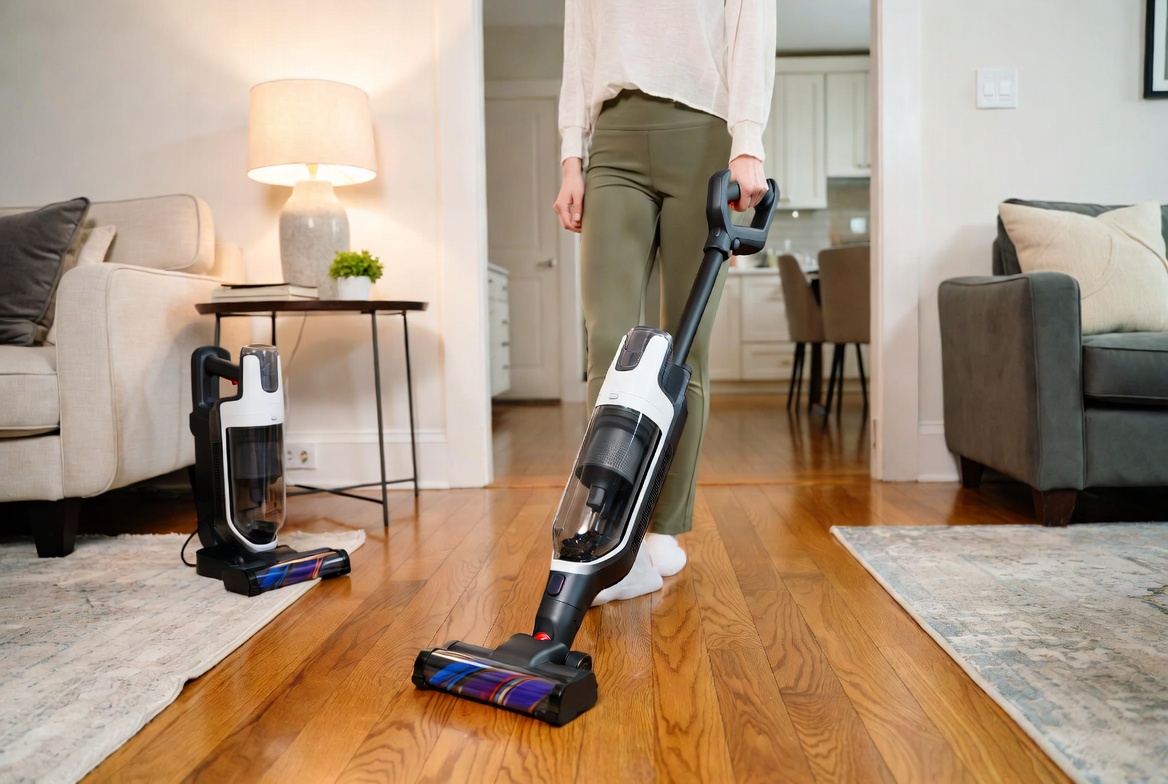
Procurement managers can make sourcing more predictable by following a structured process.
Begin by confirming the company's registration details, factory addresses, and business scope. Request key documents such as business licenses, organization codes, and registration for export rights if relevant. Collect quality and safety certificates and ensure they match the latest models and production conditions.
Checking certificate numbers and validity dates, and comparing them with factory records, reduces the risk of relying on outdated or unrelated documentation. For higher stakes projects, an independent audit or remote factory assessment can provide additional assurance.
Use "golden samples" as the baseline for future production. Define performance criteria such as suction power, runtime, noise level, and filtration efficiency, and test the sample in realistic scenarios:
- Different floor types and debris sizes.
- Repeat cleaning cycles to assess overheating or performance drop.
- Ergonomics and usability, including weight, balance, and bin emptying.
Document all specifications, including motor type, battery capacity, filtration configuration, and material choices. These details should be reflected in technical agreements to reduce the chance of hidden changes after approval.
Stick vacuums can be bulky and, in cordless variants, involve lithium‑battery transport requirements. Plan packaging and logistics carefully:
- Confirm carton dimensions, weight, and packing configuration.
- Optimize palletization and container loading to avoid wasted space and product damage.
- Align labeling, manuals, and documentation with local regulations and language needs.
For battery‑powered models, coordinate with logistics partners on declarations, shipping routes, and any additional handling costs.
Formalize expectations through detailed contracts:
- Component lists specifying motors, batteries, PCBs, plastics, and brushes.
- Clearly defined tolerances for performance metrics such as suction power and runtime.
- Agreed QC checkpoints, including in‑production sampling and pre‑shipment inspections.
Pre‑shipment inspections help verify that mass production is consistent with golden samples in terms of appearance, performance, and packaging completeness. Including inspection results and corrective actions in ongoing communication strengthens mutual understanding and continuous improvement.
Several recurring issues appear in stick vacuum procurement. Understanding them helps buyers protect their projects.
One frequent pitfall is a switch from higher‑grade plastics or components in samples to cheaper materials in mass production. This can lead to cracked housings, loose joints, or early wear of brush rolls.
To mitigate this, buyers should define material specifications in detail and, where practical, conduct periodic lab tests or independent checks. Clear documentation and random inspections during production make it harder for unannounced changes to occur.
Marketing claims sometimes rely on sealed‑intake tests or optimistic interpretations of kPa values that do not reflect real use. Buyers may be impressed by numbers but later experience unimpressive cleaning performance.
A better approach is to evaluate both kPa and air watts and to conduct comparative tests across different models using the same attachments and surfaces. This gives a more realistic picture of how the vacuum will perform in typical environments.
Switching battery cell brands or capacities between samples and mass production can reduce runtime and increase failure rates. The risk is higher when cell specifications are not clearly defined in contracts.
By locking battery details contractually and performing occasional pack inspections, buyers can maintain control over this critical component. They should also align runtime expectations with marketing messages to avoid customer dissatisfaction.
Systems that send most dust directly to the HEPA filter may suffer from rapid clogging, increased motor load, and deteriorating suction. This is particularly problematic for customers who clean carpets or produce large amounts of fine dust.
Prefer designs that use multi‑cyclone separation or other measures to reduce the load on final filters. When testing, simulate multiple cleaning cycles without cleaning the filter to see how performance holds up over time.
A critical but often overlooked risk lies in documentation mismatch between product revisions and test reports. When electronics or firmware are updated without updating related reports, products may initially pass checks but later face challenges during deeper compliance reviews.
To avoid this, buyers should require their manufacturing partners to maintain a clear change log for hardware and firmware revisions and link each revision to specific test reports. When planning changes, both sides should discuss potential compliance impacts before implementation, especially for models sold across multiple regions or platforms.
Recent industry analyses indicate that vacuum cleaners represent a significant and growing segment of the small appliances market in China. Stick vacuums, particularly cordless designs, are gaining a larger share as consumers gravitate toward lightweight, versatile cleaning tools.
For procurement managers, this trend signals ongoing technical upgrades and increasingly demanding end users. It also implies a widening gap between commodity‑level suppliers and more advanced factories that invest in motors, batteries, filtration, and user experience. Choosing partners aligned with this trajectory can help brands remain competitive over the coming years.
China's stick vacuum cleaner manufacturing landscape offers a wide range of choices, from large integrated groups with enormous capacity to agile mid‑sized OEM specialists focused on flexible customization and export projects. By carefully evaluating certifications, engineering capabilities, QC processes, and operational stability, procurement managers can build reliable sourcing strategies that support long‑term brand growth.
Factories like Ningbo Eyunhome Electric Technology Co.,Ltd., alongside other highlighted manufacturers, illustrate how different profiles can serve different buyer needs—from emerging online brands to established retailers. With a methodical approach to sampling, logistics, and contracts, buyers can navigate common pitfalls, secure stable supply, and align product performance with market expectations.
1。 How can I verify whether a factory's ISO9001 certificate is current and genuine?
Request the full certificate with issuing body details and check validity via the certification body's online database or direct inquiry. You can also cross‑reference audit dates against the factory's internal QC documentation.
2. What is the typical lead time for OEM stick vacuum orders using existing molds versus ODM private molds?
For public‑mold OEM projects with custom CMF, expect roughly 30–45 days from deposit to shipment, while fully new ODM designs with tooling and engineering validation can take 3–4 months or more.
3. How should I handle lithium‑battery compliance for multi‑country shipments?
Work with factories experienced in Class 9 Dangerous Goods handling, ensuring UN38.3 testing, MSDS documentation, and proper labeling, and coordinate with logistics partners familiar with each destination's rules.
4. How do I ensure that my stick vacuum's CE and RoHS reports actually match the product being produced?
Insist on test reports that reference your exact model number and hardware revision, and include these references in your contracts; avoid accepting "similar model" reports without a clear technical equivalence statement.
5. How can I balance low MOQ requirements with stable quality for a new brand launch?
Target mid‑sized, export‑oriented factories—such as Ningbo Eyunhome Electric Technology Co.,Ltd. or similar peers—that offer moderate MOQs, documented QC, and willingness to refine designs based on initial batches instead of pushing only high‑volume commodity programs.
1. China Stick Vacuum Cleaner Market Size & Share Report by 2033 https://deepmarketinsights.com/vista/insights/stick-vacuum-cleaner-market/china
2. Vacuum Cleaners – China Market Outlook https://www.statista.com/outlook/cmo/household-appliances/small-appliances/vacuum-cleaners/china
3. China Stick Vacuum Cleaner Market Analysis & Trends https://www.indexbox.io/store/china-kw-stick-vacuum-cleaner-840-market-analysis-forecast-size-trends-and-insights/
4. How to Audit a Chinese Vacuum Factory: 7 Steps https://minfutech.com/how-to-audit-chinese-vacuum-factory/
5. Top 5 Cordless Vacuum Manufacturers China https://minfutech.com/top-5-cordless-vacuum-manufacturers-china/
6. Top Mistakes Buyers Make When Sourcing Vacuum Cleaners from China https://www.lxvacuum.com/article-details/top-mistakes-buyers-make-sourcing-vacuum-cleaners-from-china.html
7. Vacuum Cleaner Stick Manufacturers & Suppliers https://www.made-in-china.com/manufacturers/vacuum-cleaner-stick_2.html
8. Global Stick Vacuum Cleaner Market Research Report 2025–2032 https://www.marketresearch.com/Deep-Insights-Research-Co-DIR-v4285/Global-Stick-Vacuum-Cleaner-Research-41790902/
9. Top 7 Vacuum Cleaner Manufacturers in China (Buyer Guide & Import Tips) https://www.chilat.com/blog/2016345569831653378


