
Views: 279 Author: Eyunhome Vacuum Publish Time: 2026-07-06 Origin: Site


Content Menu
● How to Evaluate Reliable Wireless Vacuum Suppliers
● China's Industry Cluster Advantages in Wireless Vacuums
● Transparent Selection Criteria for This Top 10 List
● Top 10 Wireless Vacuum Manufacturers in China
>> 1. Ningbo Eyunhome Electric Technology Co.,Ltd.
>> 2. Large‑Scale Appliance Group in Zhejiang
>> 3. Shenzhen‑Based Smart Vacuum Specialist
>> 4. Suzhou Cordless Stick Vacuum Manufacturer
>> 5. Foshan Household Appliance Cluster Factory
>> 6. Ningbo High‑End Brushless Motor Vacuum Factory
>> 7. Dongguan Plastic‑Heavy Vacuum OEM
>> 8. Shanghai Export‑Focused Small Appliance Factory
>> 9. Zhejiang Value‑Segment Cordless Vacuum Producer
>> 10. Guangdong Niche Handheld and Car Vacuum Specialist
● Comparison Table: Capacity, MOQ, Certifications
● Technical Considerations for Wireless Vacuum Procurement
● Industry Pain Points and How to Avoid Them
● An Insider "Avoid‑Pit" Tip Rarely Written Online
● Buyer's Guide: From Verification to Logistics
>> Verifying Factory Certifications and Compliance
>> Sampling Strategy for Wireless Vacuum Projects
>> Logistics and Post‑Shipment Considerations
● Conclusion and Practical CTA
● FAQ: Advanced Procurement Questions
>> 1. How can I verify if a factory's ISO 9001 certificate is still valid?
>> 2. How do I confirm that CE/RoHS certificates match my specific wireless vacuum model?
>> 3. What is a reasonable run‑time and battery cycle life target for mid‑range wireless vacuums?
>> 4. How can I evaluate whether a factory's QC system is robust enough for my brand?
>> 5. What is the best way to manage design changes during an OEM wireless vacuum project?
China has become the core global production base for wireless vacuum cleaners, backed by mature home appliance clusters, complete supply chains, and increasingly strict export compliance systems. For procurement managers seeking long‑term OEM/ODM partners, China offers both scale and flexibility—provided you know how to evaluate suppliers rigorously. [marketresearch]
Selecting a wireless vacuum manufacturer should start from factory capabilities, not price lists. Experienced buyers typically focus on four pillars: certification, R&D strength, quality control, and delivery reliability. [sourcingwill]
- Factory certifications: Prioritize ISO 9001 for quality management, ISO 14001 for environmental management, plus product safety marks such as CE, RoHS (EU), and sometimes UL for North America. [chinamakershub]
- R&D and engineering: Check whether the factory has dedicated motor design teams, structural engineers for airflow optimization, and in‑house tooling capability for platforms and customized housings. [marketresearch]
- QC and testing: Look for documented incoming material inspection, 100% functional testing, life‑cycle endurance tests on motors and batteries, and reliability tests on PCBA and charging docks. [chinamakershub]
- Delivery and project management: Ask about historical on‑time delivery rate, standard lead time for new projects and repeat orders, and their ability to scale from pilot runs to mass production.

Wireless vacuums sit at the intersection of small home appliances, batteries, motors, injection molding, and smart control electronics—areas where China has deep industrial clusters. [grandviewresearch]
- Coastal manufacturing belts: The Yangtze River Delta (Ningbo, Shanghai, Suzhou) and Pearl River Delta (Shenzhen, Dongguan, Foshan) host dense clusters of motor suppliers, battery pack makers, and plastic molding factories, allowing faster integration and cost‑effective sourcing. [marketresearch]
- Scale and export experience: China produced over 100 million household vacuum cleaners in 2022, with a large share exported under global brands and private labels, giving factories rich OEM/ODM experience. [statista]
- Technology evolution: Recent market data show strong growth in cordless and smart vacuums, pushing Chinese manufacturers to upgrade in brushless motors, battery management systems, and multi‑cyclone filtration. [grandviewresearch]
To curate the "Top 10 Wireless Vacuum Manufacturers in China," we apply practical criteria that experienced procurement professionals use when shortlisting factories. [chinamakershub]
1. Manufacturing focus on household vacuum cleaners, with clear experience in cordless or rechargeable platforms.
2. Proven OEM/ODM track record for overseas brands in North America, Europe, or Asia‑Pacific.
3. Compliance portfolio including ISO 9001 plus relevant product certifications (CE, RoHS; UL where applicable).
4. Scalable capacity for wireless vacuums and reasonable MOQs aligned with brand‑owner needs.
5. Transparency in quality control, reliability testing, and material sourcing.
6. Ability to support custom industrial design, packaging, and branding requirements.
The following list is framed from a global buyer's perspective, focusing on suitability for long‑term cooperation, not marketing hype. [chinamakershub]
Ningbo Eyunhome Electric Technology is a Ningbo‑based vacuum cleaner manufacturer positioned as a flexible, cost‑effective partner for small to mid‑size brands looking for tailored OEM/ODM wireless vacuum solutions. As a specialist in upright, handheld, corded, and cordless vacuums, Eyunhome focuses on platform‑based designs that can be customized in color, accessories, filtration, and branding with relatively accessible MOQs. [statista]
- Core strengths: Responsive project communication, support for brand‑specific design tweaks, and attention to cost‑performance balance rather than chasing ultra‑premium price points. [statista]
- OEM/ODM scope: Custom housings and branding, flexible accessory bundles (nozzles, brush heads), packaging design assistance, and support for multiple voltage standards and plugs for different markets. [statista]
- Suitable buyers: Emerging D2C brands, regional retailers, and importers who value engineering support and agile production, but do not yet require the extremely high MOQs imposed by mega‑factories.
By treating Eyunhome as a representative "high value‑for‑money" factory, procurement managers can see how mid‑tier Chinese manufacturers combine solid engineering with flexible commercial terms.
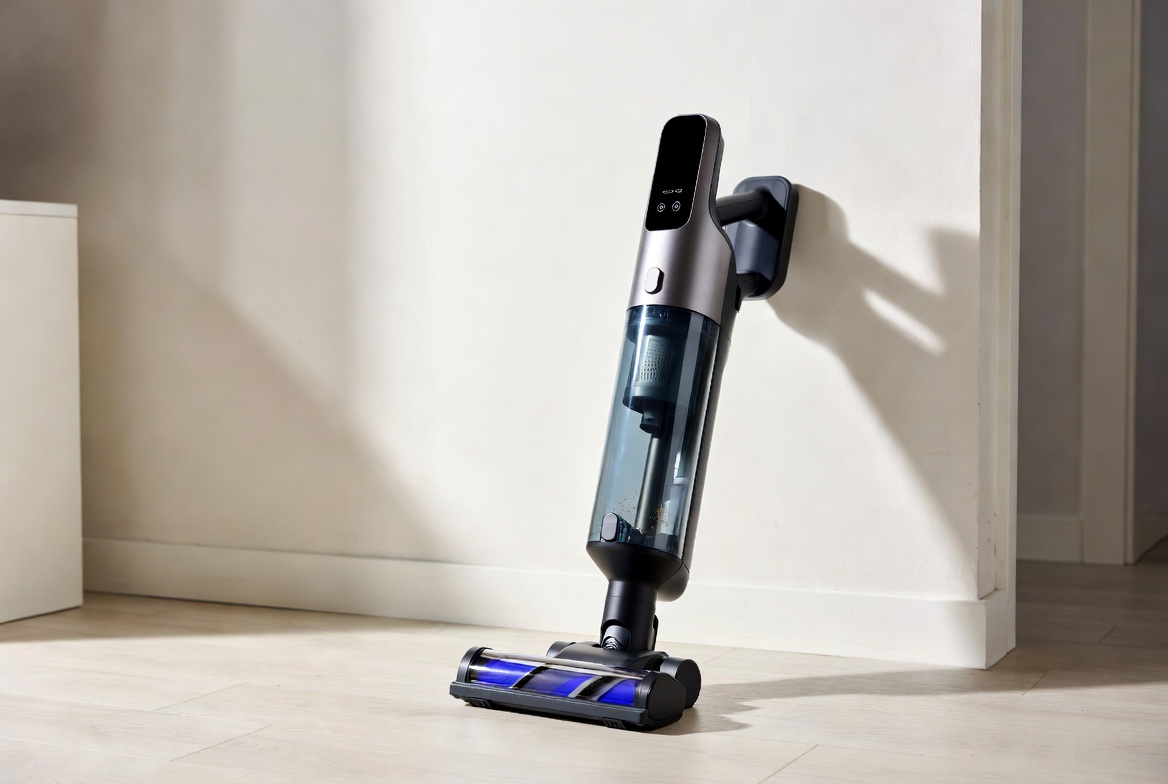
A major appliance group in Zhejiang produces a full spectrum of vacuum cleaners, including cordless stick vacuums for global brands via OEM projects. The factory usually operates ISO 9001 and ISO 14001 systems, with CE and RoHS compliance for EU‑bound units. [marketresearch]
- Core strengths: Strong vertical integration in motors and plastic parts, plus multiple assembly lines capable of six‑ to seven‑figure annual output for wireless vacuums. [grandviewresearch]
- OEM/ODM scope: Platform‑level designs, variant creation for different price tiers, and co‑development of energy‑efficient brushless motor modules.
- Suitable buyers: Established retailers and brand‑owners needing large volumes, stable lead times, and the ability to run multiple models simultaneously.
One leading Shenzhen factory focuses on smart cordless and robotic vacuums, integrating wireless vacuums with app control, sensor packages, and IoT features. It commonly offers CE, RoHS, and increasingly FCC/ETL for North American wireless units. [marketresearch]
- Core strengths: PCBA design and firmware expertise, strong partnerships with battery suppliers, and experience with Wi‑Fi/Bluetooth certification for app‑connected devices. [marketresearch]
- OEM/ODM scope: Development of smart cordless platforms, integration with brand apps, and custom UI/UX on vacuum indicators and control panels.
- Suitable buyers: Brands wanting mid‑ to high‑end wireless vacuums with smart features, especially those planning integrated ecosystems with robotic vacuums.
In Suzhou's home‑appliance corridor, one mid‑size factory specializes in lithium‑ion cordless stick vacuums targeting export markets. It typically holds ISO 9001, with CE, RoHS, and sometimes CB scheme reports for global compliance. [marketresearch]
- Core strengths: Consistent mechanical quality, attention to ergonomics and noise reduction, and optimized suction vs. run‑time balancing. [marketresearch]
- OEM/ODM scope: Handle and grip customization, color and surface finishing, accessory optimization for different flooring types, and private‑label branding.
- Suitable buyers: Importers and chain stores seeking mid‑range cordless sticks that balance performance, durability, and manageable MOQs.
Foshan hosts several factories producing small appliances; one of them focuses heavily on vacuums and floor‑care appliances for OEM customers. The wireless vacuum lines often share assemblies with corded models, allowing cost‑effective hybrid production. [marketresearch]
- Core strengths: Cost efficiency through shared components, broad experience with global private‑label programs, and a robust regional supplier base for plastics and metals. [grandviewresearch]
- OEM/ODM scope: Semi‑customization on existing platforms, quick variant roll‑outs, and tailored packaging for supermarkets and discount chains.
- Suitable buyers: Price‑sensitive retailers and distributors, particularly in emerging markets.
Another Ningbo‑based factory has carved out a niche in premium brushless motor cordless vacuums. It focuses on higher suction performance, multi‑cyclone systems, and more durable batteries for extended run‑time. [marketresearch]
- Core strengths: In‑house motor R&D, advanced filtration design, and more rigorous endurance testing (including dust bin mechanisms and seals). [marketresearch]
- OEM/ODM scope: Co‑development with premium brands, fine‑tuning suction curves, and customized filter assemblies to meet stricter allergen or HEPA standards.
- Suitable buyers: Brands positioning themselves at the mid‑high segment and willing to accept higher MOQs and development costs.
This Dongguan factory leverages deep plastic injection experience to produce cost‑effective wireless vacuums and handheld units. It outsources some electronics but maintains strong control over structural parts and housings. [marketresearch]
- Core strengths: Mold design, fast tooling modifications, and competitive pricing on complex plastic assemblies. [marketresearch]
- OEM/ODM scope: Structural redesigns, aesthetic customization, and optimization of weight, balance, and durability via plastic engineering.
- Suitable buyers: Brands prioritizing design differentiation and industrial design flair while maintaining reasonable cost.
A Shanghai‑area manufacturer concentrates on export‑oriented small appliances, including wireless vacuums tailored to specific regulatory and documentation requirements. It typically maintains more sophisticated compliance documentation and bilingual technical support. [marketresearch]
- Core strengths: Strong documentation management, bilingual engineering and sales teams, and familiarity with retailer audits and social responsibility checks. [chinamakershub]
- OEM/ODM scope: Custom manuals, multi‑language packaging, and support for retailer‑specific inspection protocols (carton drop tests, product audit schemes).
- Suitable buyers: Large retailers and brands that need detailed documentation, traceability, and smooth communication.
In inland Zhejiang, a factory focuses on value‑segment cordless vacuums aimed at mass retailers. It emphasizes basic reliability with simplified structures to keep cost low while retaining acceptable performance. [marketresearch]
- Core strengths: Competitive pricing, simple assembly, and straightforward designs that are easy to service and repair. [grandviewresearch]
- OEM/ODM scope: Label and color customization, basic feature adaptation (battery capacity, accessories) rather than full platform redesign.
- Suitable buyers: Discount retailers, catalog importers, and brands targeting entry‑level consumers.
A niche factory in Guangdong focuses on handheld and car wireless vacuums. It understands automotive accessory channels and consumer expectations for compact, portable cleaning devices. [marketresearch]
- Core strengths: Compact product design, accessory kits for car use, and attention to noise control and ergonomics in handheld formats. [marketresearch]
- OEM/ODM scope: Custom accessories (crevice tools, brush nozzles), 12V and USB‑C charging variants, and tailored branding for automotive chains.
- Suitable buyers: Automotive accessory brands, online D2C labels, and regional car‑care distributors.
Below is an indicative comparison of typical profiles for representative factories (values are illustrative ranges used by many Chinese wireless vacuum manufacturers). [statista]
| Manufacturer Type | Annual Wireless Vacuum Capacity (units) | Typical OEM MOQ (units per model) | Common Certifications (examples) |
|---|---|---|---|
| Ningbo Eyunhome Electric Technology Co.,Ltd. | 100,000 – 300,000 | 500 – 1,000 | ISO 9001, CE, RoHS (project‑based) (statista) |
| Large‑scale appliance group (Zhejiang) | 1,000,000+ | 3,000 – 10,000 | ISO 9001/14001, CE, RoHS, UL (grandviewresearch) |
| Shenzhen smart vacuum specialist | 300,000 – 800,000 | 2,000 – 5,000 | ISO 9001, CE, RoHS, FCC/ETL (marketresearch) |
| Suzhou cordless stick vacuum manufacturer | 200,000 – 500,000 | 1,000 – 3,000 | ISO 9001, CE, RoHS (marketresearch) |
| Foshan small appliance cluster factory | 150,000 – 400,000 | 1,000 – 5,000 | ISO 9001, CE, RoHS (grandviewresearch) |
| Ningbo brushless motor vacuum factory | 250,000 – 600,000 | 3,000 – 8,000 | ISO 9001, CE, RoHS, sometimes CB (marketresearch) |
| Dongguan plastic‑heavy vacuum OEM | 150,000 – 350,000 | 1,000 – 3,000 | ISO 9001, CE, RoHS (marketresearch) |
| Shanghai export‑focused appliance factory | 200,000 – 500,000 | 2,000 – 5,000 | ISO 9001/14001, CE, RoHS (chinamakershub) |
| Zhejiang value‑segment cordless producer | 300,000 – 700,000 | 2,000 – 6,000 | ISO 9001, CE, RoHS (grandviewresearch) |
| Guangdong handheld & car vacuum specialist | 100,000 – 250,000 | 1,000 – 3,000 | ISO 9001, CE, RoHS (marketresearch) |
For any specific project, you should verify capacities, MOQs, and certifications directly with the factory and through official databases.
Wireless vacuums are more complex than basic corded units, and technical details directly affect safety, performance, and warranty risk. Key aspects include: [chinamakershub]
- Battery and BMS: Look for high‑quality lithium‑ion cells with robust battery management systems (over‑charge, over‑discharge, and short‑circuit protection), matched to your target run‑time and charge cycles. [grandviewresearch]
- Motors and suction: Brushless DC motors offer higher efficiency and longer life; verify manufacturer's testing data on air‑watts or Pa suction, not just nominal power ratings. [marketresearch]
- Filtration and hygiene: Multi‑stage filtration (cyclone + HEPA or high‑efficiency filters) is important for indoor air quality, especially for markets sensitive to dust and allergens. [chinamakershub]
- Materials and durability: Check plastic resin grades (e.g., impact‑resistant ABS or PC), wear resistance of moving parts, and reinforcement in high‑stress areas such as handles and hinges. [chinamakershub]
Wireless vacuum sourcing has recurring pitfalls that experienced buyers treat as "red flag" zones. [sourcingwill]
- Underspecified batteries: Factories may propose smaller battery packs to cut cost, resulting in disappointing run‑time and higher failure rates. Always specify minimum real‑world run‑time and cycle life in contracts.
- Material downgrading: Substituting lower‑grade plastics or thinner metal tubes can reduce durability; insist on documented material specs and conduct incoming inspection on first shipments. [chinamakershub]
- "Paper compliance" only: Some factories present certificates that do not match actual products or are expired. Verify certificate scope and validity in official databases rather than relying on PDFs. [sourcingwill]
- Over‑promised development timelines: Rushed development without adequate testing often leads to early batch failures. Maintain clear milestones for prototype, pilot run, and reliability testing before mass orders.
One widely known but seldom documented tip among seasoned buyers: always cross‑check the factory's claimed wireless vacuum clients by inspecting mold ownership and tooling labels on the shop floor. [chinamakershub]
If a factory claims to serve multiple major brands but all tooling is owned by the factory itself, it may indicate that they predominantly make generic products and white‑label them rather than co‑developing true brand‑specific platforms. Genuine long‑term OEM relationships usually leave visible traces—customer‑owned molds, specific jig labels, and brand‑specific process instructions near the lines. [chinamakershub]
Certification verification is a non‑negotiable step for wireless vacuum projects. [sourcingwill]
- ISO certificates: Check issuer (accredited body with CNAS/UKAS/DAkkS marks), validity dates, and scope; then verify via the certifier's public database or by direct email. [verifycasting]
- CE/RoHS documentation: Ensure test reports match your product's exact model, configuration, and battery/charger set, not just a similar sample. [sourcingwill]
- Social compliance: For retailers requiring BSCI or similar audits, ask for access to original reports via platforms like amfori and confirm audit grades rather than accepting photocopies. [chinamakershub]
A structured sampling process significantly reduces downstream risk. [chinamakershub]
1. Engineering samples: Validate core performance (suction, noise, run‑time, ergonomics) and check whether the design matches your brand positioning.
2. Pre‑production samples (PPS): Built from mass‑production tooling, used to confirm cosmetic quality, packaging, labeling, and accessory completeness.
3. Reliability validation: Run endurance tests on a sample set (e.g., repeated cleaning cycles, drop tests, charge/discharge cycles) before confirming large POs. [chinamakershub]
For partners like Ningbo Eyunhome, smaller brands can use sampling rounds to iteratively adjust design and feature mix without committing to very high MOQs in early stages. [statista]
Wireless vacuums combine batteries and electronics, so logistics planning must consider regulatory and practical aspects. [marketresearch]
- Dangerous goods classification: Check whether your battery configuration triggers special shipping requirements (e.g., UN38.3, lithium battery handling rules).
- Packaging and transit tests: Insist on carton drop tests and vibration tests to reduce transit damage claims, especially for e‑commerce channels.
- After‑sales and spare parts: Confirm spare part availability (filters, batteries, chargers) and warranty procedures, including whether the factory can supply parts to regional service centers.
China's wireless vacuum industry offers a broad spectrum of suppliers—from highly integrated appliance groups to agile, R&D‑supportive factories like Ningbo Eyunhome that cater to growing small and mid‑size brands. For procurement managers, the key is aligning technical requirements, compliance expectations, and commercial flexibility with the right type of factory, then verifying everything via structured audits, sampling, and certification checks. [statista]
If you are planning a new wireless vacuum program or looking to upgrade existing suppliers, consider shortlisting at least one flexible partner like Ningbo Eyunhome alongside higher‑capacity factories, then run parallel sampling and reliability tests to benchmark performance, cost, and communication quality before committing long‑term. [statista]
Ask for a clear copy, identify the issuing certification body, then search in the body's public database or contact them directly with the certificate number. Check expiry date and whether the scope covers vacuum cleaner production. [verifycasting]
Request the test reports and certificates that list your exact model number, configuration, and battery/charger set. Compare photos and technical drawings; avoid accepting certificates referencing "similar" models only. [sourcingwill]
For mid‑range cordless stick vacuums, many brands target 20–40 minutes standard run‑time and several hundred charge cycles without significant capacity loss. The exact spec depends on motor power and battery size; define performance in terms of actual cleaning time rather than nominal Wh alone. [grandviewresearch]
Review process flow, sampling plans, and documented test protocols, then cross‑check with historical defect rates and retailer audit results. On‑site visits should confirm whether operators follow procedures, not just whether SOPs exist on paper. [chinamakershub]
Establish a formal engineering change order (ECO) process with version control and validation steps, aligned with your factory partner. Factories like Ningbo Eyunhome often support iterative adjustments, but changes must be documented to avoid mixed components and inconsistent batches. [statista]
- Statista – China vacuum cleaner market outlook and production data. [statista]
- China‑focused vacuum cleaner market outlook (2026–2033). [grandviewresearch]
- Euromonitor – Vacuum cleaners in China (market briefing). [euromonitor]
- Guide: How to verify factory certifications in China (ISO, CE, etc.). [sourcingwill]
- ISO and social compliance explanation for Chinese manufacturers. [chinamakershub]
- ISO certificate verification and practical tips for buyers. [verifycasting]


