
Views: 277 Author: Eyunhome Vacuum Publish Time: 2026-09-30 Origin: Site


Content Menu
● Which Dreame Robot Vacuum Fits Your Home?
>> D Series: Lower-Cost Entry, Varied Automation
>> L Series: More Choices, Less Predictable Names
>> X Series: Premium Features With Practical Limits
>> Aqua10 and Matrix10: Different Mopping Approaches
● What Tests and Owners Reveal
>> Suction Ratings Are Not Cleaning Scores
>> Excellent Pet-Hair Pickup Can Still Mean Clogs
>> Hands-Free Still Has a Maintenance Schedule
>> Step 1: Map Floors and Messes
>> Step 3: Decide How Much Mop Work You Will Do
>> Step 4: Compare Exact Models, Not Families
>> Step 5: Plan the First Two Weeks
● When a Robot Needs a Second Vacuum
>> Which Dreame robot vacuum is best for pet hair?
>> Is the D30 Ultra a good budget robot vacuum?
>> Are higher suction ratings always better?
>> Do all Dreame "Ultra" models have identical docks?
>> Will a lifting mop keep every rug dry?
>> Is the Matrix10 Ultra worth choosing over the L50 Ultra?
>> What should I request for an OEM/ODM vacuum project?
A Dreame robot vacuum can take daily floor cleaning off your schedule—but choosing the right one takes more than comparing suction ratings. The D, L, and X series, along with the Aqua10 and Matrix10 models, differ in mopping design, obstacle avoidance, dock maintenance, and how much attention they need in a busy home. This guide matches those differences to real household needs, drawing on independent tests and reported ownership experiences rather than specifications alone.
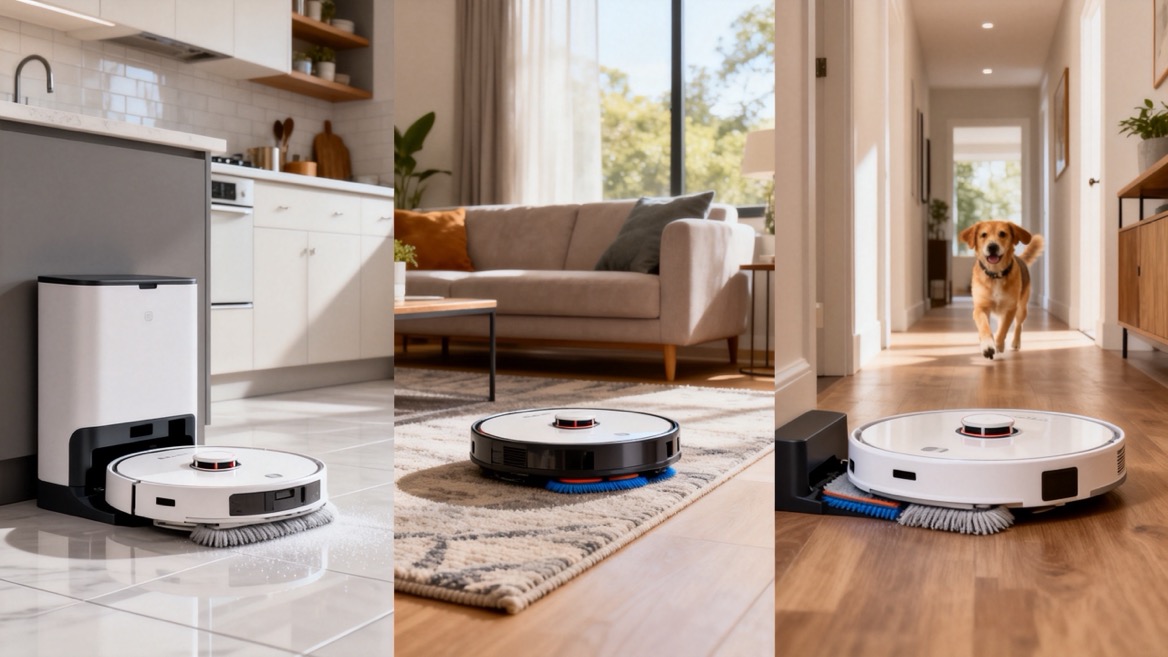
| Household priority | Models worth comparing | Main reason to consider them | Trade-off to check |
|---|---|---|---|
| Straightforward vacuuming on a tighter budget | D20 Plus, D20 Pro Plus | Auto-emptying docks and dual-brush hair management | Plate-style mops need more hands-on care |
| Efficient coverage with an automated mop dock | D30 Ultra | Strong general pickup and efficient navigation in independent tests | Weaker small-object avoidance and pet-hair pickup |
| Mixed floors, pets, and substantial automation | L50 Ultra | Strong carpet and pet-hair test results; mop maintenance in the dock | Hair can still clog the dustbin or dock |
| Premium obstacle avoidance | X60 Max Ultra Complete | Strong obstacle-avoidance and carpet-cleaning test results | Small onboard bin and below-average estimated coverage per charge |
| Room-specific mop pads | Matrix10 Ultra | Dock switches between mop-pad types | Higher complexity, slower tested navigation than the L50 |
| Interest in roller mopping | Aqua10 models | Different approach to washing hard floors | Check the exact variant and current reliability reports |
These are starting points, not universal winners. A robot that performs well in a studio may behave differently around your rugs, cables, door tracks, and shedding pets. Prices and regional configurations also change, so compare the full model name before ordering.
The D series is not one fixed level of cleaning. A simpler D model may have a charging station or an auto-empty dock but still require you to remove and wash its flat mop pad. The D30 Ultra goes further, with spinning mops and a dock that empties dust, washes and dries pads, and refills water. That convenience comes with a useful warning: an automated dock does not guarantee equally capable stain removal or obstacle avoidance.
In independent evaluations, the D30 Ultra scored 84 against an average of 78 for carpet deep cleaning. It also avoided only 8 of 24 objects across two obstacle tests and picked up 61% of flattened pet hair, versus an 82% test average. It makes more sense for a relatively uncluttered home that values efficient general cleaning than for a carpeted home with heavy shedding and toys scattered on the floor.
The L series covers a broad range of brushes, sensors, and docks. Many L models use spinning mop pads that lift over carpet, while more equipped versions wash and dry those pads at the dock. Some can leave the pads behind for a vacuum-only run. These differences matter more than the family number alone.
A particularly useful example is the L50 Ultra. In independent testing, it removed 90% of embedded sand from medium-pile carpet and 100% of flattened pet hair in the tester's controlled pickup assessment. It also avoided 20 of 24 objects. Those figures support its appeal for mixed-floor homes, but they do not mean it never misses a cable or never needs a dustbin check.
Treat suffixes such as AE, CE, FE, and PE as reasons to inspect the listing, not as a reliable ranking from basic to best. Before buying, confirm the included main brush, camera or other obstacle sensors, mop-washing temperature, and supplied accessories for that exact version.
The X series emphasizes advanced sensing, mobility, and dock functions. The X60 Max Ultra Complete, for example, avoided 22 of 24 objects and removed 89% of embedded carpet sand in independent evaluations. Its mops lift substantially over carpet, and it can leave them at the dock for vacuum-only cleaning.
Yet its tested estimated coverage was about 950 square feet per charge, below the tester's approximately 1,170-square-foot average. Its onboard dustbin holds 235 mL. Those details may matter more than its headline suction figure if you have a large floor plan or a dog that fills a bin quickly. Also, do not assume results for the *Max Ultra Complete* apply unchanged to every X60 variant.
The Aqua10 range introduces roller-style mopping, while the Matrix10 Ultra uses a dock that can switch between different mop pads and cleaning solutions. Neither design is automatically better for every floor. In one independent comparison, the Matrix10 performed strongly on dried stains, but cleaned at 0.62 m² per minute, compared with 0.80 m² per minute for the L50.
Reliability deserves attention here. The original buyer's guide reports multiple customer complaints of base-station water leakage for the Aqua10 Ultra Roller and says it removed that model from its Top 20 list, although the problem did not occur in its lab. This is a reported complaint pattern, not proof that every unit leaks. Buyers should check current owner feedback, warranty terms, and the exact model before committing.
A manufacturer's pascal rating describes a stated suction specification, not the complete path from floor to dustbin. Brush contact, airflow, floor type, and debris size also affect what remains after a cleaning pass.
The D30 Ultra illustrates the distinction. Despite its 25,000 Pa claimed suction, its independent suction-bench result was close to the test average. It nevertheless performed well at general debris pickup and carpet deep cleaning. The useful question is therefore not "Which number is largest?" but "How did this exact model clean the surfaces and messes I have?"
For carpets, look for embedded-debris results. For pet owners, consider both hair pickup and the route that hair takes afterward. For hard floors, assess dried-stain removal, water left behind, and whether the mop reaches edges. A single headline number cannot cover all three jobs.
This is an especially important ownership lesson. During a three-month trial in a roughly 750-square-foot home with children, rugs, and a heavily shedding dog, the L50 Ultra kept floors clean with little day-to-day intervention. But the reviewer reported rope-like hair clumps blocking the robot's dustbin ports and the dock's debris channel about once a week. The app did not reliably call attention to that buildup.
A separate account of the X50 Ultra described a similar problem with heavy dog hair: pickup was effective, but clumps could obstruct the bin and dock. The owner found more frequent auto-emptying and daily runs helpful. These are individual experiences, not a measured clog rate for all households, but they expose a gap that brush-focused comparisons can miss.
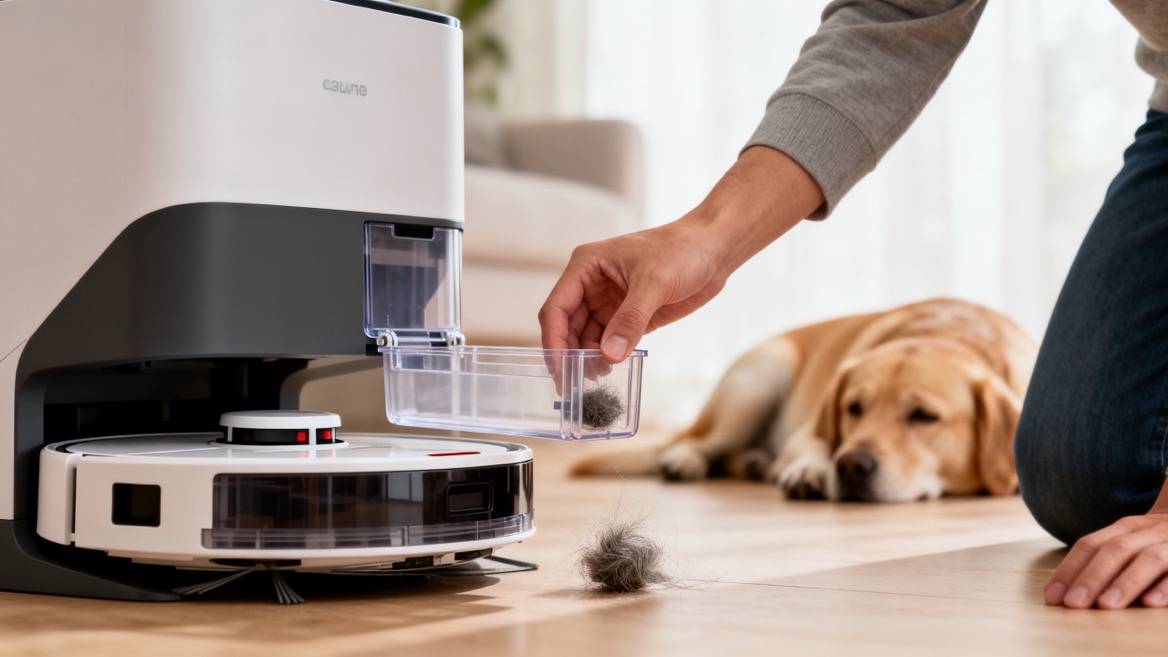
A self-emptying, mop-washing dock reduces repeated tasks; it does not remove them. You still need to check the dust path, replace or empty bags as appropriate, refill clean water, dispose of dirty water, inspect brushes, and clean sensors and washable dock parts according to the manual.
Longer-term use can also reveal setting-related costs. In the L50 household trial, a regular full-floor clean took about 50 minutes, while the automatic CleanGenius mode took around 80 minutes because it made additional passes. The reviewer preferred tailored room settings for that home. If a robot seems slow or consumes too much water, review its cleaning plan before assuming the hardware is faulty.
Write down the percentage of hard floor and carpet, rug pile height, the number of rooms, and the messes that occur every day. A kitchen with dried spills needs a different priority than a carpeted living room full of pet hair. Note areas a round robot may not reach well, such as tight corners, upholstery, stairs, and the edges beneath cabinets.
Measure single vertical thresholds separately from tiered tracks. An advertised maximum for a two-stage crossing does not mean the robot can climb a single step of the same height. Check clearance beneath furniture as well, including anything hanging down that could catch a sensor or brush.
The L50 Ultra, for instance, is described with different single-step and multi-stage crossing limits. On the X60 Max Ultra Complete, independent testers reported a successful 51 mm single-step crossing in their evaluation. Both examples show why the shape of the obstacle matters as much as a maximum millimeter figure.
Choose a simpler plate-mop model if occasional manual pad removal is acceptable. If you mop often, compare docks that wash, dry, and refill the robot. In a home with thick rugs, confirm whether the specific model merely lifts its pads or can leave them at the dock. Even lifted pads may brush a deep-pile rug; a vacuum-only run with pads removed offers a clearer separation.
Use a short checklist for every listing:
- Brush: Single rubber, cutting-style anti-tangle, or dual-roller—and is the preferred brush included?
- Obstacles: Basic navigation versus dedicated small-object avoidance.
- Mop: Flat pad, spinning pads, or roller; lift height and pad-removal options.
- Dock: Dust emptying, mop washing, drying, water refill, and cleaning effort.
- Ownership: Onboard bin capacity, consumables, warranty, and local support.
Do not infer an accessory or camera from a similar model name. Confirm what ships in the market where you will use the machine.
Run the robot while someone is home for its first few cycles. Remove loose cables, set no-go and no-mop zones, then review the map after adding rugs or moving furniture. Check the brush, onboard bin, dock inlet, and cleaned floor after each early run. Once you know where it struggles, adjust room order, water flow, or emptying frequency rather than turning every setting to maximum.
For an X50 with mapping problems, reported troubleshooting steps include updating the app and firmware, cleaning sensors, checking dock placement, and remapping only if simpler fixes fail. Avoid deleting a working map casually: doing so can erase your customized zones.
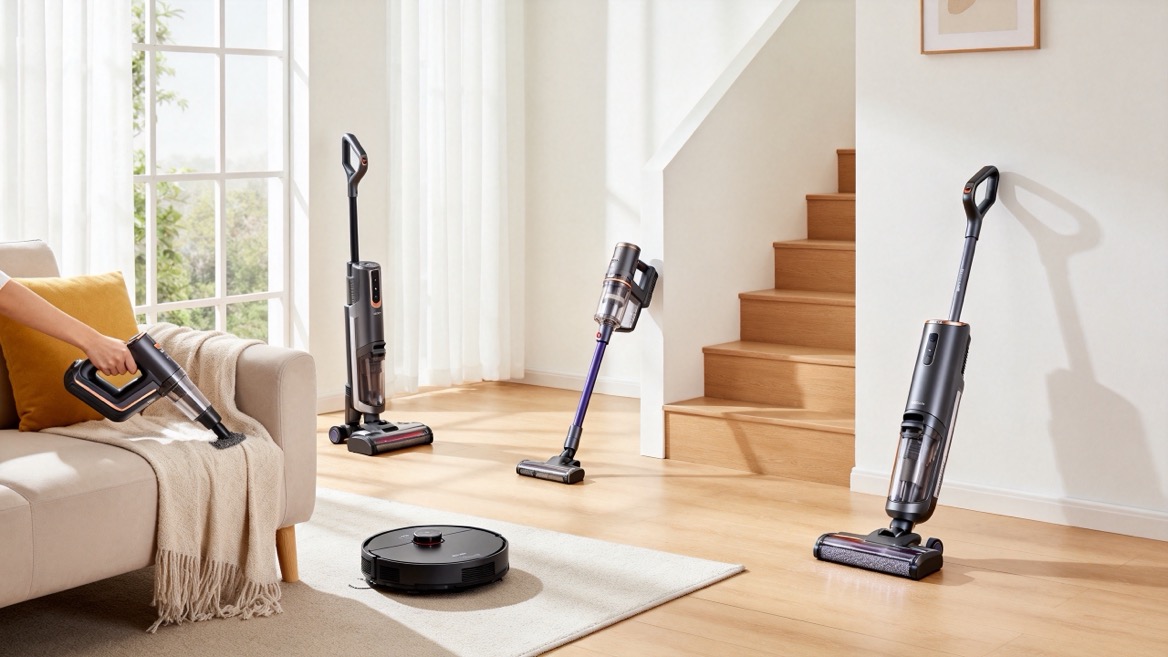
A robot is best viewed as a routine floor-care tool, not necessarily the only vacuum a household needs. It cannot clean stairs or sofas, and it may leave work along edges, beneath low cabinets, or inside narrow gaps. The long-term L50 trial, for example, still required occasional manual attention along walls and kitchen cabinets.
That distinction also matters for business buyers designing a complete floor-care range. Ningbo Eyunhome Electric Technology Co., Ltd. offers upright, handheld, corded, and cordless vacuum solutions, together with OEM/ODM services, production support, and after-sales support as described by the company. These products should be positioned as complementary cleaning options—not presented as Dreame robots or claimed to reproduce independent robot-vacuum test results.
If you source vacuums for retail, distribution, or a private-label program, identify the jobs a robot leaves unfinished. Then specify the floor types, attachments, power format, packaging, service requirements, and intended market for the supporting vacuum. This creates a more useful product brief than asking only for the highest advertised suction.
Shortlist two exact Dreame models, then compare independent results and recent owner experiences against your own floors and maintenance tolerance. Contact Ningbo Eyunhome Electric Technology Co., Ltd. with your intended market and vacuum requirements to discuss an upright, handheld, corded, or cordless OEM/ODM solution that complements everyday floor cleaning.
Compare controlled pet-hair pickup with brush tangling, onboard-bin capacity, and dock clogging. The L50 Ultra and X60 Max Ultra Complete both achieved 100% pickup in the cited flattened-hair tests, but an L50 owner's three-month account also describes recurring hair blockages with a heavily shedding dog. The better choice depends on both your floors and how often you can inspect the debris path.
It is worth considering if you value efficient coverage, general pickup, and an automated mop dock. It is less compelling if small-object avoidance, dried-stain removal, or flattened pet-hair pickup are your top priorities; each was a weakness in independent testing.
No. A suction specification does not measure every stage of cleaning. The D30 Ultra's claimed 25,000 Pa did not translate into an exceptional independent suction-bench score, even though its practical debris pickup was strong. Compare results on the floor types you actually own.
No. The name broadly signals added automation, but washing method, drying, detergent handling, sensors, and included accessories can vary by model and variant. Check the exact product listing and manual before purchase.
Not necessarily. Pad lift helps during transitions, but thick or uneven rugs can still make contact. Where carpet protection is essential, choose a compatible model and a cleaning mode that leaves mop pads at the dock, or set a no-mop zone.
Choose it chiefly if automatic mop-pad switching suits your mix of rooms and floor finishes. Independent tests found strong mopping but slower navigation and lower estimated coverage per charge than the L50. If you do not need pad switching, the L50 deserves comparison before paying for the more complex dock.
Provide the supplier with your target market, planned product type, floor-care use cases, preferred power format, attachments, branding and packaging needs, expected order volume, and after-sales expectations. Ask for the applicable specifications and support terms for the proposed model rather than assuming every configuration has the same capabilities.
- [Vacuum Wars, *Dreame Robot Vacuum Buyer's Guide 2026*] — Series structure, model variants, brushes, docks, and Aqua10 customer-complaint update. [vacuumwars]
- [Vacuum Wars, *Dreame D30 Ultra Review*] — Independent cleaning, navigation, obstacle, and pet-hair evaluations. [vacuumwars]
- [Vacuum Wars, *Dreame L50 Ultra Robot Vacuum Review*] — Controlled pickup, carpet, pet-hair, and obstacle tests. [vacuumwars]
- [Vacuum Wars, *Dreame L50 Ultra Review After Three Months of Real-Life Use*] — Household experience, runtime, maintenance, and hair-clog observations. [vacuumwars]
- [Vacuum Wars, *Dreame X60 Max Ultra Complete Review*] — Flagship test results, coverage, threshold crossing, and dustbin capacity. [vacuumwars]
- [Vacuum Wars, *Dreame Matrix10 Ultra Review*] — Mop-switching evaluation and comparison with the L50 Ultra. [vacuumwars]
- [Vacuum Wars, *Dreame X50 Ultra: Common Complaints and How to Fix Them*] — Reported owner issues and troubleshooting practices. [vacuumwars]
- Ningbo Eyunhome Electric Technology Co., Ltd. — Company description and product/service scope supplied in the editorial brief; no public product-test data was supplied.


