
Views: 289 Author: Eyunhome Vacuum Publish Time: 2026-10-02 Origin: Site


Content Menu
● The Robot Vacuum Timeline at a Glance
● Before Robots: A Guided Floor Cleaner
>> From Research Project to Product
● How Roomba Changed Expectations
● Mapping Made Cleaning More Predictable
>> From Reactive Paths to Planned Routes
>> Mapping Is Not Obstacle Avoidance
● The Modern Robot Vacuum's Strengths and Limits
>> Better Cleaning, More Automation
>> What Real-World Feedback Reveals
● A Practical Robot Vacuum Buying Checklist
● Why Manual Vacuums Still Matter
● What This History Means for OEM/ODM Buyers
● Choose the Right Cleaning Solution
>> Who invented the first robot vacuum cleaner?
>> Was the Electrolux Trilobite launched in 1996?
>> When did Roomba first appear?
>> Do robot vacuums replace upright vacuums?
>> Is mapping the same as obstacle avoidance?
>> What should pet owners prioritize?
>> What should a vacuum importer ask an OEM/ODM manufacturer?
The history of the robot vacuum cleaner is more than a timeline of inventions. It is the story of how engineers turned a simple promise—clean floors with less effort—into a practical household appliance. From guided floor cleaners in the 1950s to today's mapping, mopping, and self-emptying machines, each advance solved a different problem. Yet modern buyers still ask a surprisingly old question: How much cleaning can a machine really do on its own?
For households, the answer depends on the floor, the mess, and the amount of maintenance they will tolerate. For retailers and private-label buyers, it also depends on how honestly a product is specified and supported. This guide traces the major milestones, explains what changed technically, and shows how that history can inform better vacuum decisions.

| Year | Milestone | Why it mattered |
|---|---|---|
| 1957 | Donald G. Moore filed a patent describing a guided, mobile floor cleaner. | It showed an early route to automated floor coverage, although the proposed system depended on a prepared path. |
| 1989 | MIT students built Zoom Broom, a robotic carpet sweeper. | It demonstrated floor-cleaning robotics in a research setting rather than as a consumer product. |
| 1997 | Electrolux showed its Trilobite prototype on television. | The concept became visible to a wider audience before commercial release. |
| 2001 | Electrolux launched the Trilobite. | A mass-produced robot vacuum reached consumers. |
| 2002 | iRobot launched Roomba. | Simple operation helped bring the category into mainstream homes. |
| 2010 | Neato's XV-11 brought laser-based room mapping to buyers. | Planned routes offered an alternative to largely reactive movement. |
| 2015–2021 | Connected controls, automatic dirt disposal, and hazard recognition expanded. | Convenience became about the entire cleaning routine, not just movement across the floor. |
A date can mark a patent, prototype, public demonstration, or commercial launch. Those are different achievements. Keeping them separate makes the history more accurate—and more useful.
In 1957, inventor Donald G. Moore filed a patent for mobile household appliances that included a floor sweeper or vacuum cleaner. The described cleaner could travel across a floor, follow a prescribed path, and return to storage. The patent was granted in 1961.
It was an imaginative approach, but not a modern free-roaming robot. One proposed arrangement relied on a guide path built into the floor, with electrical contacts and magnetic guidance. That infrastructure would have limited its practicality in ordinary homes. It is best understood as an early automation concept, not as a commercially available robot vacuum.
The distinction matters. Today's machines must deal with chairs moved between cleaning runs, unexpected cables, and rooms that do not follow a fixed route. Moore's idea addressed the desire to avoid pushing a cleaner manually; later engineers had to solve how a cleaner could respond to a changing home.
In 1989, MIT students created Zoom Broom, a robotic carpet sweeper for a robotics competition. The project was not a retail product. Its historical significance lies in its connection to the research community that later helped develop household robots.
Several years later, Electrolux took a more consumer-facing step. Its Trilobite prototype appeared on the BBC's *Tomorrow's World* in 1997. Electrolux launched the mass-produced Trilobite in 2001, not 1996. Separating the demonstration from the launch avoids turning a prototype into a product that buyers could already purchase.
The Trilobite made autonomous vacuuming tangible, but early robots faced a difficult combination of navigation, cleaning performance, price, and consumer expectations. A machine could travel without help and still fail to clean the spots a person cared about most.
iRobot launched the first Roomba robot vacuum in 2002. Its achievement was not simply that it could move independently. It made automated floor care feel approachable: place the machine on the floor, start a cleaning cycle, and let it work.
That ease of use helped establish a market. It also clarified what people expected a robot to do. Consumers did not judge a vacuum by its sensors alone; they judged it by whether it collected visible dirt, stayed out of trouble, and needed less attention than cleaning by hand.
The category continued to develop after Roomba's debut. iRobot introduced the Scooba floor-washing robot in 2005, the connected Roomba 980 in 2015, a Roomba with automatic dirt disposal in 2018, and a model designed to identify and avoid some hazards in 2021. These milestones show a shift from automating movement toward automating more of the ownership experience.
An early robot could cover much of a room by changing direction when it encountered obstacles. That approach was simple, but it could revisit one area while missing another. A planned route gave owners a clearer sense that the machine had worked through the space.
Neato's XV-11, introduced around 2010, helped make laser-based mapping familiar to consumers. Its scanner detected the room's layout so the robot could clean in more orderly lines and return to its dock. Mapping did not remove every cleaning limitation, but it addressed a fundamental problem: knowing where the robot was and where it still needed to go.
Modern machines may use laser sensing, cameras, or a combination of sensors. Their ability to build a map is useful for room selection, scheduled cleaning, and restricted areas. However, buyers should not confuse a neat route on an app with proof of strong dirt pickup.
This is one of the most important distinctions in the category. Navigation helps a robot move through rooms and cover floor space. Obstacle avoidance helps it recognize and steer around smaller hazards, such as cables, socks, toys, and pet waste.
A robot can map walls accurately and still catch a charging cord in its brush. More sensing hardware may improve its chances, but performance varies by model and software. Independent testing of robot vacuums continues to find meaningful differences in how well machines handle everyday clutter.
The practical lesson is straightforward: check the specific model's obstacle tests. Do not assume that terms such as "smart navigation" mean the floor can be left unprepared.
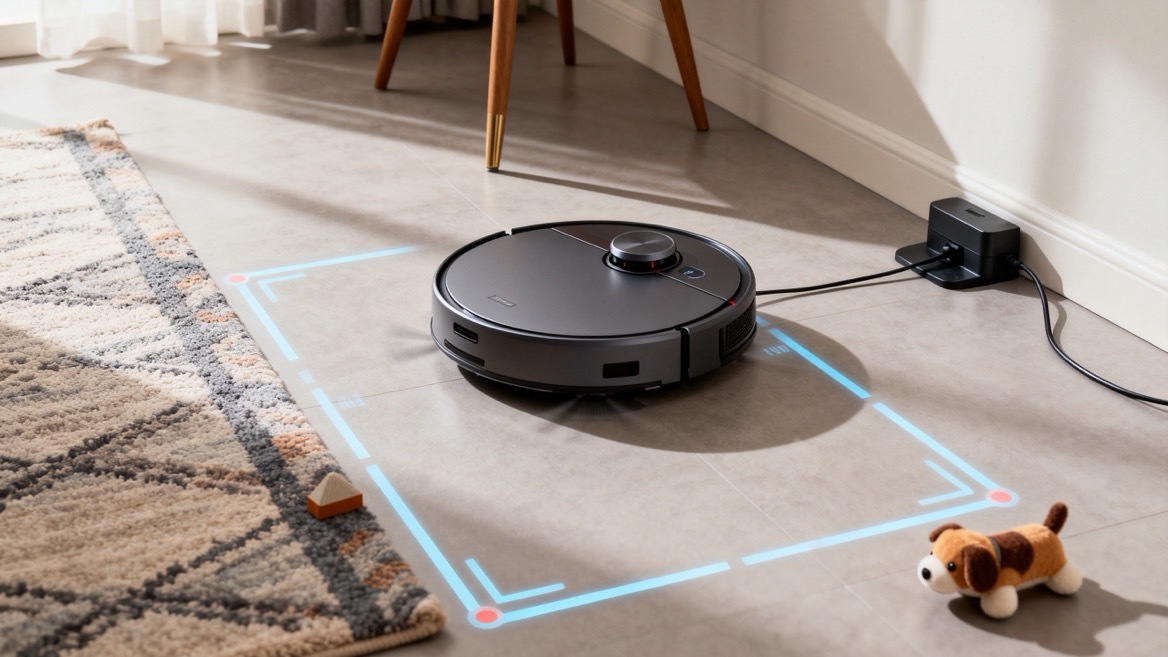
Today's robot vacuums can combine planned routes, carpet detection, app controls, mopping, and multifunction docks. Some docks empty debris, wash mop pads, or refill water tanks. These features can reduce routine work, especially in a home that needs frequent cleaning.
The improvement is measurable in at least some controlled tests. After testing more than 200 robot vacuums, Vacuum Wars reported that its best deep-carpet cleaning result rose from 76% among older models to 96% for its best modern result. That is a comparison of the reviewer's test results—not a promise that every new robot will match an upright vacuum or perform equally well in every home.
Modern convenience also brings more parts to maintain. A self-emptying dock may spare an owner from emptying the robot after each run, but its bag or bin still needs attention. A mop-washing station reduces hand-washing; it does not eliminate dirty-water disposal or tray cleaning.
Owners often value a robot for keeping everyday dust under control. The complaints are equally instructive: embedded pet hair, missed edges, cords caught in brushes, rugs that stop a cleaning run, and maintenance that feels less "hands-free" than expected.
These are not universal failures. They are reasons to match a model to the home rather than to a feature list. Independent product testing shows that a robot can perform exceptionally on hard floors while struggling to pull pet hair from carpet. Even models with sophisticated sensors can miss certain obstacles.
For a household with a shedding pet, carpet performance and brush design deserve more attention than a headline suction figure. For a mostly hard-floor home, mopping quality, edge coverage, and water management may matter more. In a cluttered home, the best vacuum is sometimes the one that reliably finishes a run—not the one with the longest specification sheet.
Before choosing a robot vacuum, take five measurements or observations:
1. Identify the floor types. Note how much of the home has hard flooring, low-pile carpet, thick rugs, or mixed surfaces.
2. Record the recurring mess. Pet hair, long human hair, crumbs, fine dust, and dried spills place different demands on brushes and mops.
3. Measure physical barriers. Check clearance beneath key furniture and the height and shape of door thresholds.
4. Assess daily clutter. If cables or toys frequently remain on the floor, seek model-specific avoidance tests—and still plan a quick visual check.
5. Set a maintenance limit. Decide whether you are willing to empty a bin, untangle a brush, wash mop pads, or maintain a larger dock.
Use that list to read reviews critically. Look for pickup results on your floor type, hair-tangle tests, successful room coverage, and evidence that the machine can cross your actual thresholds. Advertised suction and runtime alone do not answer those questions.
A useful ownership test is to ask: *What would I still need to do after the robot finishes?* If the answer includes stairs, upholstery, tight corners, and occasional deep carpet cleaning, plan for a second tool rather than expecting one robot to handle every surface.
A robot is well suited to frequent floor maintenance. A stick or upright vacuum remains useful when a person needs to reach stairs, furniture, vehicle interiors, edges, or a concentrated mess immediately. These tools serve overlapping but different jobs.
| Cleaning need | Robot vacuum | Manual vacuum |
|---|---|---|
| Scheduled cleaning of accessible floors | A strong fit | Requires someone to operate it |
| Stairs and upholstery | Usually outside its reach | Suitable with the right attachments |
| Sudden, localized spills of dry debris | May require setup or a targeted cycle | Usually faster to direct at the mess |
| Embedded carpet hair and grit | Depends heavily on the model | Allows deliberate repeat passes |
| Cleaning around clutter | Depends on obstacle handling | A person can move objects as they clean |
This is a useful perspective for retailers, too. A customer asking for less daily sweeping may benefit from a robot. A customer asking to clean a sofa, staircase, or car needs a different solution. Recommend the cleaning system, not just the newest device.
The robot vacuum's development offers a broader lesson for appliance sourcing: an impressive feature matters only when the complete product works reliably for its intended user. From a procurement perspective, a convincing demonstration is the start of evaluation, not its end.
For a private-label or distribution program, build the product brief around use cases and verifiable requirements:
- Define the customer. Is the product meant for small apartments, family homes, pet owners, or users who prioritize low maintenance?
- Request comparable samples. Evaluate pickup, noise, handling, ergonomics, accessories, and packaging using the same test conditions.
- Inspect service needs. Ask how filters, brushes, batteries, and other wear parts are replaced, and clarify warranty and after-sales responsibilities.
- Check regional requirements. Confirm the intended market, plug and voltage configuration, labeling, manuals, and required compliance documentation before production.
- Approve production details. Agree on the specification, sample, quality criteria, packaging artwork, and change-control process in writing.
These steps apply to robot vacuums, but also to upright, handheld, corded, and cordless vacuums. The underlying purchase is not a motor or a feature claim. It is a dependable cleaning experience that a buyer can explain, support, and deliver consistently.
Ningbo Eyunhome Electric Technology Co., Ltd. offers OEM/ODM support for upright, handheld, corded, and cordless vacuum solutions. Those categories should be presented accurately: they are not a claim that the company manufactures robot vacuums. For importers developing a manual-vacuum range alongside growing interest in automated floor care, that distinction helps set clear expectations.
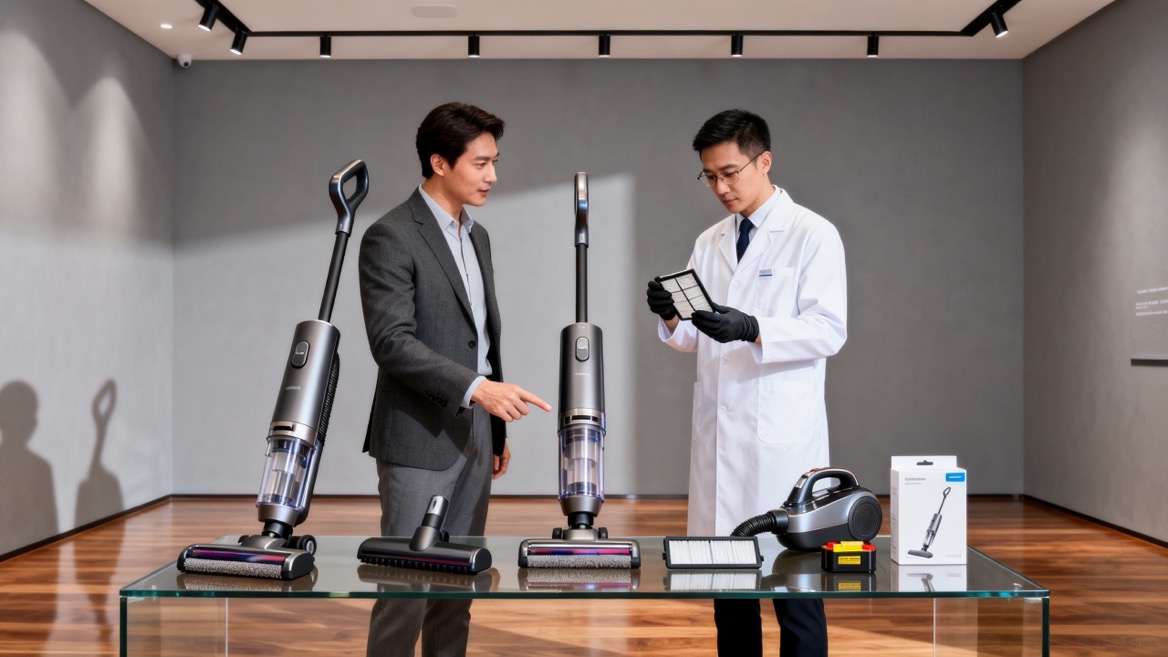
The history of the robot vacuum cleaner shows real progress—but it also shows why the right tool depends on the job. If you are building a vacuum range for your market, identify the surfaces and cleaning tasks your customers face before selecting features.
Contact Ningbo Eyunhome Electric Technology Co., Ltd. with your target market, preferred upright or handheld format, corded or cordless requirements, expected order volume, and branding needs. Ask the team to discuss a suitable OEM/ODM specification, sample evaluation, production plan, and after-sales arrangements for your business.
There is no single answer unless "first" is defined. Donald G. Moore's 1957 patent described an automated, guided floor cleaner. Electrolux later demonstrated a Trilobite prototype and launched a mass-produced robot vacuum in 2001. iRobot's Roomba followed in 2002 and became a defining consumer product.
No. Electrolux records a 2001 launch for the Trilobite. Its company history describes a prototype shown publicly in 1997. A prototype's appearance and a product's commercial release should not be treated as the same event.
iRobot launched the Roomba floor-vacuuming robot in 2002. Later models added capabilities such as connected app control, automatic dirt disposal, and improved handling of some household hazards.
Not for every household or task. A robot can maintain accessible floors regularly, but stairs, upholstery, tight spaces, and demanding deep-cleaning jobs may still call for an upright, stick, or handheld vacuum.
No. Mapping helps a robot understand its route and floor coverage. Obstacle avoidance focuses on smaller items it might encounter during that route. A mapped room can still contain a cord or sock that a robot fails to recognize.
Look for independent carpet pet-hair results, brush-tangle performance, practical dust capacity, and obstacle handling if pet waste is a concern. A high suction claim by itself does not show how well a model removes hair embedded in carpet.
Start with the intended market and cleaning use case. Then confirm the approved sample, written specifications, quality checks, replaceable parts, labeling, documentation, warranty terms, and after-sales process. These details make a product easier to sell and support.
- Vacuum Wars, ["A Brief History of the Robot Vacuum Cleaner"] — Original article and historical account, including Zoom Broom.
- Donald G. Moore, ["Perambulating Kitchen Appliances and Control Means Therefor," US3010129A] — Primary patent record for the 1957 filing and 1961 grant.
- Electrolux Group, ["The First 100 Years of Electrolux"] — Company history documenting the Trilobite prototype demonstration.
- Electrolux Group, ["1990–2000s: Refocusing, Stronger Brands and New Markets"] — Company timeline confirming the 2001 Trilobite launch.
- iRobot, ["History"] — Company milestones for Roomba and later products.
- *IEEE Spectrum*, ["Review: Neato Robotics XV-11"] — Contemporary account of laser-guided navigation and cleaning behavior.
- Vacuum Wars, ["Are Robot Vacuums Worth It? What We Learned After Testing 200 Models"] — Controlled-test findings and limitations of current machines.
- Vacuum Wars, ["Robot Vacuum Buying Guide"] — Practical guidance on floor types, obstacles, brushes, maintenance, and specifications.
- RTINGS, ["The 4 Best Robot Vacuums of 2026"] — Independent model testing and discussion of cleaning and maintenance trade-offs.


