
Views: 253 Author: Eyunhome Vacuum Publish Time: 2026-09-02 Origin: Site


Content Menu
● Why Upholstery Gets Dirty Faster Than You Think
● The Main Benefits of Regular Upholstery Cleaning
>> 1. It Helps Maintain a Cleaner Indoor Environment
>> 2. It Protects Fabric Appearance and Texture
>> 3. It Extends the Useful Life of Furniture
>> 4. It Improves Comfort and Odor Control
● How Often Should You Vacuum Upholstered Furniture?
● How to Vacuum Upholstery Properly
>> Step 1: Check the Furniture Label
>> Step 2: Remove Loose Items and Lift Cushions
>> Step 3: Use the Right Vacuum Attachment
>> Step 4: Vacuum Slowly in Overlapping Passes
>> Step 5: Finish With a Light Inspection
● A Safe Response Plan for Common Upholstery Stains
● Why Vacuum Design Matters for Upholstery Care
>> Features that support better upholstery cleaning
● When to Call a Professional Upholstery Cleaner
● Build a Simple Upholstery-Care Routine
● Work With a Reliable Vacuum Cleaner Manufacturer
>> How often should I vacuum my sofa?
>> Can I use a regular vacuum cleaner on upholstery?
>> What does the "X" upholstery cleaning code mean?
>> Should I steam-clean my couch?
>> How can I remove pet hair from upholstered furniture?
>> Why does my couch still smell after vacuuming?
>> Is a cordless vacuum good for upholstery cleaning?
Upholstery cleaning is important because sofas, chairs, cushions, and fabric headboards collect dust, crumbs, pet hair, skin flakes, allergens, and everyday soil far more easily than most people realize. A consistent upholstery-cleaning routine helps preserve the appearance and feel of furniture while reducing the buildup of particles trapped in the fabrics your family uses every day.
For homeowners, the goal is not to over-clean or soak furniture with harsh chemicals. The goal is to use the right vacuuming method, cleaning frequency, fabric-safe products, and stain-response process for each piece. For brands, retailers, and cleaning-appliance buyers, it is also a reminder that a vacuum cleaner's upholstery tool, suction stability, filtration, and ease of use can materially affect the customer's cleaning results.

A sofa may look clean on the surface while holding fine debris deep within its cushions, seams, tufting, and fabric fibers. Every time people sit down, move cushions, eat snacks, bring in outdoor dust, or allow pets onto the furniture, more particles settle into the upholstery.
Unlike hard floors, upholstered furniture does not reveal dirt immediately. Dust can become embedded gradually, while oils from skin and hair can darken high-contact areas such as armrests, headrests, seat edges, and cushion fronts.
Common contaminants found in upholstery include:
- Dust and fine airborne particles
- Pet hair and pet dander
- Pollen carried indoors on clothing or through open windows
- Food crumbs and drink residue
- Skin flakes, hair, and body oils
- Makeup, sunscreen, and lotion residue
- Odors from pets, cooking, smoke, or moisture
- Dust-mite-related allergens in household dust
Dust mites are commonly found in household dust and can occur in carpets, bedding, and upholstered furniture. Their particles may aggravate symptoms for people with dust-mite allergies or asthma. Regular vacuuming of fabric-covered furniture is one practical way to reduce dust buildup.
The lesson is simple: upholstery is not decorative only—it is a high-contact textile surface. It deserves a routine that is closer to bedding or carpeting maintenance than occasional spot cleaning.
Fabric furniture acts like a passive filter. It catches particles from the air and holds them in the weave, padding, seams, and gaps between cushions. That includes ordinary dust, pet hair, pollen, and other debris carried into the home.
Weekly vacuuming is especially useful for homes with pets, children, open windows, high foot traffic, or household members who are sensitive to dust. Public indoor-air guidance specifically recommends vacuuming carpets and fabric-covered furniture weekly to help control dust buildup, ideally using a properly fitted and maintained HEPA filter.
A clean sofa cannot replace ventilation, air filtration, or professional medical care. However, it is an important part of a wider household-cleaning plan.
Ground-in dirt is abrasive. As people sit, shift, and move across the furniture, embedded particles can rub against the fibers. Over time, this may contribute to dullness, flattened pile, uneven color, and a worn appearance in frequently used areas.
Routine vacuuming removes loose debris before it becomes deeply embedded. This is particularly important for:
- Light-colored sofas and chairs
- Textured woven fabrics
- Velvet and pile fabrics
- Furniture used daily by families
- Office reception seating
- Rental and hospitality furniture
- Homes with shedding pets
A vacuum cleaner with an upholstery attachment helps reach the areas that standard floor tools miss, including seams, buttons, piping, cushion edges, and the space beneath removable cushions.
Replacing a sofa or upholstered chair can be expensive. Cleaning is usually less costly and less disruptive than replacing furniture prematurely because it looks stained, smells unpleasant, or has become visibly dull.
Maintenance supports longer furniture life in several ways:
- Removes abrasive grit before it damages fibers
- Helps prevent stains from becoming permanent
- Reduces odor-causing debris
- Keeps cushions and seams easier to inspect
- Makes it easier to identify wear, loose threads, or damage early
- Supports a more presentable home, office, showroom, or rental property
For furniture retailers, appliance brands, and cleaning-service businesses, this point has commercial value: customers do not only want cleaning performance. They want products and routines that help protect the investment they have already made in their furnishings.
A couch can feel "less fresh" long before it looks dirty. Pet hair, spills, food particles, humidity, and repeated use can create lingering odors within the fabric and cushion filling.
Vacuuming removes dry debris that contributes to stale smells. Prompt blotting and fabric-appropriate spot treatment can prevent many spills from becoming persistent odor sources.
If a musty smell remains after surface cleaning, investigate the cause rather than simply adding fragrance. Moisture inside cushion foam, a pet accident, mold growth, old food residue, or a spill that reached the padding may require more targeted treatment or professional service.
There is no single schedule that suits every household. The right upholstery-cleaning frequency depends on how much the furniture is used, the fabric type, whether pets are allowed on it, and the level of dust or pollen in the environment.
Use this practical schedule as a starting point:
| Household situation | Recommended vacuuming frequency | Additional action |
|---|---|---|
| Low-use guest-room furniture | Every 2–4 weeks | Inspect for dust and spot stains |
| Average household sofa or armchair | Weekly | Vacuum cushions, seams, and crevices |
| Home with pets | 1–2 times per week | Use a pet-hair or upholstery attachment |
| Children, snacks, or frequent spills | Weekly plus spot cleaning as needed | Treat fresh stains immediately |
| Allergy-sensitive household | Weekly or more often | Use a sealed system and maintained HEPA filtration where available |
| Office, reception, or rental furniture | Weekly to biweekly | Establish a documented cleaning routine |
Consumer cleaning guidance also recommends vacuuming upholstered furniture, including under cushions and inside crevices, as part of a regular cleaning schedule.
For a deep clean, the appropriate interval varies by fabric, traffic level, and manufacturer guidance. Many homes benefit from a professional assessment or fabric-safe deep cleaning when visible soil, odor, repeated staining, or allergy concerns persist despite routine vacuuming.
Vacuuming upholstery is not difficult, but technique matters. Moving too quickly over the surface can leave dust behind, while using the wrong tool can pull delicate fabric or fail to reach crevices.
Before using moisture, detergent, steam, or solvent, find the furniture's care label. It may be located beneath a seat cushion, underneath the frame, or inside a removable cover.
The most common upholstery care codes are:
| Care code | What it means | Best approach |
|---|---|---|
| W | Water-based cleaner only | Use water-based shampoo or foam cleaner; avoid solvents |
| S | Solvent cleaner only | Use a suitable dry-cleaning solvent; do not use water |
| WS / SW | Water- or solvent-based spot cleaning may be allowed | Use the gentlest suitable method and avoid oversaturation |
| X | Vacuuming or light brushing only | Do not use water- or solvent-based cleaners |
| DC | Dry clean only | Use professional dry-cleaning service when needed |
Furniture manufacturers commonly use these codes to guide cleaning choices. For example, "W" indicates water-based shampoo or foam cleaner, "S" indicates dry-cleaning solvent only, and "X" means vacuuming or light brushing only.
Never assume that steam cleaning is safe simply because a fabric looks durable. Heat and moisture can cause shrinkage, watermarking, color transfer, adhesive failure, or cushion damage in unsuitable materials.
Take off throws, pillows, and removable cushions. Check underneath cushions, along the backrest, and around the arms. These areas commonly collect crumbs, hair, coins, and fine dust.
If cushions are reversible, rotate them according to the furniture manufacturer's instructions. This can promote more even wear over time.
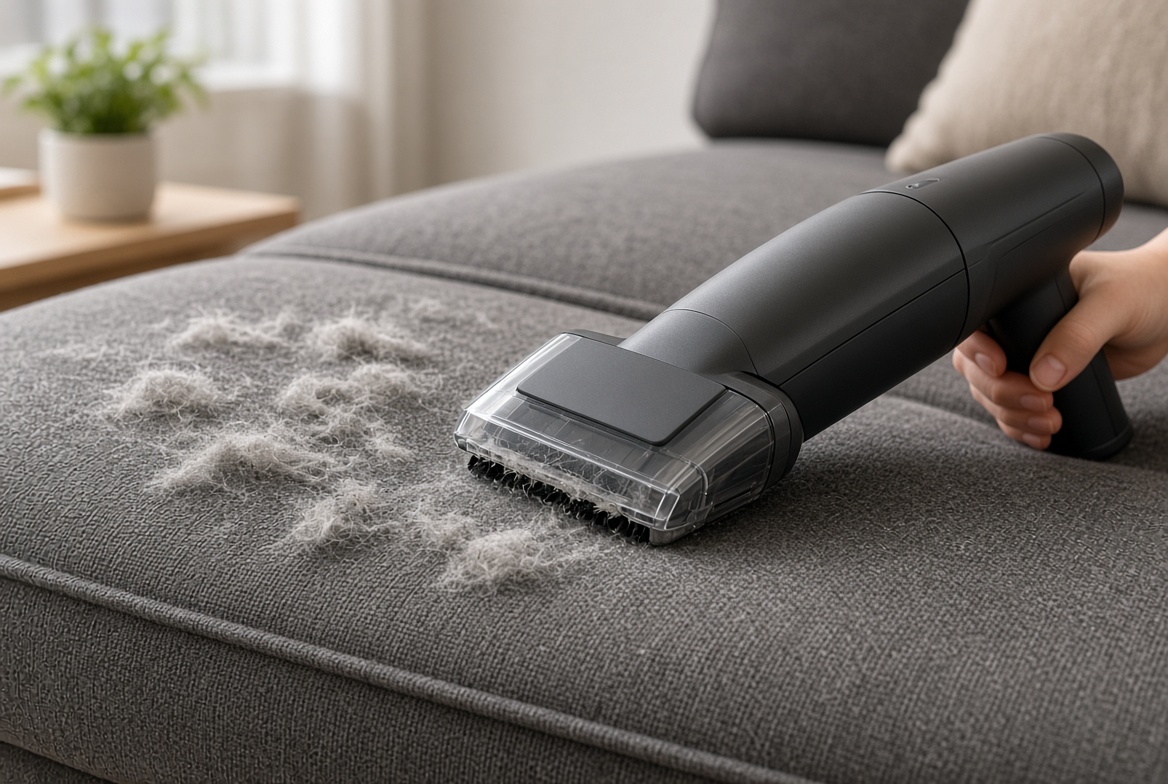
A dedicated upholstery nozzle is usually the most effective choice because it has a broad, fabric-friendly opening. A crevice tool is useful for narrow seams, tufting, cushion edges, and the gaps between the seat and backrest.
For pet hair, a motorized mini tool or rubber-edged pet tool may improve pickup, depending on the fabric. Always test a small hidden area if the material is delicate, loose-woven, or prone to snagging.
Work in sections. Move the tool slowly across the fabric in one direction, then repeat at a right angle where practical. This helps lift surface debris from different angles of the weave.
Pay special attention to:
- Seat cushions
- Armrests
- Headrest areas
- Back cushions
- Tufted buttons and folds
- Piping and stitched seams
- Under removable cushions
- The narrow gap between seat and back
Look for stains, odor sources, pulled threads, loose seams, or worn fabric. Catching a problem early is much easier than dealing with a stain after it has dried, oxidized, or spread into the cushion filling.
The fastest response is usually the safest response. When a spill happens, avoid panic-cleaning with the first product available. Rubbing aggressively or soaking the fabric can make a stain larger and push moisture deeper into the padding.
Follow this sequence:
1. Blot immediately with a clean white cloth or plain paper towel.
2. Lift solids carefully with a spoon or dull edge; do not grind them into the fabric.
3. Check the care code before adding water, foam, solvent, or steam.
4. Test any product in a hidden area first.
5. Use minimal moisture and work from the outer edge toward the center.
6. Blot rather than scrub to reduce the risk of fabric distortion.
7. Allow complete air drying before sitting on the furniture or replacing cushions.
8. Repeat only if needed after the area has dried and you can accurately assess the result.
For water-safe upholstery, foam cleaners are often easier to control than applying large amounts of liquid. For solvent-only fabrics, use only a compatible product in a well-ventilated space and follow the product instructions carefully.
Do not mix cleaning products. Indoor-air guidance warns that some household cleaning chemicals can irritate the respiratory system, and recommends reading product labels, improving ventilation where possible, and avoiding chemical mixing.
A vacuum cleaner designed for upholstery cleaning should do more than pick up visible crumbs. For practical daily use, buyers often value a combination of stable suction, useful attachments, manageable weight, convenient storage, and effective filtration.
- Dedicated upholstery tool: Covers broad fabric surfaces without being too aggressive
- Crevice nozzle: Reaches seams, cushion gaps, and tight edges
- Stable suction performance: Helps lift fine dust, hair, and dry debris
- Sealed filtration system: Helps limit the release of captured fine particles back into the room
- HEPA filtration option: Particularly relevant for buyers focused on fine-particle capture and allergen-conscious cleaning
- Cordless convenience: Useful for quick cleanups on sofas, car seats, stairs, and pet areas
- Long runtime or corded reliability: Important for larger homes, commercial cleaning, and frequent use
- Easy bin emptying: Reduces mess when disposing of collected dirt and hair
- Lightweight handheld capability: Makes overhead, stair, vehicle, and furniture cleaning easier
For vacuum brands and distributors, these features should be evaluated as part of the complete customer experience—not as isolated specifications. A high-power vacuum that is heavy, awkward to empty, or poorly equipped for upholstery may be less useful than a balanced model with the right attachments and easier handling.
Routine vacuuming and careful spot treatment can handle many day-to-day situations. However, some cases require professional assessment.
Consider professional upholstery cleaning when you notice:
- Large or old stains that remain after fabric-safe treatment
- Persistent pet, smoke, food, or mildew odors
- Water damage or moisture inside cushions
- Delicate silk, wool, velvet, suede, leather, or antique furniture
- Fabric with an "X" or dry-clean-only care code
- Color bleeding, fading, or shrinkage after attempted cleaning
- Visible mold or suspected contamination
- Commercial furniture with heavy, long-term soil buildup
A professional should identify the fabric, test an inconspicuous area, select a compatible cleaning method, and control moisture carefully. This approach is especially important for premium furniture, hospitality seating, rental properties, and high-traffic business environments.
The best cleaning system is one people will actually follow. Instead of waiting until the sofa looks heavily soiled, create a manageable schedule.
- Vacuum seat cushions and armrests
- Vacuum under cushions and in crevices
- Remove pet hair before it becomes embedded
- Check for crumbs, spills, or fresh marks
- Wash removable throws and pillow covers according to their labels
- Inspect furniture for odor, discoloration, or fabric wear
- Rotate or flip cushions if permitted by the manufacturer
- Vacuum the back, sides, and lower frame
- Clean nearby floors and rugs to reduce dust transfer back to the furniture
- Check vacuum filters, brush tools, and bin condition
- Reassess high-use furniture after allergy seasons, holidays, or heavy entertaining
- Clean behind and under sofas and chairs
- Review fabric-care labels before attempting a deeper treatment
- Schedule professional cleaning if soil or odor has built up beyond routine care
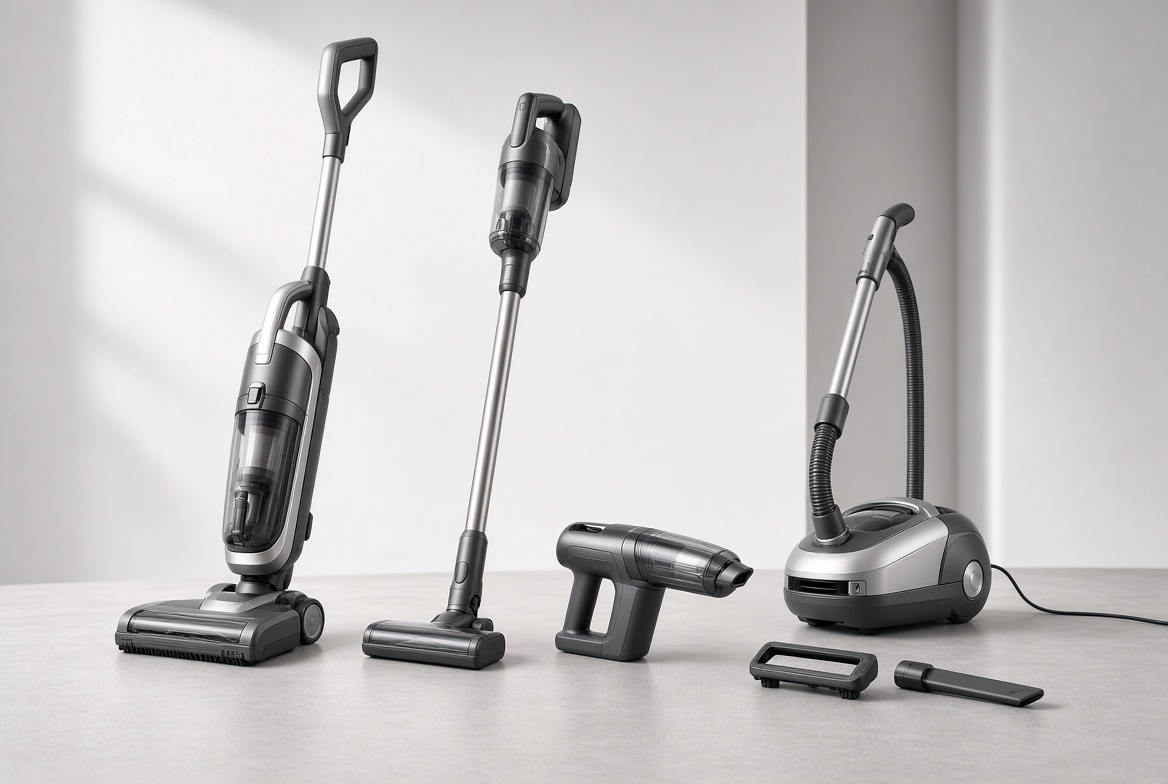
For distributors, retailers, private-label brands, and procurement teams, upholstery cleaning is an important use case when selecting vacuum cleaner products. Consumers increasingly expect a vacuum to clean more than floors. They want practical performance on sofas, cushions, stairs, mattresses, car interiors, curtains, and pet areas.
Ningbo Eyunhome Electric Technology Co., Ltd. provides vacuum cleaner solutions for global business needs, including upright, handheld, corded, and cordless vacuum cleaners. With professional OEM and ODM services, stable production capacity, and dependable after-sales support, we help brands and buyers develop vacuum cleaner ranges suited to their markets.
Whether you need a lightweight handheld model for upholstery and car interiors, a cordless vacuum for flexible whole-home cleaning, or a corded upright model for sustained performance, a well-designed product range can help your customers maintain cleaner, more comfortable living spaces.
Contact Ningbo Eyunhome Electric Technology Co., Ltd. to discuss your vacuum cleaner OEM/ODM requirements, target market, product positioning, and upholstery-cleaning accessory needs.
For most homes, vacuuming a sofa once per week is a practical baseline. Homes with pets, children, frequent snack spills, or allergy-sensitive household members may benefit from vacuuming one to two times per week. Weekly vacuuming of fabric-covered furniture is also recommended in public indoor-air guidance to reduce dust buildup.
Yes, if it has an upholstery attachment or a suitable low-agitation tool. Avoid using a harsh rotating floor brush directly on delicate fabric unless the manufacturer specifically states that it is safe. A soft upholstery nozzle and crevice tool are usually the most versatile combination.
An "X" code means the fabric should not be cleaned with water-based or solvent-based products. The recommended care is vacuuming or light brushing only. If staining is serious, consult a professional cleaner rather than experimenting with household cleaners.
Only if the furniture manufacturer permits it and the fabric is appropriate for moisture and heat. Steam can damage some upholstery, cause shrinkage, leave watermarks, affect adhesives, or push moisture into the cushion filling. Always check the care label and test an inconspicuous area first.
Vacuum slowly with an upholstery or pet-hair attachment, moving in overlapping passes. For stubborn hair, use a rubber-edged tool, fabric-safe brush, or slightly damp rubber glove before vacuuming. Clean the vacuum filter and brush tools regularly to maintain airflow.
Vacuuming removes dry debris, but odors may come from liquid spills, pet accidents, moisture in cushion foam, smoke, food residue, or mildew. Identify the source, follow the fabric-care code, use minimal moisture, and allow the furniture to dry completely. Persistent odors may require professional cleaning.
A cordless vacuum can be very convenient for upholstery because it is easy to carry around sofas, stairs, vehicles, and cushions. Choose a model with an upholstery tool, sufficient runtime, reliable suction, convenient bin emptying, and appropriate filtration for the intended market.
1. [Eureka — Why Upholstery Cleaning Is Important]
2. [U.S. Environmental Protection Agency — Spring Cleaning and Indoor Air Quality]
3. [Ashley Furniture Industries — Upholstery Cleaning Codes]
4. [Consumer Reports — A Cleaning Schedule You Can Stick To]
5. [American Academy of Allergy, Asthma & Immunology — Indoor Air Quality]
6. [Asthma and Allergy Foundation of America — Control Indoor Allergens]


