
Views: 268 Author: Eyunhome Vacuum Publish Time: 2026-11-01 Origin: Site


Content Menu
● Which Is the Best Robot Vacuum Under $1,600?
● Best Premium Robot Vacuum: What the Test Results Actually Show
● Why Suction Ratings Should Not Decide Your Purchase
>> Match the Evidence to Your Flooring
● Best Robot Vacuum for Pet Hair: Look Beyond Anti-Tangle Claims
>> Why Dustbin Capacity Still Matters
● Robot Vacuum and Mop Features Worth Paying For
>> Separate Dock Washing From Floor Cleaning
● Navigation, Obstacle Avoidance, and Furniture Clearance
● Calculate the Real Cost of a Robot Vacuum Under $1,600
● A Seven-Day Acceptance Test for Your New Robot Vacuum
>> Days 1–2: Mapping and Access
>> Days 3–4: Cleaning and Rug Handling
>> Days 5–7: Maintenance and Repeatability
● What Customer Reviews Can—and Cannot—Tell You
● What Vacuum Buyers and Distributors Should Learn From Premium Robots
>> Turn Your Requirements Into a Supplier Brief
● Build a Vacuum Range Around Real Cleaning Needs
>> What Is the Best Robot Vacuum Under $1,600 for Carpets?
>> Is the Highest Suction Rating Always Better?
>> Can a Premium Robot Vacuum Replace Every Other Vacuum?
>> Does a Self-Emptying Robot Still Require Maintenance?
>> Is the Qrevo Edge 3 Pro the Best Choice for Every Pet Owner?
>> Can Eyunhome Support Private-Label Vacuum Projects?
The best robot vacuum under $1,600 should deliver more than impressive specifications. It should clean your floors consistently, handle everyday obstacles, and reduce the work left after each cleaning cycle. For buyers considering premium models, the real question is not which machine has the longest feature list, but which one fits their home.
The Roborock Qrevo Edge 3 Pro currently leads the referenced independent ranking for the $1,300–$1,600 category. However, its strengths do not make it the automatic choice for everyone.
This guide explains the test results, the trade-offs worth noticing, and the ownership checks I would prioritize before spending a premium budget.

The Roborock Qrevo Edge 3 Pro is a strong starting point for homes with carpets, mixed flooring, low furniture, and challenging thresholds.
Independent testing reported excellent embedded-sand removal, effective long-hair management, efficient navigation, and above-average overall mopping. Its automated dock also handles several repetitive maintenance tasks.
The Dreame X60 Max Ultra Complete deserves consideration for buyers who prioritize carpet pet-hair pickup and obstacle avoidance. It performed better in those specific tests.
One important distinction: the underlying ranking covers the $1,300–$1,600 segment, not every robot available below $1,600. Less expensive models may offer better value for simpler homes.
Prices also change. The referenced page displayed a promotional price below the category's lower boundary, so confirm the current local price, seller, warranty, and included accessories.
A useful comparison separates measured cleaning results from advertised specifications.
| Buying factor | Reported Qrevo Edge 3 Pro result | Practical interpretation |
|---|---|---|
| Carpet deep cleaning | 93% embedded-sand removal | Strong evidence of effective carpet cleaning |
| Comparison baseline | Approximately 78% average sand removal | Provides context within the reviewer's test database |
| Carpet pet-hair pickup | 87.5%, versus an 82.2% average | Above average, but not the strongest tested option |
| Long-hair tangling | No wrapping in a seven-inch hair test | Encouraging, but not a lifetime maintenance guarantee |
| Threshold crossing | Repeatedly crossed a 57 mm test barrier | Useful evidence for difficult transitions |
| Onboard dustbin | 240 mL | Worth considering in homes with bulky debris |
These figures belong to one reviewer's testing system. They are not universal performance guarantees.
For example, a successful threshold test does not prove that the robot will cross every transition of the same height. Shape, surface grip, approach angle, and surrounding space can change the outcome.
The Qrevo Edge 3 Pro illustrates why suction claims need context.
Its manufacturer-rated suction is 36,000 Pa. Yet the independent review measured below-average suction and slightly below-average airflow while still recording excellent carpet deep-cleaning performance.
That difference matters. A published pressure figure cannot describe every part of the cleaning process.
Brush geometry, floor contact, debris handling, and cleaning routes all influence the final result.
My purchasing priority would therefore be performance, not the largest number on the packaging.
For carpet-heavy homes, examine embedded-debris removal and pet-hair pickup.
For hard floors, look for controlled pickup without scattering, effective edge coverage, and suitable mopping behavior.
For mixed flooring, check how the robot handles rugs, transitions, and mop lifting. A capable mop is only useful if its operating settings suit the surfaces around it.
Pet owners need to evaluate two separate abilities: collecting hair and preventing hair from wrapping around brushes.
The Qrevo Edge 3 Pro performed above average in carpet pet-hair pickup and completed the reviewer's seven-inch hair test without brush wrapping.
However, the Dreame X60 Max Ultra Complete achieved a perfect score in the same carpet pet-hair test and performed better in obstacle avoidance.
That makes it a relevant alternative for homes where shedding and floor clutter dominate the buying decision.
A self-emptying dock does not eliminate the robot's onboard storage limit.
The Qrevo's 240 mL bin may fill with bulky debris before a cleaning run finishes. More frequent cleaning and suitable emptying settings may help, but buyers should check how those settings work.
For a heavily shedding household, ask:
- Can the robot empty during a cleaning session?
- Can emptying behavior be adjusted?
- How accessible are the brush ends and intake?
- Are replacement brushes and bags readily available?
Premium mopping should reduce effort without creating new problems.
The Qrevo Edge 3 Pro uses dual spinning mop pads, including an extending pad for edge coverage. Its pads lift 15 mm, and its dock supplies warm water for mopping.
The independent evaluation found above-average overall mopping performance, although coffee-only stain removal was slightly below average.
That distinction is more informative than a broad claim that it "cleans every stain."
Hot mop washing describes what happens at the dock. It does not establish that the floor receives the same water temperature.
Similarly, automated drying is a maintenance feature, not proof that every hygiene concern has disappeared.
Evaluate these functions separately:
- Stain removal on your flooring.
- Water left behind after cleaning.
- Rug protection and mop-lifting behavior.
- Pad washing and drying.
- Dirty-water handling and dock access.
"Self-cleaning" should mean less manual work, not an expectation of zero maintenance.
Navigation determines whether a robot can clean efficiently. Obstacle avoidance determines how often household objects interrupt it.
The Qrevo Edge 3 Pro uses retractable LiDAR, allowing its navigation tower to lower beneath suitable furniture.
Its independent navigation-efficiency result was approximately 13% above the reviewer's average. Obstacle avoidance was also above average, although the Dreame alternative scored higher.
Before buying, measure furniture clearance and inspect the spaces where the robot must turn.
Do not assume that object recognition makes cables or pet waste safe to leave in its path. Recognition claims and practical reliability are different things.
Keep troublesome objects off the floor and use no-go zones where appropriate.
Purchase price is only the beginning of the ownership decision.
A practical budget should include:
- Dust bags and filters.
- Replacement brushes and mop pads.
- Approved cleaning solution, where required.
- Possible servicing and shipping charges.
- Time spent cleaning the dock and untangling components.
Use this planning framework:
> Ownership budget = purchase price + consumables + paid servicing + replacement parts.
This is a budgeting tool, not a predicted cost for a specific model.
Before ordering, check local consumable prices and replacement-part availability. A discount is less attractive when routine supplies are difficult to obtain.
Also review warranty exclusions, battery coverage, return shipping, and whether repairs are available in your market.
A home trial can reveal problems that specifications cannot. Complete these checks within the seller's return period.
Create the map and confirm room boundaries. Check docking access, furniture clearance, and important transitions.
Watch the first cleaning cycle rather than leaving the robot unattended immediately.
Inspect a representative carpet area, a hard-floor edge, and the space around dining furniture.
Check for missed debris, scattered particles, damp rugs, or repeated navigation failures. Change one setting at a time so you can understand what improves the result.
Inspect the bin, brush ends, wheels, and dock tray.
Confirm that the robot returns reliably, empties correctly, and completes its usual route. Record interventions: rescued cables, manual emptying, map corrections, or extra cleaning.
The useful question is simple: how much work did the robot actually save?
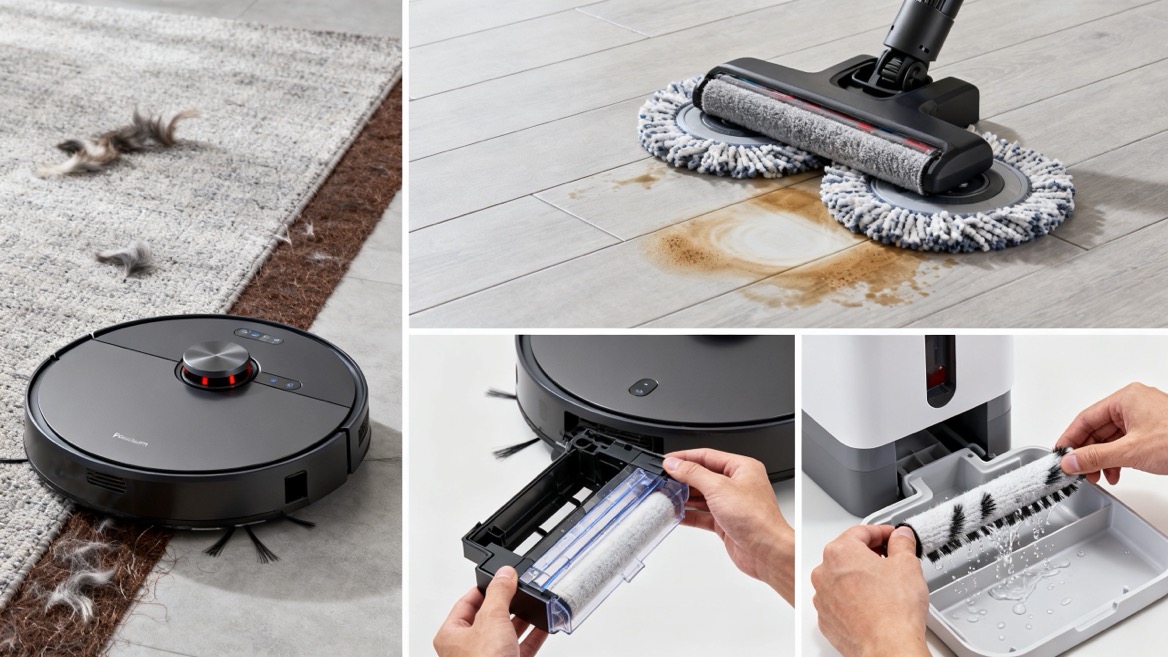
The referenced evaluation noted insufficient owner reviews to draw firm conclusions about long-term satisfaction with the Qrevo Edge 3 Pro.
That limitation should remain visible. Strong laboratory results do not establish years of reliability.
When reviewing customer feedback, prioritize descriptions that identify:
- Ownership duration.
- Floor type and home layout.
- Pet ownership.
- The specific fault or success.
- The seller's or manufacturer's response.
Avoid treating an isolated complaint as a proven defect rate. Equally, do not mistake enthusiastic first impressions for durability evidence.
No verified customer testimonials were supplied for this article, so none are presented as firsthand endorsements.
For retailers, importers, and private-label buyers, premium robot features highlight a broader purchasing lesson: specify the cleaning task before selecting the product format.
A robot addresses scheduled floor maintenance. Upright, handheld, corded, and cordless vacuums address different cleaning routines.
Rather than forcing one product into every role, build a range around customer needs.
| Product format | Buyer requirement to evaluate |
|---|---|
| Upright vacuum | Carpet cleaning, maneuverability, storage, and servicing |
| Handheld vacuum | Portability, attachments, and convenient spot cleaning |
| Corded vacuum | Cable reach, operating convenience, and cleaning performance |
| Cordless vacuum | Weight, usable runtime, charging, and battery support |
These are purchasing criteria, not performance claims about a particular product.
Ningbo Eyunhome Electric Technology Co., Ltd. offers upright, handheld, corded, and cordless vacuum solutions, together with OEM/ODM services, production support, and after-sales assistance.
For a productive sourcing discussion, specify:
1. Target market and customer segment.
2. Floor types and cleaning tasks.
3. Required attachments and product configuration.
4. Applicable market documentation and testing requirements.
5. Packaging, forecast volume, and delivery expectations.
6. Spare-parts and after-sales responsibilities.
Confirm project-specific capabilities, commercial terms, and supporting documentation before committing to production. This guide does not claim that Eyunhome manufactures the robot models discussed above.
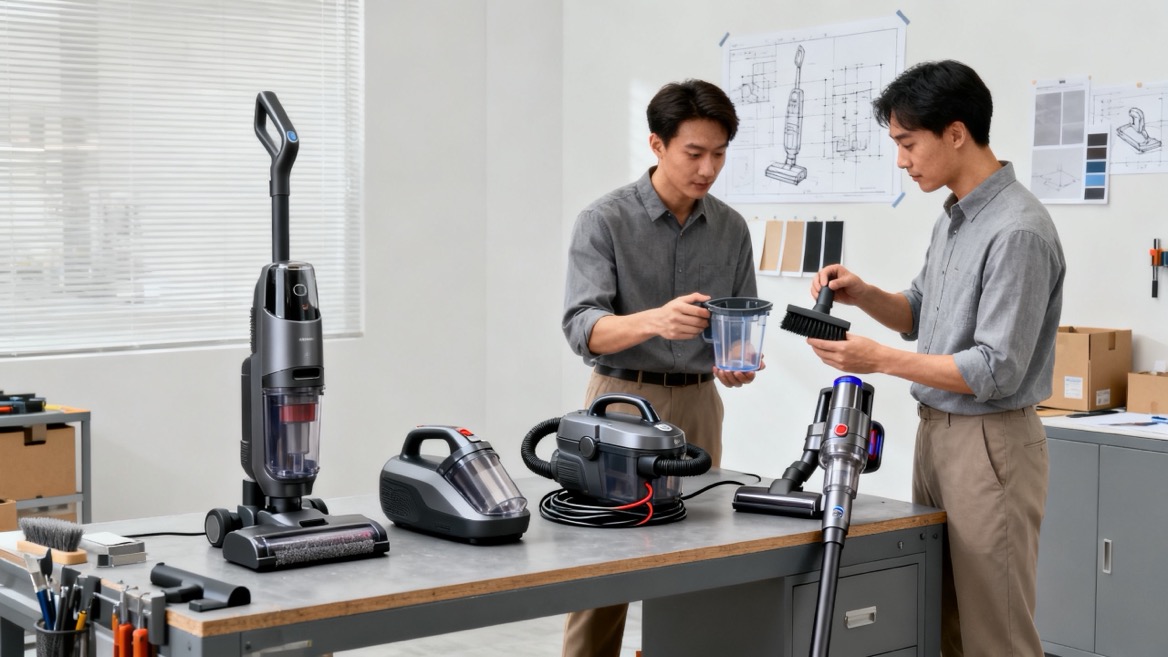
For household buyers, choose a premium robot by floor compatibility, measured cleaning ability, and the maintenance you can realistically manage.
For distributors and brand owners, translate those same priorities into a clear product brief.
Contact Ningbo Eyunhome Electric Technology Co., Ltd. with your target market, preferred vacuum format, expected order volume, and customization requirements to discuss an OEM/ODM proposal aligned with your business.
The Qrevo Edge 3 Pro is a strong candidate based on its reported 93% embedded-sand removal. Compare that result with your carpet type, pet-hair needs, and local pricing before purchasing.
No. The reviewed Qrevo combined a high advertised suction rating with below-average measured suction but excellent carpet cleaning. Look at cleaning results alongside specifications.
Not necessarily. Its floor-cleaning role does not cover every task, such as upholstery, stairs, or elevated surfaces. Choose complementary equipment according to the areas you actually clean.
Yes. Brushes, filters, sensors, wheels, and dock components still need care. Follow the model's instructions: some filters must not be washed, and cleaning intervals vary.
No. Its pet-hair results were good, but the Dreame X60 Max Ultra Complete performed better in the referenced carpet pet-hair and obstacle-avoidance tests.
Eyunhome offers OEM/ODM services for its stated upright, handheld, corded, and cordless vacuum categories. Discuss your required configuration, documentation, production schedule, and support terms directly.
1. [Vacuum Wars — Robot Vacuums: Best from $1,300 to $1,600]. Updated November 1, 2026. Source for the category recommendation, reported cleaning results, comparison with the Dreame X60 Max Ultra Complete, navigation findings, dock features, pricing snapshot, and limitations of available owner feedback. All laboratory results in this article are attributed to this publication, not to Eyunhome or the article's author. [vacuumwars]
2. [iRobot — Roomba s Series: Essential Care]. Manufacturer guidance supporting the discussion of continuing maintenance, dry cleaning of sensors and charging contacts, and model-specific restrictions on washing filters. These instructions should not be generalized to every robot vacuum. [homesupport.irobot]
3. [iRobot — Roomba Combo 10 Max Care Procedure Frequency]. Additional manufacturer guidance illustrating that automated cleaning systems still require scheduled component care. [homesupport.irobot]
4. [Federal Trade Commission — The Consumer Reviews and Testimonials Rule: Questions and Answers]. Editorial reference supporting the decision not to invent user testimonials, ownership experiences, or independent endorsements. [ftc]


