
Views: 263 Author: Eyunhome Vacuum Publish Time: 2026-10-25 Origin: Site


Content Menu
● What Makes the Best Upright Vacuum Cleaner?
● What Current Upright Vacuum Reviews Tell Buyers
>> Where a Ranking Needs Additional Context
● Corded Upright vs. Cordless Vacuum Cleaners
>> When a Corded Upright Makes Sense
>> When Cordless or Handheld Models Fit Better
● How to Evaluate Carpet and Hard-Floor Cleaning
>> Look Beyond Motor Wattage and Suction Claims
>> Test Hard Floors Separately
● Filtration: Evaluate the Complete Air Path
>> Bagged vs. Bagless Upright Vacuums
● Turn Customer Feedback Into Product Requirements
● A Practical Sample-Validation Process for Business Buyers
>> Step 1: Define the Intended Customer
>> Step 2: Establish a Repeatable Test Matrix
>> Step 3: Check Performance After Controlled Loading
>> Step 4: Inspect Serviceability
>> Step 5: Approve the Production Reference
● OEM/ODM Upright Vacuum Manufacturing: What to Specify
>> OEM: Define the Existing Product Configuration
>> ODM: Define the Development Responsibility
● Compare Ownership Costs, Not Just Unit Price
● Build a Vacuum Range Around Real Cleaning Needs
>> 1. What should I prioritize when choosing an upright vacuum cleaner?
>> 2. Are corded upright vacuums always better than cordless models?
>> 3. What makes an upright vacuum suitable for pet hair?
>> 4. Does a high-efficiency filter guarantee a sealed vacuum?
>> 5. What should private-label buyers request before ordering?
>> 6. Can Eyunhome support different vacuum cleaner formats?
Choosing the best upright vacuum cleaners starts with a simple question: what must the machine do well every day? Strong carpet cleaning matters, but so do manageable weight, reliable dust containment, easy maintenance, and replacement-part availability. For retailers, distributors, and private-label brands, those priorities must also translate into consistent production and dependable after-sales support.
At Ningbo Eyunhome Electric Technology Co., Ltd., we offer upright, handheld, corded, and cordless vacuum cleaner solutions, supported by OEM/ODM services. This guide combines independent product-review findings with a manufacturer-side purchasing framework. It does not present third-party testing as our own or substitute invented testimonials for verified customer feedback.

A useful upright vacuum balances pickup performance, handling, filtration, and ownership costs. The most impressive specification is not always the most important one.
For example, high suction alone cannot guarantee effective cleaning. Floorhead geometry, brush agitation, airflow, and contact with the surface all influence how much debris reaches the dust container.
Start by matching the product to its intended environment:
| Cleaning requirement | Features to prioritize | What to verify |
|---|---|---|
| Carpet-heavy homes | Effective agitation and adjustable floorhead | Embedded-dirt pickup and pushing effort |
| Mixed flooring | Brush control and suitable intake openings | Fine-dust pickup, large-debris pickup, and scatter |
| Pet-owning households | Hair-management brushroll and upholstery tools | Hair pickup and brush entanglement separately |
| Frequent stair cleaning | Manageable carrying weight and accessible tools | Carrying balance and usable hose reach |
| Dust-sensitive households | Effective filtration and sealed airflow path | Whole-machine containment and disposal method |
| Private-label product ranges | Consistent specifications and serviceable parts | Sample approval, inspection criteria, and spare parts |
My central purchasing principle is balance: a product should clean effectively without making everyday use or maintenance unnecessarily difficult.
Independent rankings provide useful comparisons when their methods and limitations are clear.
The Vacuum Wars upright leaderboard, updated October 21, 2026, identifies the Shark Detect Pro Lift-Away ADV LA802 as its leading overall model. Its reported results include perfect surface-debris pickup and a 100% score in the publication's carpet deep-cleaning test.
Those results are meaningful within that specific test. They do not establish that every carpet, debris mixture, or household will produce identical outcomes.
The same review also identifies practical compromises: a 0.76-liter dustbin, a 25-foot cord, and no motorized attachment. This illustrates why buyers should read beyond the ranking position.
The source article already covers cleaning performance, filtration, maneuverability, and attachments extensively. Its main limitation for business buyers is not a lack of consumer features. It is the gap between choosing one retail product and developing a repeatable product program.
Three additional questions deserve attention:
1. How will performance change as filters and dust containers load?
2. Which customer complaints should become engineering requirements?
3. What evidence will confirm that production units match approved samples?
A strong sourcing decision connects independent review findings with these operational questions.
The better format depends on cleaning duration, floor coverage, storage, and user expectations.
A corded upright avoids battery-runtime interruptions during use. It can suit households that prefer longer cleaning sessions or regularly maintain carpeted rooms.
However, continuous electrical power does not mean unlimited operation under every condition. Users must still follow instructions concerning blockages, overheating, and maintenance.
Evaluate:
- Cord reach across the intended cleaning area.
- Storage hooks and cord-release convenience.
- Dust-container capacity.
- Floorhead width and furniture access.
- Ease of switching between floor and hose cleaning.
Cordless products offer freedom from power outlets. Handheld designs can support furniture, stairs, vehicle interiors, and localized cleanup.
For cordless comparisons, request runtime under clearly stated conditions. Battery life measured without a powered floorhead is not directly comparable with runtime during intensive carpet cleaning.
For a product portfolio, these formats can complement rather than replace one another. A full-size upright and a compact handheld may address different customer needs.
Motor input power describes electricity consumption, not the quantity of dirt removed.
Likewise, suction pressure and airflow describe different aspects of operation. Neither should replace cleaning tests conducted with defined surfaces, debris, settings, and passes.
For sample comparisons, keep these conditions consistent:
- Carpet type and condition.
- Debris composition and applied mass.
- Number and speed of cleaning passes.
- Floorhead settings.
- Filter and dust-container condition.
ASTM F608 provides a recognized framework for evaluating carpet-embedded dirt removal under specified conditions. Its scope concerns embedded dirt, not general surface-litter pickup.
A floorhead that performs well on carpet may push larger crumbs forward or scatter debris on hard flooring.
Ask suppliers to demonstrate fine dust, larger particles, and debris near edges. Confirm whether brush speed, brush shutoff, or another floor-specific setting is needed.
Also check compatibility with the flooring manufacturer's care instructions. "Multi-surface" should not be treated as permission to use every setting on every delicate surface.
A filter label does not explain the entire machine.
Dust containment also depends on seals, filter installation, housing joints, and the route air follows before discharge. A high-efficiency filter cannot compensate for air bypassing it.
For purchasing discussions, separate three questions:
1. What performance is claimed for the filter?
2. What evidence supports whole-machine containment?
3. How much dust exposure occurs during emptying and maintenance?
Vacuum Wars uses a visual fog test to investigate leakage. That can reveal useful comparative information, but it should not be presented as equivalent to every standardized particle-emission measurement.
Bagged designs contain collected debris in a replaceable bag. Bagless designs avoid recurring bag purchases but require users to empty a container.
Neither format automatically guarantees better cleaning.
The practical choice depends on disposal preferences, consumable availability, maintenance habits, and the target selling price. Buyers should inspect the complete emptying process rather than comparing container capacity alone.
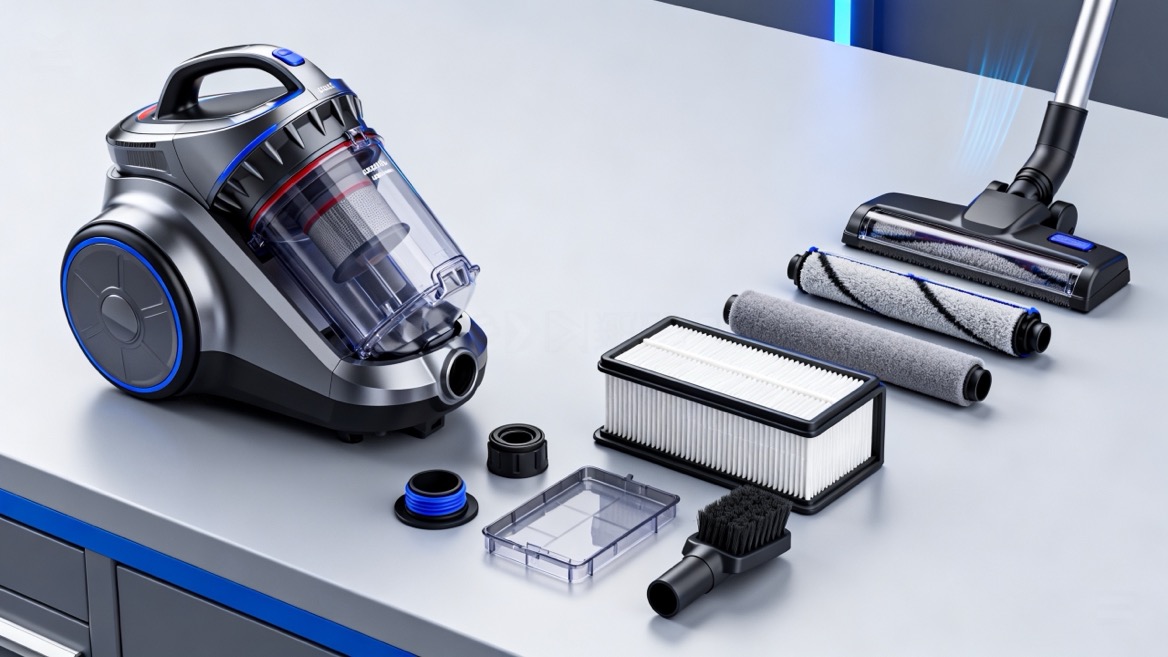
No original customer-review dataset was supplied for this article. Therefore, the observations below summarize concerns discussed in the reviewed buying material; they are not quotations from Eyunhome customers or measured complaint frequencies.
The source material highlights competing concerns: dust exposure when emptying bagless containers, recurring bag costs, machine weight, hose reach, and hair maintenance.
These concerns become more useful when translated into verifiable requirements.
| Feedback concern | Product question | Suggested evaluation |
|---|---|---|
| Difficult to carry | Is the handle balanced and accessible? | Carry the sample along the intended route |
| Frequent brush cleaning | Does hair remain around the roller or end caps? | Run repeatable hair tests and inspect both areas |
| Messy emptying | Can debris be released without awkward handling? | Observe several complete emptying cycles |
| Inconvenient maintenance | Are filters and rollers easy to access? | Time removal, cleaning preparation, and reassembly |
| Limited cleaning reach | Does hose tension pull or tip the machine? | Test usable reach in a realistic setup |
For retailers with existing sales data, classify reviews by model, purchase date, usage conditions, and issue type. Separate shipping damage from product faults and misuse from unclear instructions.
Do not treat an isolated complaint as a failure-rate estimate. Look for repeatable patterns and verify them through inspection or testing.
The following workflow is a proposed purchasing method, not a claim about completed Eyunhome testing.
Specify flooring, household size, pet ownership, storage constraints, and expected cleaning frequency.
Avoid a vague requirement such as "powerful and lightweight." Define how performance and handling will be evaluated.
Compare samples under the same conditions. Record pickup results, handling observations, dust disposal, tool access, and maintenance requirements.
Photographs and written procedures help prevent subjective impressions from becoming the only evidence.
Freshly cleaned samples show only one operating condition.
Compare results before and after a defined amount of collected debris. Record any change in pickup, handling, or maintenance needs.
This is an additional evaluation proposal, not a standardized certification claim.
Remove accessible filters, inspect brushroll access, and identify parts likely to need replacement.
Confirm part numbers, ordering arrangements, and instructions before launch.
Keep an approved sample and a signed specification.
Document materials, accessories, packaging, labeling, performance criteria, and permitted tolerances. A visual match alone does not establish functional equivalence.
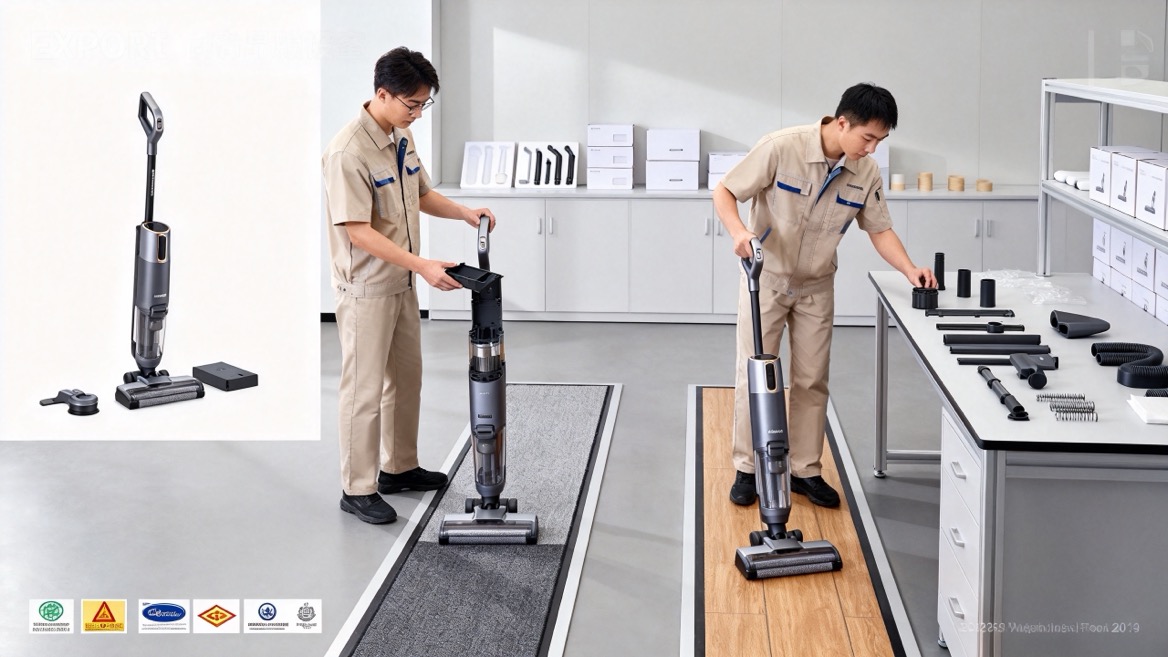
Ningbo Eyunhome Electric Technology Co., Ltd. provides OEM/ODM services alongside upright, handheld, corded, and cordless product solutions.
For buyers, the first step is to distinguish a branding project from a development project.
An existing-platform project may involve agreed branding, colors, accessories, packaging, and configuration choices.
Confirm what can change without affecting tooling, performance, delivery schedules, or previously obtained documentation. Do not assume every requested modification is available.
A development-led project requires clearer agreement on design scope, ownership, tooling, validation, and approval milestones.
Discuss:
- Intended market and electrical configuration.
- Target cleaning tasks.
- Product dimensions and handling expectations.
- Dust collection and filtration requirements.
- Accessory compatibility.
- Packaging and instruction languages.
- Required testing and market documentation.
- Tooling ownership and change control.
Any certification or compliance statement should match the exact model, configuration, and destination market. Request supporting documents rather than relying on a general company claim.
A lower purchase price can lose its advantage if maintenance, returns, or replacement parts become difficult.
A practical comparison should include:
- Initial product cost.
- Filters, bags, and other consumables.
- Spare-part availability.
- Maintenance labor.
- Warranty-handling arrangements.
- Potential downtime and replacement logistics.
For commercial purchasing, build a scenario using your own sales volumes and service assumptions. Do not insert unsupported failure rates to make one option appear cheaper.
Ask the supplier to clarify warranty scope, claim evidence, exclusions, and responsibility for transport costs. These details make after-sales support understandable before an issue occurs.
The best upright vacuum cleaner is not necessarily the model with the longest feature list. It is the one whose cleaning performance, handling, maintenance, and service arrangements fit the intended user.
For brands and distributors, that fit must also remain consistent across production.
Share your target market, preferred vacuum format, flooring requirements, desired features, and estimated order quantity with Ningbo Eyunhome Electric Technology Co., Ltd.. Request a model-specific discussion covering available configurations, samples, validation expectations, production arrangements, and after-sales support before placing an order.
Start with floor type and cleaning tasks. Then assess pickup performance, pushing effort, filtration, disposal, and maintenance. Compare products under equivalent conditions rather than choosing by wattage alone.
No. Corded products avoid battery-runtime interruptions, while cordless models offer outlet-free movement. Actual cleaning performance depends on the individual design and test conditions, not simply the power source.
Look for effective hair pickup, manageable brush entanglement, accessible roller cleaning, and suitable upholstery tools. Hair collected from flooring and hair wrapped around a brush are separate performance measures.
No. Filter performance and whole-machine containment are different claims. Housing joints, seals, filter fit, and airflow bypass must also be considered.
Request a clear specification, representative sample, relevant test documentation, packaging details, spare-part arrangements, and written warranty terms. Confirm that documentation matches the exact ordered configuration.
Eyunhome offers upright, handheld, corded, and cordless vacuum solutions with OEM/ODM support. Specific features, customization options, quantities, and schedules should be confirmed for the selected project.
1. Vacuum Wars. "The Best Upright Vacuums of 2026." Updated October 21, 2026. Primary source for current product comparisons, reported test results, testing methods, ranking limitations, and consumer considerations concerning weight, disposal, and maintenance. [vacuumwars]
2. ASTM International. "F608: Standard Test Method for Evaluation of Carpet-Embedded Dirt Removal Effectiveness of Household/Commercial Vacuum Cleaners." Supports the distinction between controlled embedded-dirt testing and surface-debris evaluation. The referenced page describes an earlier edition; buyers should establish the applicable edition with their testing provider. [store.astm]
3. Consumer Reports. "Best Upright Vacuum Cleaners." Independent comparison supporting the importance of assessing carpet cleaning, bare-floor pickup, pet-hair performance, weight, reliability, and owner satisfaction as separate considerations. [consumerreports]
4. Vacuum Wars. "Upright Vacuum Reviews." Additional model-review context concerning pickup, airflow, filtration, hair management, and product trade-offs. [vacuumwars]


